
Learn about Contraband and Counterfeit Drugs
Learn about Contraband and Counterfeit Drugs
Counterfeit Drugs – The Illicit Public Health Threat
In today’s global environment, it doesn’t matter if you live in United States, Europe, Asia, or Africa— everyone is at risk from unsafe drugs. All across the world, we are seeing more incidents of counterfeiting involving more types of drugs in more countries. Counterfeit drugs defraud consumers and deny patients therapies that can alleviate suffering and save lives. Unfortunately, in some cases, these fake drugs have caused great harm and fatalities.
According to the U.S. Food and Drug Administration (FDA), the U.S. law defines counterfeit drugs as those sold under a product name without proper authorization. These counterfeit drugs may be:
FACT: Counterfeiting is not limited to
brand-name prescription drugs.
Counterfeiters also create fake
versions of generic and over-thecounter
(OTC) drugs, as well as
medical products like glucose
test strips and pregnancy tests.
- Too strong or too weak
- Missing key ingredients
- Made with dangerous ingredients
- Contaminated with foreign, even toxic, materials
- Made in unsanitary or unsterile conditions
- Created using unsafe standards
- Improperly labeled, stored or handled
- Expired (out-of-date)
A Global Problem
The World Health Organization estimates that as much as 10 percent of medicines sold worldwide are believed to be counterfeit, ranging from around one percent of sales in developed countries to more than 30 percent in developing countries, depending on the geographical area.
According to the Pharmaceutical Security Institute (PSI) , counterfeiters sold more than 600 different types of branded, generic and over-the-counter drugs in 2007 (up more than 14 percent from 2006), including expensive lifestyle drugs, inexpensive pain relievers, and essential medicines such as cancer medications, vaccines, antimalarials, cardiovascular drugs, antibiotics, and HIV therapies. Additionally, counterfeiters are using more sophisticated technology and improved packaging to make their fake goods harder to detect.
In 2007, PSI recorded total of 1759 incidents of counterfeit, stolen or illegally diverted drugs (24 percent more than 2006) in 112 countries.
Top Internet Resources
Partnership for Safe Medicines
FDA Counterfeit Homepage
FDA Q&A on Prescription Drug Marketing Act
FDA Medwatch Program
FDA‐OCI Website
NABP Verified‐Accredited Wholesale Distributors
NABP Wholesaler‐Distributor Regulators
ASHP List of Drug Shortages
Pharmacists – On the Front Lines
By being aware of where counterfeits come from and how they enter the supply chain, pharmacists can play a major role in detecting unsafe products and stopping them before they reach patients.
| The Supply Chain | Counterfeiting Activities |
|---|---|
| Suppliers are responsible for providing raw materials, excipients (the inert substances found in a drug), active pharmaceutical ingredients and other components manufacturers use to create medical products. |
It is during this step that counterfeit ingredients can infiltrate a legitimate manufacturing facility. |
| Manufacturers oversee drug formation and production and responsible for quality assurance and proper dosage and formulations. |
It is during this step that counterfeit ingredients can infiltrate a legitimate manufacturing facility. |
| Warehousing & Distribution Vendors act as the intermediaries between the manufacturers and the drug acquisition sites. |
It is during this step that counterfeiting process takes place in one or more of the below forms:• Product diversion • Theft/diversion • Fraudulent labeling • Label switching • Illegal repackaging • Cutting legitimate products with counterfeit products |
| Drug Acquisition Sites are the businesses and places where customers and patients can obtain the medications, such as traditional, mail order and online pharmacy stores, hospitals, physicians’ offices, hospice sites, retail outlets and long-term care providers. |
If the product provided by the vendor is counterfeit, then the pharmacist becomes one part of the chain in this harmful distribution. Healthcare practitioners, including pharmacists and physicians have been involved in drug diversion schemes and counterfeiting. |
| Patients & Consumers | Counterfeit drugs often find their way into U.S. homes via foreign online drug sellers, most of which are rogue. Consumers may purchase the counterfeit drugs directly from these overseas “online pharmacies” or from an affiliate operating domestically. |
Pharmacists can also help by spotting consumers who are using substandard medications by noticing if the patient’s health has been deteriorating or has not improved when it should have. They can ask patients what medications they are taking and where they purchase their drugs in order to determine the source for all their medications or if there may be any drug interactions. Many time patients use multiple sources—including online pharmacies—for any drugs not covered by their insurance or that have a high co-payment.
SafeMeds Tools
The Partnership for Safe Medicines (www.safemedicines.org) has several free, resources to help you stay up-to-date on what’s happening here in the U.S. and other parts of the world regarding drug safety, including:
- SafeMeds News Archive: The Partnership’s Web site maintains a comprehensive list of all relevant news stories from around the globe and is a great way to see the global dimensions of this problem.
- SafeMeds Weekly Update: Our free weekly email provides readers with a weekly roundup of what’s happening around the world regarding counterfeit drugs, as well as the latest blog entry from the Partnership’s experts. Check out past issues of the update in our email archive.
- SafeMeds Email Alert System: As part of the FDA’s Alert Network, we offer this free email service that sends official alerts from the FDA and other government agencies around the world to anyone—private citizens, public groups, corporations, healthcare practitioners, associations—when specific counterfeit drug incidents are detected.
- Safe Medicines Blog: Our weekly blog provides news about counterfeit and non-approved drugs in the US as well as expert commentary from Partnership for
Safe Medicines’ board members.
Spot the Fake
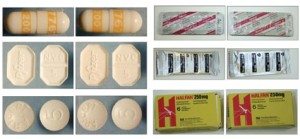
Chalk, powered concrete, boric acid and highway paint have all been used by counterfeiters to make fake drugs. Sometimes these imitations are so good the experts can’t always tell the genuine drugs from the fake ones without analyzing its chemical composition.
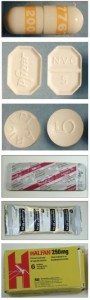
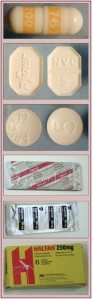
Here are some examples of what actual counterfeit drugs look like. Notice how well counterfeiters package their products to look authentic.
| Approved | Counterfeit |
|---|---|
 |
 |