Four things Congress should do for patient safety in the rest of the 119th
February 5, 2026
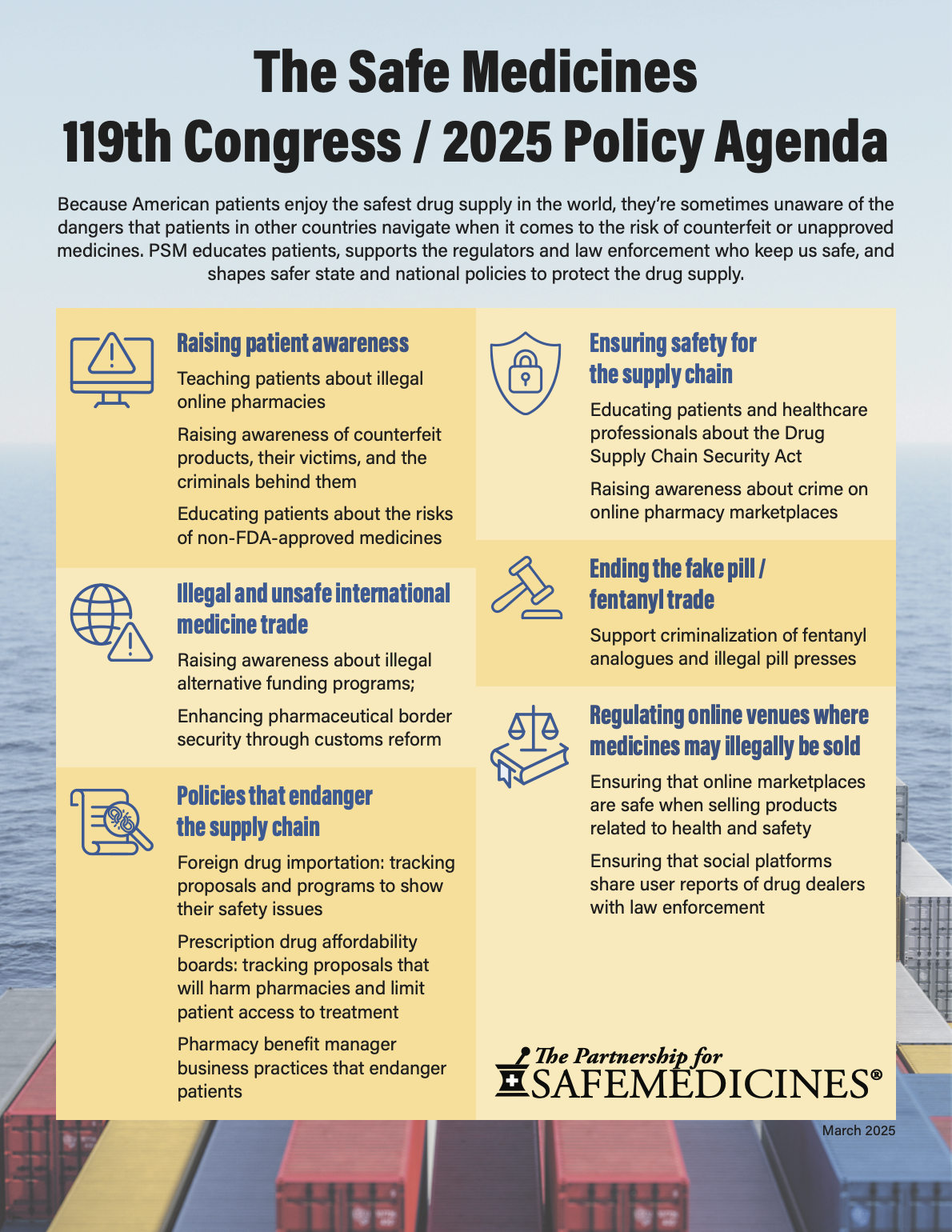
Read PSM's policy agenda for the 119th Congress.
The 119th Congress will start 2026 with a pharmaceutical and medical product supply chain under unprecedented strain, defined by globalized manufacturing, explosive growth in small-package imports, sophisticated counterfeiters, and a drug shortage crisis that has reshaped how medicines reach patients. While the United States’ drug supply chain remains the gold standard for safety, outdated authorities, resource gaps, and enforcement loopholes are being exploited by bad actors at the expense of public health. This post outlines four practical steps Congress should take to strengthen pharmaceutical border security, reinforce regulatory oversight, and protect patients.
Require 503B compounding facilities to be inspected by FDA before shipping products
HR 6509 SAFE Drugs Act / Letter of Support
While 503B outsourcing facilities play an important role in improving resilience during drug shortages, their products are not FDA-approved or evaluated for safety, effectiveness, or quality. Today, 503Bs can manufacture and distribute medicines nationwide without any pre-market inspection of their facilities.
Congress should require 503Bs to undergo an FDA inspection before they are allowed to ship any compounded drugs, bringing this “last-resort” segment of the drug supply in line with basic patient safety expectations. Given the increasing volume and complexity of the products they produce, pre-shipment inspections are critical to ensure compliance with current good manufacturing practices, protect patients from contaminated or misdosed medications, and align the industry’s operational standards with its expanded scope.

PSM's letter in support of the SAFE Drugs Act of 2025.
Allow CBP to share more information with IP rights holders
SB 2677 / HR 4930 / Letter of Support
Congress should clarify and expand Custom and Border Protection's authority to share information with stakeholders in connection with the agency's enforcement of IP rights at the border. This would enable faster and more effective action against counterfeit and infringing products. Brand manufacturers are best positioned to quickly assess authenticity, identify subtle counterfeiting indicators, and trace illicit supply chains, but outdated legal and policy constraints limit what CBP can share, slowing enforcement and allowing dangerous products to enter U.S. commerce. Carefully expanded information sharing would enable faster verification, stronger civil and criminal cases, and more efficient targeting of repeat offenders. In the context of drugs and medical devices, empowering CBP to collaborate more fully with legitimate manufacturers would significantly strengthen border enforcement and help keep unsafe products out of the U.S. supply chain.

Grant FDA more resources to screen incoming packages against its import database
FY 27 appropriations
Congress should increase FDA resources and authorities to screen incoming packages against its import and compliance databases. Without adequate staffing, modernized IT systems, and advanced data analytics, FDA cannot consistently match incoming packages to known violators, high-risk manufacturers, or products previously refused entry. This gap allows counterfeit, misbranded, and unsafe medicines to slip through the border, even when FDA already has intelligence indicating elevated risk. Investing in automated screening tools, real-time data integration with CBP, and sufficient personnel to act on those signals would dramatically improve FDA’s ability to protect patients.
FDA destruction authority
FY 27 appropriations
Congress should close a long-standing loophole in import enforcement by granting FDA clear authority to require the destruction of imported, non-compliant products that pose a significant risk to public health. As highlighted in a September 2025 letter sent by PSM, the current system too often allows dangerous drugs and medical devices to be returned to shippers rather than seized and destroyed. This enables a “revolving door” for rogue manufacturers. Empowering FDA to mandate the destruction of high-risk imports would deter repeat offenders, ensure that already strained FDA resources are more effectively used, and better protect the integrity of the pharmaceutical supply chain.