
March 24, 2026: Physician sentenced for administering expired injectables in long-running fraud scheme
Major Stories
A rheumatologist was sentenced after injecting patients with expired drugs despite billing insurance for full-priced medications and a massive children's ibuprofen recall for contaminants.
A federal judge in Alaska sentenced rheumatologist Dr. Claribel Tan to six-and-a-half years in prison for administering substandard drugs to patients while fraudulently billing insurers. Over a 15-year period, Dr. Tan injected patients with expired medications, free samples not intended for sale, and drugs different from those prescribed, creating significant safety risks.
Despite this, her clinic billed insurers for full-priced medications that were often never purchased. Her husband, who managed the clinic and assisted in the scheme, was sentenced to probation with home confinement.
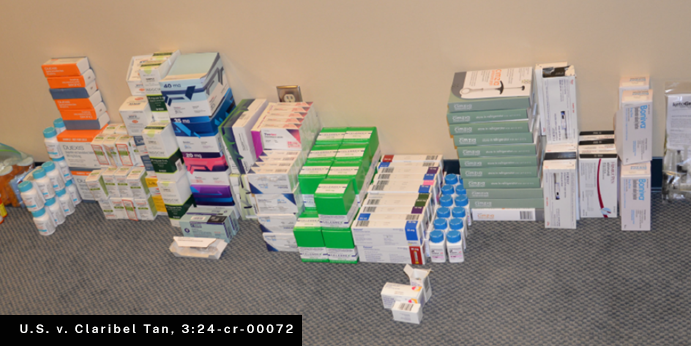
Medicines stockpiled in Dr. Tan's office. (USA v Tan)
Nearly 90,000 bottles of children’s ibuprofen oral suspension were recalled nationwide after reports of contamination with a “gel-like mass” and black particles. The affected product, manufactured by Strides Pharma for Taro Pharmaceuticals, was distributed in 4-ounce bottles and identified by lot numbers of 7261973A and 7261974A, with an expiration date of Jan. 31, 2027. The recall was initiated following consumer complaints and has been classified by the FDA as a Class II event, indicating potential for temporary or medically reversible health effects. Consumers are advised to stop using the product immediately.
Domestic
A California man was sentenced for processing payments for illegal online pharmacies. A Canadian faces charges for trafficking counterfeit prescription pills made with protonitazene. Men in Florida and Nevada were charged with selling unapproved medicines.
A California man was sentenced to a year and a day in prison for running an unlicensed money transmitting business. Jimmy Fu, of West Hills, California, processed millions of dollars for illegal online pharmacies that supplied counterfeit medications, including fake Adderall, through overseas shipments and U.S. pill press operations. Undercover agents found that the pills contained methamphetamine, caffeine, or no active ingredients.
U.S. prosecutors extradited a Canadian national to face charges related to importation of protonitazene, a synthetic opioid, and money laundering, after he allegedly arranged the importation of tens of thousands of pills disguised as oxycodone. The Royal Canadian Mounted Police intercepted a later 300,000-pill shipment in July 2024, as well as uncovering clandestine laboratories in Quebec. If convicted, the defendant faces up to 120 years in federal prison.
A Florida man was charged federally for selling unapproved and misbranded versions of weight-loss drugs, including products marketed as semaglutide, without prescriptions. Prosecutors allege he operated an online business that labeled the products “for research purposes only” to circumvent regulations, while still advising customers on their use for weight loss. The drugs were sourced from overseas and included substances not approved by the FDA, raising safety and quality concerns. Authorities say the products were sold directly to consumers across state lines without proper oversight or registration as a manufacturer.

Investigators unearthed this customer complaint during their investigation of Fu. (USA v Fu)
A Nevada man was indicted on 17 federal counts for smuggling and selling misbranded erectile dysfunction and prescription drugs under various brand names. He allegedly imported hundreds of thousands of capsules and tablets containing sildenafil, sildenafil citrate, and tadalafil from unregistered facilities in India, falsely labeling them as “100% natural” and evading customs enforcement. The drugs were sold through smoke shops, convenience stores, adult novelty stores, and a company website, generating over $1.9 million in revenue.
Nevada regulators fined multiple individuals and a peptide supplier following an incident at a Las Vegas anti-aging festival where two women became critically ill after receiving peptide injections. A doctor and pharmacist, both unlicensed in Nevada, and an unlicensed health coach, were cited for administering or recommending the treatments, while a Texas-based group was fined for allegedly supplying the peptides without proper authorization. Investigators were unable to determine the exact cause of the illnesses or test the injected products, though at least one peptide used has been flagged by the FDA for safety risks.
A recent story in the Atlantic covered the rapid rise of unregulated drug use in the U.S., particularly peptides and other “research-only” compounds, which are increasingly popular among fitness enthusiasts, biohackers, and consumers seeking weight-loss or sexual health treatments. Drugs like Vyleesi, retatrutide, and GLP-1 compounds are being obtained online or through compounding pharmacies, often bypassing FDA oversight and safety standards.
Pill presses
Joshua Morales, of Lawrence, Massachusetts, pleaded guilty to drug charges tied to a pill press operation that produced large quantities of counterfeit prescription drugs. Authorities seized a pill press and other equipment to manufacture fake Percocet and Adderall pills, kilograms of illicit substances and 10,000 counterfeit pills during the investigation.
A second Massachusetts man, Lawrence Michael Nagle, Jr., of Saugus, received a 19- year sentence for leading a 27-person drug trafficking ring that distributed tens of thousands of counterfeit prescription pills containing fentanyl and methamphetamine. The operation supplied both counterfeit and legitimate-appearing drugs, including fake Adderall and oxycodone, through a network of distributors across the North Shore region. Authorities seized over 74,000 counterfeit pills and multiple kilograms of fentanyl and methamphetamine, as well as firearms during the investigation.
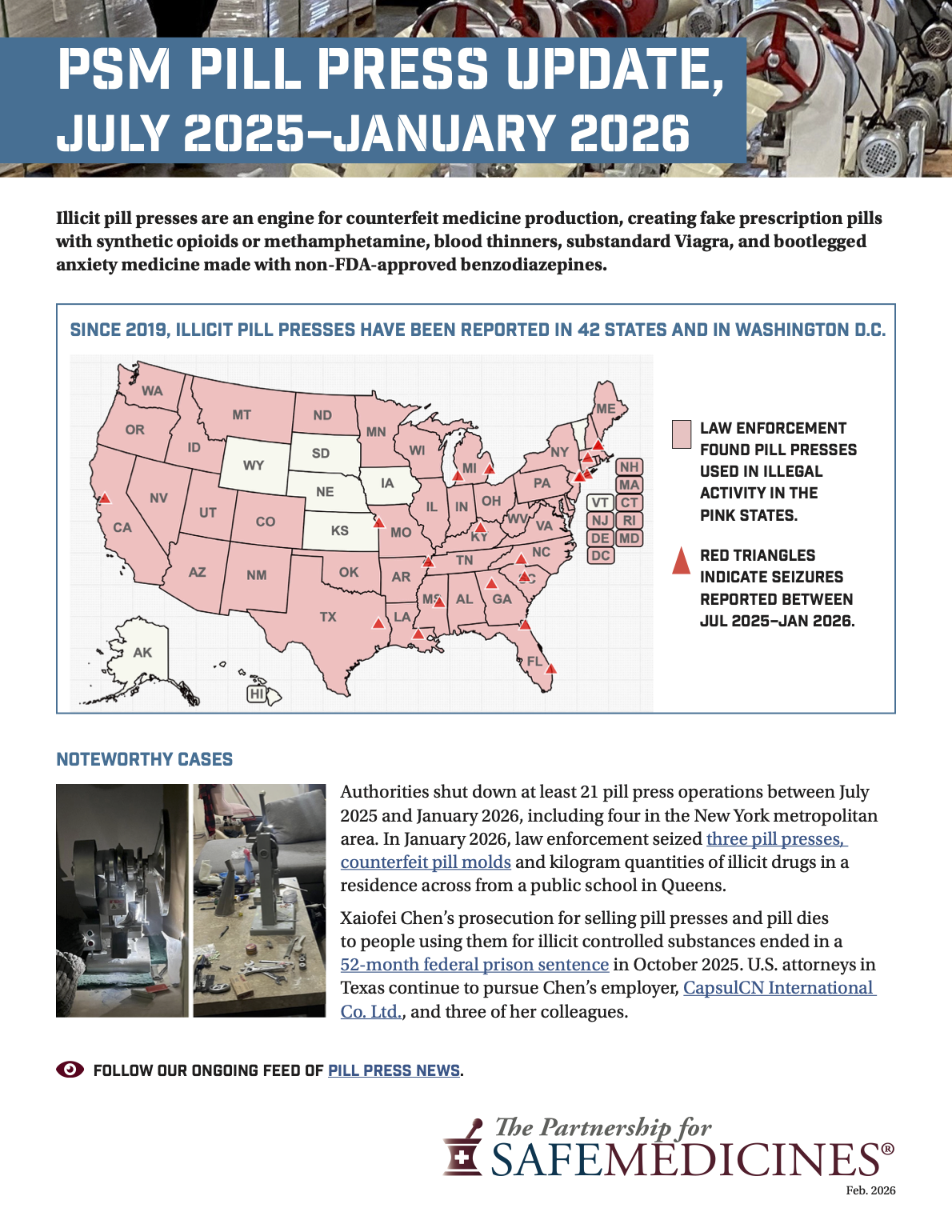
Catch up on pill press news.
PSM in the News
The Hindu cited PSM executive director Shabbir Imber Safdar’s recent observations in The Lancet, that “perfect-looking” counterfeit Ozempic and Mounjaro, often originating in Mexico, are fueling unprecedented fraud in weight-loss injectables and pose serious public health risks.
Regulatory action
Last week, the FDA posted enforcement notices about two voluntary drug recalls. New Life Pharma recalled multiple lots of semaglutide and tirzepatide sterile multi-dose vials due to a lack of assurance of sterility, affecting a total of 890 vials (Class II). Separately, 125 boxes of Mojo Max Fusion XXX capsules were recalled nationwide after FDA testing found undeclared sildenafil and tadalafil, making the product misbranded and marketed without an approved application (Class I). Both recalls are ongoing, and no press releases were issued.
The following FDA warning letters were also published last week:
- A North Carolina 503B compounding facility, Apothecary Pharma LLC, was cited for violations, including the production of sterile drugs in insanitary conditions, such as visibly rusty and difficult-to-clean equipment, which rendered sterile drugs adulterated. The facility also failed to comply with CGMP requirements, compounded drugs without FDA approval, issued products with inadequate labeling and directions for use, and did not properly report adverse events, creating serious risks to patient safety.
- In a letter to India-based Flowchem Pharma Private Limited, the FDA cited serious CGMP violations, including the use of inadequately cleaned and poorly maintained equipment with visible rust and residues, improper storage of raw materials exposed to contamination, failure to identify and control impurities in APIs, and reliance on unverified supplier certificates without proper identity testing, all of which put product quality and patient safety at risk.
- A warning letter to OraLabs, Inc. cited serious CGMP violations, including releasing over-the-counter drug products without performing required microbiological testing, failing to investigate and document root causes of microbial contamination, and inappropriately invalidating out-of-specification results.
- Citra100mg was cited for illegally selling unapproved and misbranded prescription opioids online to U.S. consumers, including dispensing without a prescription and providing inadequate directions for safe use. The address listed on their website is a florist, according to Google.
- Patcos Cosmetics Pvt. Ltd. was cited for severe CGMP violations, including preparing, packing, and storing over-the-counter drugs in grossly insanitary conditions with evidence of water damage, mold, broken windows, and harborage areas. Additional violations included failure to maintain the facility in good repair, inadequate identity testing of high-risk components, poorly designed and unvalidated manufacturing systems, lack of process validation for finished products, ineffective quality unit oversight, and widespread data integrity deficiencies, all of which compromise the safety, quality, and purity of drug products.
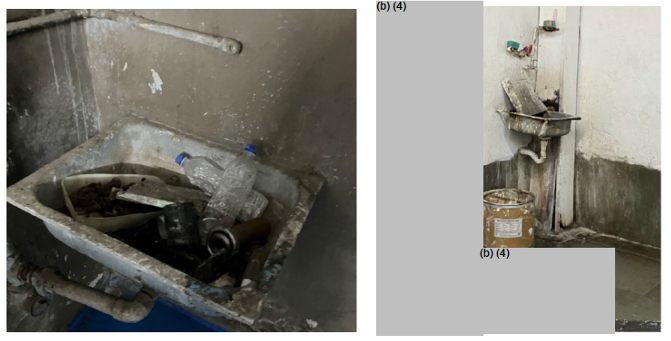
The FDA's March 2026 warning letter to Patcos pictures of these sinks in the production area, which were "a source of water for cleaning production equipment."
International
A new report finds up to 28% of medicines in India to be counterfeit, while regulators in Nigeria warn of fake cancer drugs. U.K. reports on deaths related to synthetic opioids and gray market weight loss drugs.
A new nationwide report in India by ASPA and CRISIL Intelligence found that nearly 28% of medicines in urban markets are counterfeit, with most fake drugs sold through local retail outlets, posing serious risks to patient safety and treatment efficacy.
The Independent reported on the dangers of buying unregulated weight loss drugs via social media. The article featured personal cases, expert warnings, and regulatory advice on the life-threatening risks of counterfeit or unlicensed products.
Nitazenes have been linked to 1,000 deaths in the U.K. over just two-and-a-half years, highlighting the growing danger of synthetic drugs, which are increasingly mixed with heroin and contribute to half of homicides, thefts, and robberies, according to the National Crime Agency.
NAFDAC warned Nigerians about the circulation of counterfeit cancer drugs, including Tecentriq and Phesgo.