
April 13, 2026: New video shows Mochi Health-affiliated pharmacy’s “corner cutting”
Major Stories
Severe violations detailed in the raid video of a Washington state compounding pharmacy closely affiliated with Mochi Health. A Massachusetts med spa owner pleaded guilty to importing counterfeit medicines.
A newly-released March 2025 Washington State Department of Health video shows investigators raiding Aequita, a compounding pharmacy closely affiliated with Mochi Health, where “cutting corners [was seen] at nearly every level of its operation.” In the video, inspectors found imported peptide base powder, which Aequita’s head of pharmacy operations said was “six to nine times cheaper” than American-made peptides, in a space that purportedly only contained packaging materials. PSM’s executive director is quoted in the King5 report, saying, "This entire industry has really sprung up in order to take advantage of a lot of money to be made."
Rebecca Fadanelli, a Massachusetts med spa owner, pleaded guilty to illegally importing merchandise and dispensing Botox, Sculptra, and Juvéderm from China and Brazil. According to court documents, she also posed as a nurse despite being registered as an aesthetician. Before being arrested and charged in November 2024, Fadanelli performed thousands of injections and received over $1 million in client payments.
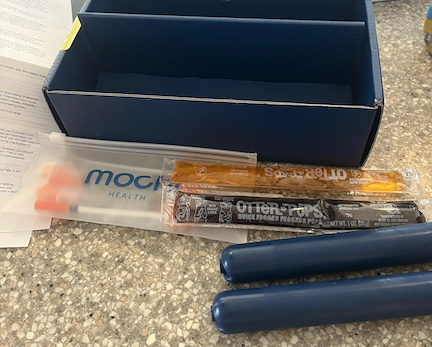
Earlier reporting about Aequita noted that they'd cut shipping costs by using popsicles instead of icepacks. (Photo: Reddit)
Domestic
The FDA seeks new power over misleading drug ads; issues a slew of warnings. A new study highlights weak oversight of med spas.
The U.S. Food and Drug Administration is seeking new legislative authority to crack down on misleading direct-to-consumer drug ads, arguing it needs stronger tools to ensure companies present balanced information about risks and benefits. The proposal would allow the agency to classify drugs as misbranded if ads exaggerate effectiveness, fail to disclose key risks, or mislead consumers, and would impose stricter rules on compounded drugs that are not FDA-approved.
A study published in the journal Dermatologic Surgery found that 36 states have little to no regulatory oversight of medical spas, despite the industry's rapid growth. The study also found that 44 states lack patient-protection regulations specific to medical spas, and 48 states had no identifiable requirements for licensure, as reported by the American Medical Association. PSM’s research into medical spas highlights similar issues.
The White House and Centers for Disease Control and Prevention issued a Health Alert Network advisory to warn of medetomidine contamination in the illicit opioid supply. It’s the first known use of this alert system to address an unregulated substance rather than an infectious disease outbreak.
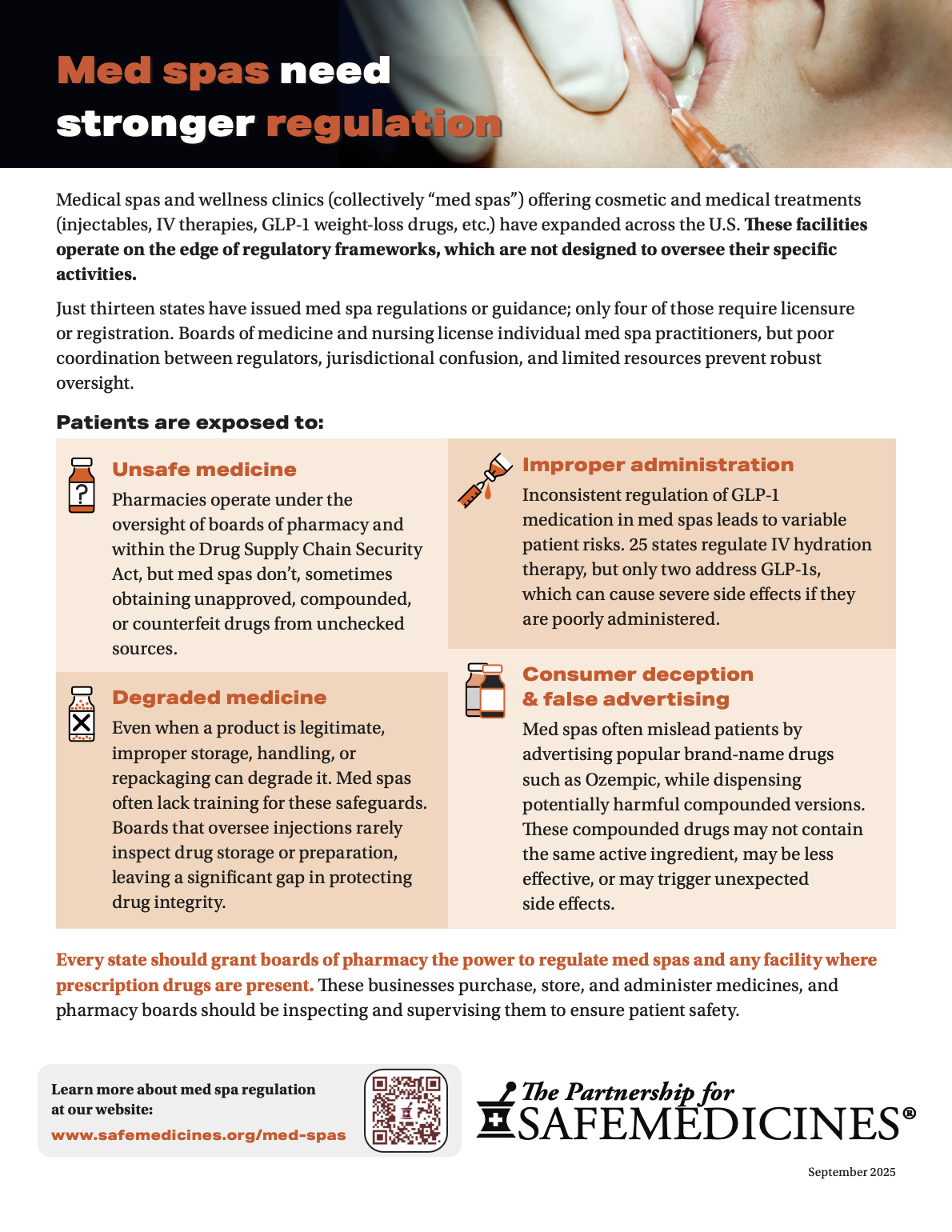
Read about the grey area that med spas find themselves in, between the boards of pharmacy, nursing, and medicine, in our handout.
Authorities in Florida arrested 19 people as part of "Operation Spring Cleaning.” The operation led to the seizure of 183.5 kilograms of counterfeit pills, and over ten kilograms of other illicit drugs.
Three California men were indicted on drug trafficking charges. After the US Postal Service intercepted over 100 packages that contained controlled substances, law enforcement searched a warehouse and discovered three pill presses and materials used to make counterfeit pills. In Delaware, a man was arrested after a search warrant led police to 55 MDMA pills and a pill press machine.
Regulators protecting patients in the news
The FDA announced a voluntary recall of DTF Sexual Chocolate, which contains undeclared sildenafil and tadalafil, prescription drug ingredients used to treat erectile dysfunction. These substances dangerously interact with certain medications, particularly nitrates, posing a risk of severe drops in blood pressure.
The FDA reported that Blaine Labs is recalling certain wound care gels due to contamination with Lysinibacillus fusiformis, a bacteria that may cause infections. While generally low risk for healthy individuals, the contamination could lead to serious complications in people with weakened immune systems.
FDA warned consumers to avoid certain hyaluronic acid products marketed for pain relief after discovering they contain undisclosed drug ingredients. These hidden substances pose serious health risks, potentially leading to severe illness or hospitalization.
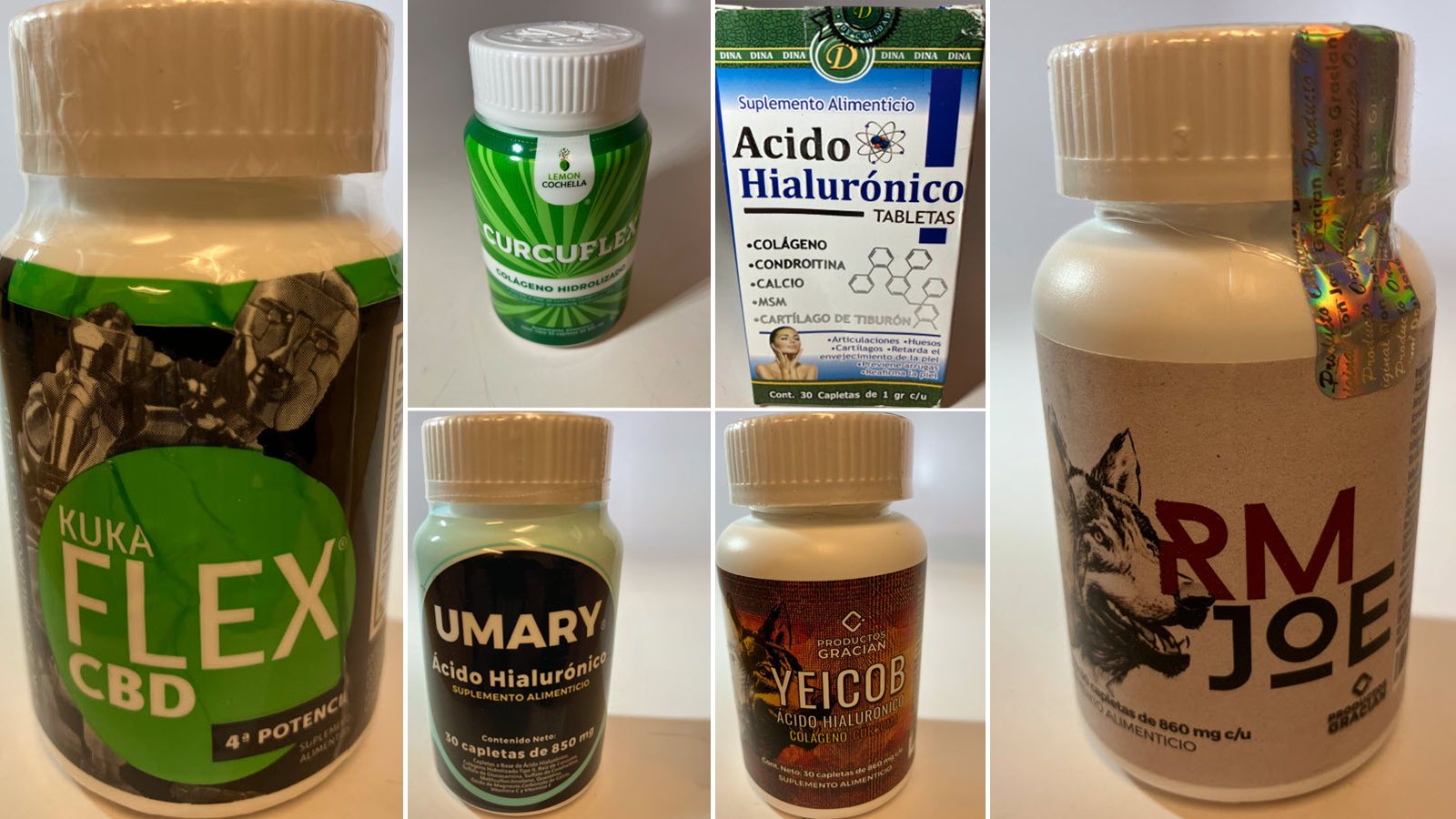
FDA warned not to use these hyaluronic products on April 7.
FDA issued a public health alert advising consumers not to use Addall XR Shot or Addall XL supplements due to dangerous, undeclared ingredients such as DMAA, DMHA, and phenibut. These substances can increase the risk of cardiovascular events, neurological effects, and addiction, prompting warnings to stop use and dispose of the products immediately.
The FDA issued a cluster of warning letters targeting multiple companies for selling unapproved GLP-1–related peptide products, often marketed for weight loss or metabolic benefits, without proper approval. Despite labeling these products as “research use only,” the agency found clear evidence they were being promoted for human use, including dosing instructions and claims about weight loss, blood sugar control, and other health effects.
The letters also raised concerns about the sale of injectable products and related supplies like bacteriostatic water, which is often used for reconstituting powders into injectable drugs. Across all cases, the agency concluded the products are unapproved new drugs not recognized as safe and effective, making their sale in the U.S. illegal.
News about GLP-1s
A Fifth Circuit panel is reviewing whether the FDA properly removed two blockbuster weight-loss drugs, Wegovy and Zepbound, from its shortage list, effectively banning compounding pharmacies from making cheaper versions. Drugmakers argue the shortages are over and the FDA correctly relied on supply data, while compounders say the agency rushed its decision, ignored evidence of ongoing shortages, and used an improper legal process.
Legislation
Minnesota’s SF5046 and HF4881 would repeal the state’s Prescription Drug Affordability Advisory Council, eliminating an 18-member stakeholder body created to advise the state on prescription drug pricing and affordability issues, representing groups such as patients, providers, insurers, employers, manufacturers, and researchers. If enacted, the repeal would dissolve the council and end its required meetings and advisory role on drug cost policy.
Keep up with state legislation in the areas of pill presses, prescription drug affordability boards, drug importation, and med spas.
International
U.K. regulators take down fake Viagra pill listings. Indian and Filipino authorities seize counterfeit drugs. Canadian regulators warn against online peptides.
The U.K.’s MHRA warned the public about counterfeit Viagra-style pills after working with eBay to remove 215 illegal online listings. Officials said the unauthorized medicines may contain unknown or dangerous ingredients and urged consumers to obtain erectile dysfunction treatments from licensed pharmacies.
Delhi Police busted a large counterfeit medicine racket involving fake diabetes drugs and painkillers falsely branded under major pharmaceutical companies. Six people were arrested after investigators uncovered a factory, storage sites, and a fraud network.
The Bureau of Customs in Manila seized over ₱53 million worth of counterfeit drugs shipped from China that were falsely declared as pet cages. Filipino authorities also arrested four suspects in Makati City after seizing about ₱102.5 million worth of counterfeit cancer drugs labeled as Keytruda during a sting operation.
Health Canada warned the public against using unauthorized injectable peptide drugs sold online, noting they have not been assessed for safety, quality, or effectiveness, and may cause serious health risks. The agency advised Canadians to obtain prescription medications only from licensed pharmacies with proper authorization, as many of these products may be contaminated, mislabeled, or dangerous.

Examples from Health Canada's April 2026 warning about peptides