
Jimmie Wilson suffered acute liver failure after taking compounded weight loss shots
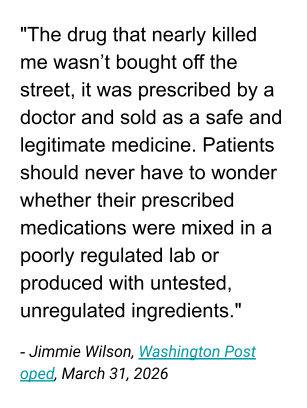
In 2025, JADA Foundation president Jimmie Wilson suffered acute liver failure and had to have an emergency liver transplant after taking prescribed tirzepatide compounded with vitamin B12, which she filled at a local compounding pharmacy in Lexington, Kentucky.
Wilson chose the compounded drug because it was less expensive, but she made that decision without knowing that:
- compounded medicine doesn't have the same safety profile as FDA-approved drugs,
- compounders often rely on non-FDA registered facilities to make GLP-1s, and
- they sidestep prohibitions on making copies of commercially-made medicines by mixing API with other substances even though no one has studied those drug combinations for safety.

Wilson at the Kentucky legislature in March. Photo: LinkedIn
Read Jimmie’s story in her words in the Washington Post.
Legislators are working to improve compounding safety
Kentucky's Representative Vanessa Grossl wrote and filed HB 729, which would require Kentucky's Board of Pharmacy to license and inspect businesses making or dispensing compounded prescription drugs, after learning about Jimmie Wilson. If that bill is passed, it would improve safety for Kentucky patients.
At the federal level, S.3794, the Safeguarding Americans from Fraudulent and Experimental (SAFE) Drugs Act of 2026, would protect U.S. patients by introducing tighter controls over compounding activity across the county. These include:
- Creating more precise legal definitions of “essentially a copy” and “commercially available drug product” so that 503A compounders cannot sidestep current definitions and mass-manufacture approved medicines;
- Capping the number of “essential copies” a 503A compounder can make each month at 20, and requiring reporting if they exceed this cap;
- Requiring the FDA to inspect outsourcing facilities before they begin large-scale compounding (defined as over 100 prescriptions filled for a particular product) and require re-inspection every two years; and
- Increasing the base outsourcing facility user fee rate to fund timely and regular inspections of outsourcing facilities.