
January 5, 2026: CBP Cincinnati intercepted $407,000 in illegally imported medical products, including contact lenses, injections, and oncology drugs
Major Stories
CBP reported seizing 450 shipments of illegally imported contact lenses and prescription medicines. Dozens of state AGs asked Meta to enforce policies against misleading weight loss products.

CBP's drug seizure photo showed unapproved lidocaine, hyaluronic acid and botulinum toxin injectables.
U.S. Customs and Border Protection (CBP) in Cincinnati, Ohio reported that CBP agents and Food and Drug Administration officers seized almost 450 shipments of illegally imported ophthalmology products and prescription pharmaceuticals in October. The products, which included contact lenses, GLP-1 medications, Botox, dermal fillers, skin care products, oncology drugs, and other FDA-prohibited substances, would have had a total retail value of $407,000.
Attorneys general in 33 states and the District of Columbia urged Meta to strengthen and step up enforcement of existing policies to suppress a surge of AI-driven marketing of weight loss products on its social media platforms. Read the letter here.

Share PSM’s intelligence alert about unlicensed medspas distributing uninspected and potentially unsafe diabetes and weight loss injectables.
Domestic News
A Washington doctor pleaded guilty to misbranding to defraud after supplying Medicaid patients with used and recalled breathing devices. FDA posted recalls for products with undeclared pharmaceutical ingredients and elevated lead.
Dr. Eric Edward Haeger of Brewster, Washington, pleaded guilty to adulterating and misbranding medical devices after billing Medicaid for over 500 used and recalled CPAP and BiPAP machines as new. Haeger and his staff used tools to remove the foam from the recalled devices, which were linked to health risks such as asthma, cancer, nausea, and inflammatory response, before distributing them to Medicaid patients.
Obesity researcher Randy Seeley, who finds research peptides don't always work as expected when he uses them in his University of Michigan lab, expressed alarm in The Atlantic over people using research-grade retatrutide—an unapproved weight-loss injectable—stating, “this stuff just scares the crap out of me.”
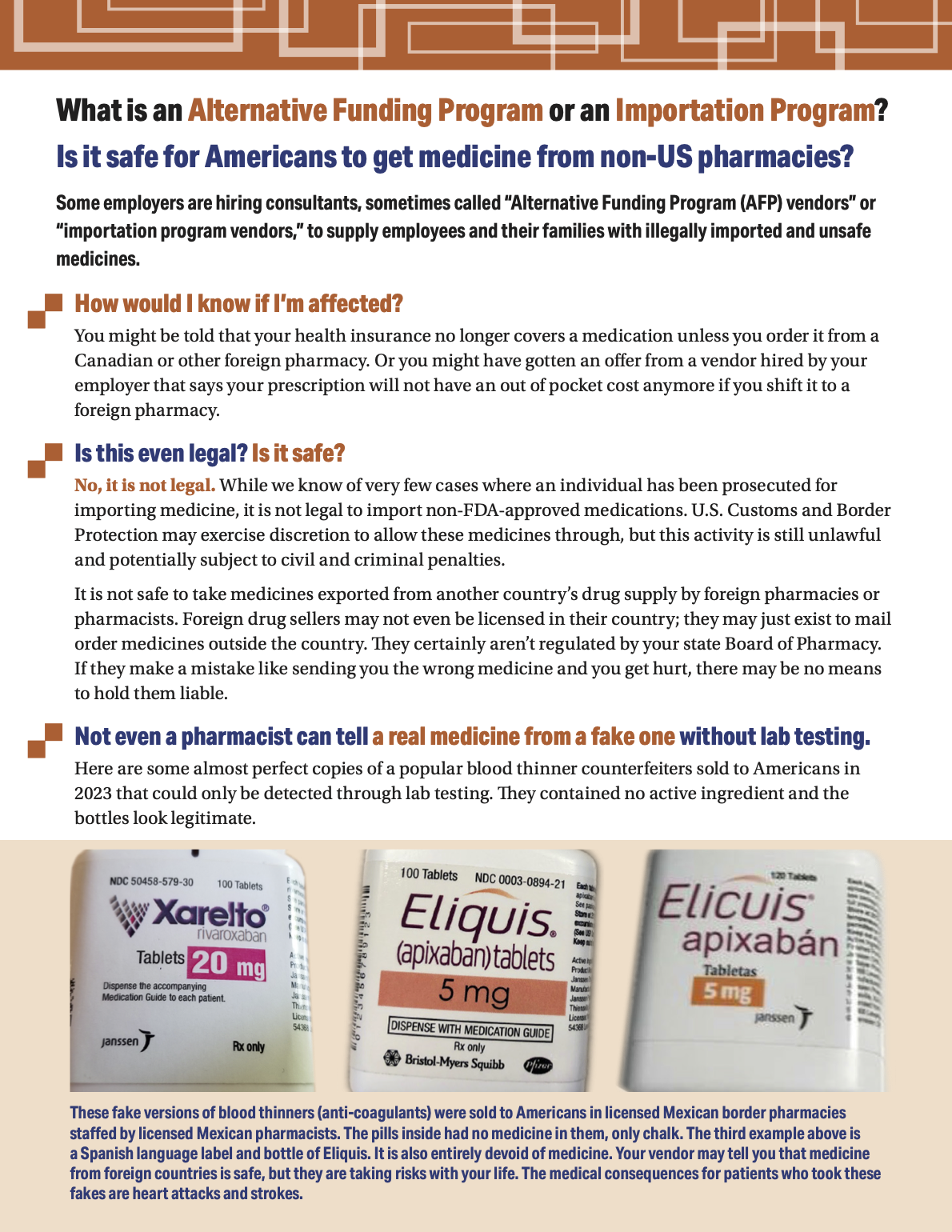
Wisconsin Public Television aired a story about self-funded health plans that have denied patients coverage for lifesaving medicine with fatal consequences. These plans sometimes outsource prescription drug coverage to alternative funding programs that supply patients with non-FDA-approved, imported medicines.
A woman in Sugarland, Texas, was charged with practicing medicine without a license after a client she allegedly injected with counterfeit Botox and Juvederm sought emergency hospital treatment for facial nerve palsy.
Officers seized four pill presses and over a kilogram of illicit drugs while dismantling a pill press operation in Jacksonville, Florida. A second, unrelated drug bust in Baton Rouge, Louisiana, yielded a pill press with fentanyl residue.

Regulators protecting patients in the news

The FDA posted recalls for a supplement that contained undeclared erectile dysfunction drugs, surgical packs for eye surgery that may not be sterile, and a supplement for joint pain with elevated lead levels.
The agency also issued warning letters to a variety of drug and supplement makers, among them
- a Florida company that the FDA says supplied compounders with adulterated raw ingredients shipped by multiple companies listed on the agency’s import alerts,
- a Delaware company selling children's supplements made with undeclared ibutamoren mesylate, a non-FDA-approved ingredient that can cause serious side effects, and
- a compounding pharmacy in Texas for current good manufacturing practice violations.
International News
The WHO issued an alert about a counterfeit cancer treatment. Health Canada seized unauthorized drugs from two stores in B.C.
The World Health Organization warned that counterfeit Ibrance, which treats advanced breast cancer, had been found in Cote d’Ivoire, Egypt, Lebanon, Libya, and Turkey in November 2025.
Health Canada seized unauthorized medicines, such as injectable peptides, anabolic steroids, testosterone, oral semaglutide, finasteride, albuterol, clenbuterol, Accutane, ivermectin, and other prescription drugs from two stores in British Columbia.

Images of the counterfeit Ibrance the WHO warned about in December 2025
A United Kingdom court sentenced four men who sold £4.3 million in counterfeit medicines on the dark web and via Telegram to a cumulative 40 years in prison.
Police in Delhi, India, arrested two men during the bust of a printing operation that allegedly supplied packaging for counterfeit medicines and cosmetic products.