
April 27, 2026: Physician who illegally imported weight loss drugs gets probation
Major Stories
A former emergency room doctor in Pennsylvania was sentenced to two years of probation and fined $1,000 after pleading guilty to delivering illegally imported weight-loss drugs to coworkers. The doctor admitted to buying tirzepatide from a lab in China and distributing it without medical evaluations, saying she intended to help colleagues improve their health. The case highlights how even trained physicians may underestimate or ignore the risks of unregulated, imported medicines. According to the Tribune-Review, the physician has since lost her job, faces medical board probation and civil penalties, and is being sued by a former hospital employee who alleges the drug caused life-threatening complications requiring major surgery.
Domestic
“Secret shopper” study finds compounded weight loss drugs are still widely available at clinics and med spas. A South Carolina man was sentenced for a scheme involving seven pill presses.
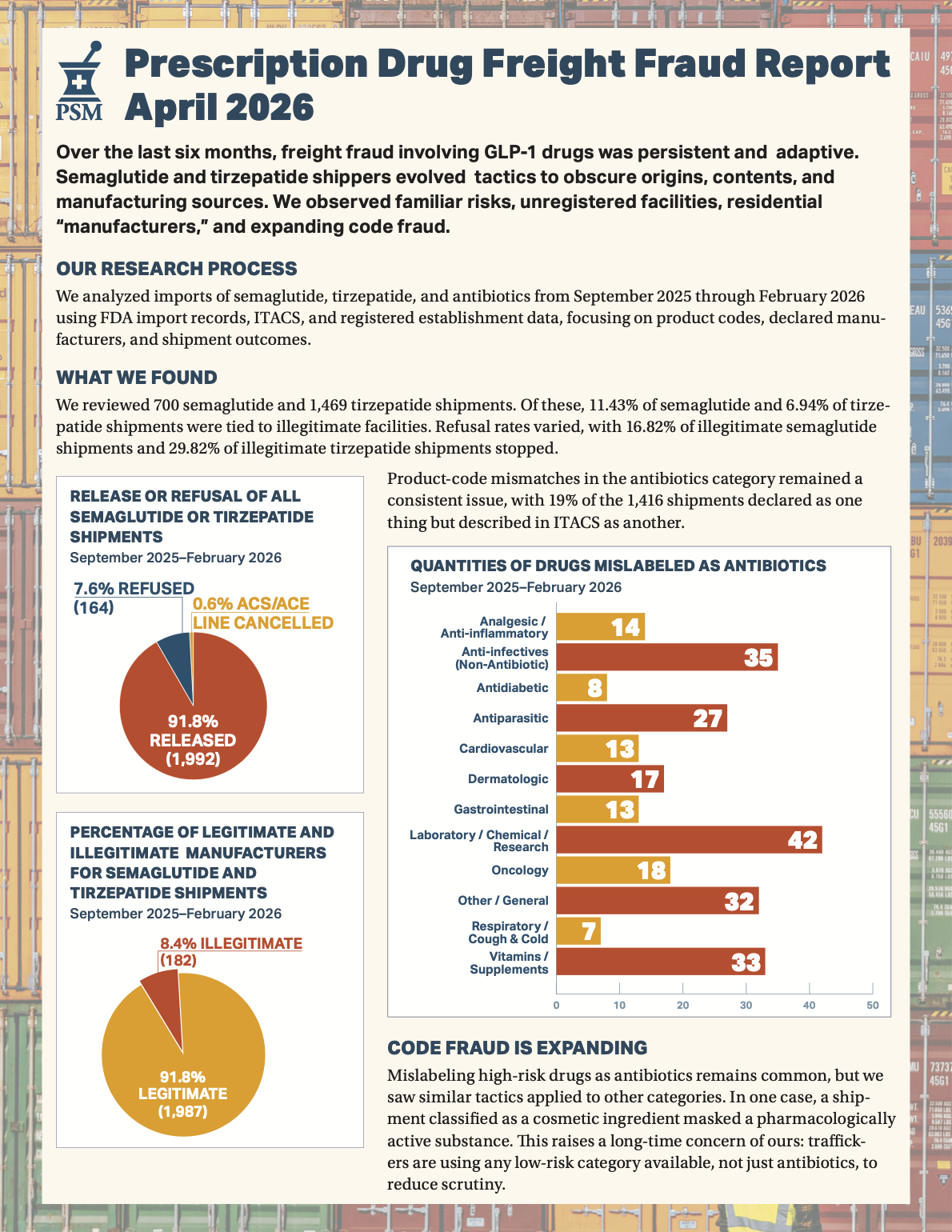
PSM's report on prescription drug freight fraud found that shipments of high-demand drugs like semaglutide and tirzepatide are increasingly using deceptive tactics, such as falsified product codes, mismatched shipment descriptions, and fake manufacturer addresses (including homes, pharmacies, and even hotels), to obscure their origins and bypass regulatory oversight, highlighting ongoing risks from unregistered facilities and illicit supply chains. Read the full report here.
A new study, which utilized “secret shopper” tactics, found that compounded GLP-1 weight loss drugs remain widely available at clinics and med spas despite the end of shortages. Investigators discovered inconsistent compounding practices, including varying drug formulations with additives, gaps in sterile compounding licenses, and facilities with regulatory warnings or disciplinary actions. Compounded drugs are not FDA-approved, and copies of commercially available drugs are only legal when those drugs are in shortage, which semaglutide and tirzepatide are not.
A South Carolina man was sentenced to 25 years in federal prison for running large-scale drug trafficking operations. Prosecutors say the man manufactured hundreds of thousands of counterfeit pills laced with fentanyl in labs, one of which contained 7 pill presses. Authorities also seized 150,000 pills made to look like Roxicodone, 30 kilograms of fentanyl, pill stamps, and pill binders during the investigation.
Prescription drug affordability boards (PDABs) continued advancing drug cost oversight efforts in February and March, with states like Maryland advancing upper payment limits for major drugs, while others focused on building review frameworks and future cost controls. Read more for a closer look at how each state is pursuing drug price controls.
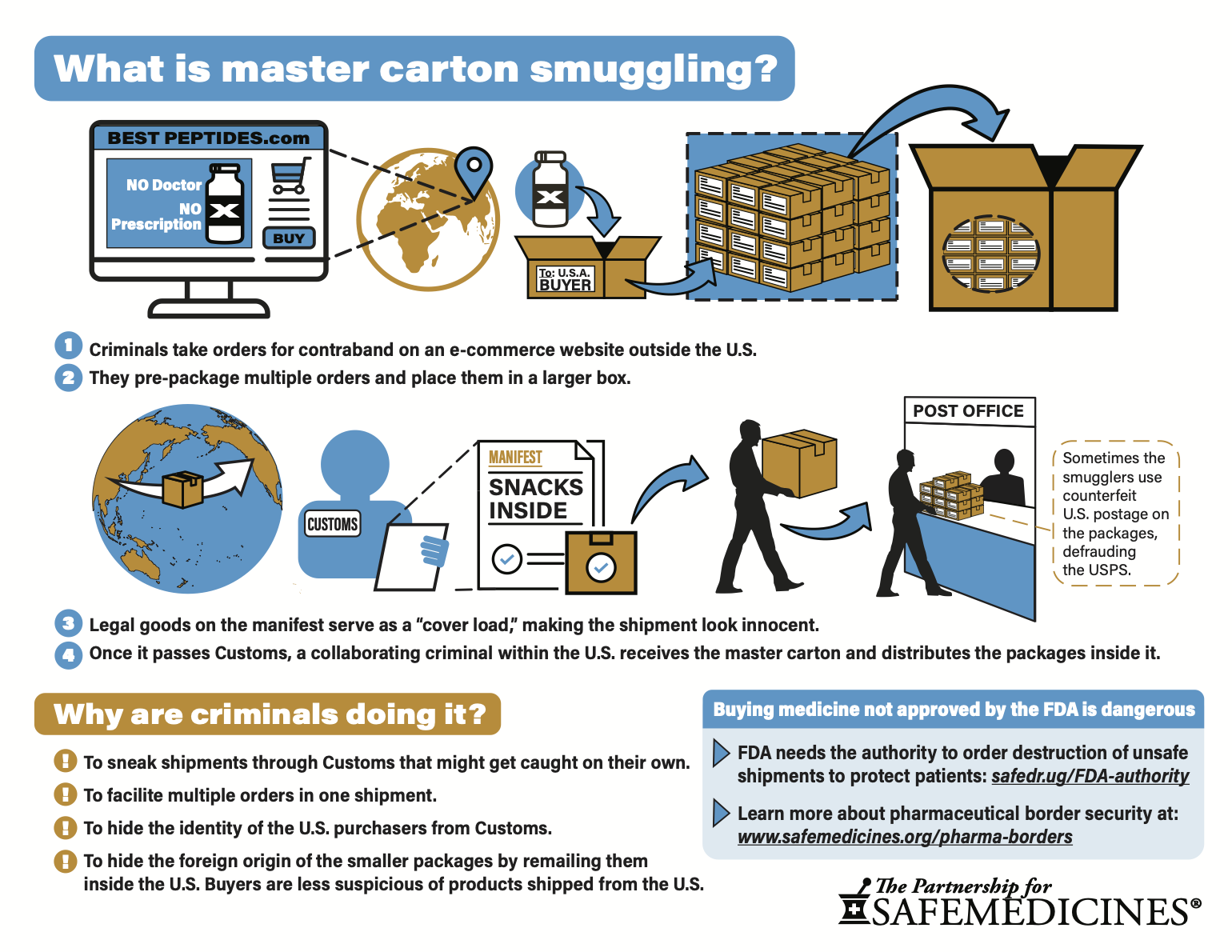
PSM created a shareable post that explains “master carton smuggling,” a tactic where traffickers bundle thousands of smaller drug shipments, such as GLP-1 medicines, into large cartons with misleading labels to evade customs detection, then distribute the concealed packages domestically, allowing them to hide origins, bypass inspections, and obscure illegal supply chains.
Regulators protecting patients in the news
The FDA issued three warning letters to compounding facilities producing sterile drugs, including injectables, ophthalmic solutions, and weight loss drugs. The agency cited serious safety and regulatory violations, particularly involving sterile drug production issues such as unsanitary conditions, inadequate aseptic practices, and poor environmental monitoring. All three also distributed unapproved or misbranded products, and while each initiated recalls over sterility concerns, the FDA said fixes were incomplete, highlighting ongoing risks in the compounding sector.
The FDA warned New Jersey-based New Life Pharma for manufacturing and distributing unapproved injectable weight-loss drugs, including semaglutide and tirzepatide vials, while failing to properly register, list, or follow basic safety standards. Inspectors found major sterility and quality control failures and said the company blocked parts of the inspection, prompting multiple recalls.
The FDA warned a Chinese manufacturer after finding pests, mold, contaminated equipment, and standing water at its facility producing drug products such as mentholated cough drops. The letter also cited falsified records and data integrity issues, prompting a recall.
The FDA issued a warning letter to UCSF’s radiopharmaceutical facility for serious regulatory failures, including inadequate investigations of sterility test failures and weak environmental monitoring systems. The agency said these issues could compromise sterile radiopharmaceutical products and raised concerns about data integrity, delayed investigations, and insufficient quality oversight.
The FDA issued a warning letter to a Michigan manufacturer for significant violations in the manufacture of sterile injectable drug products, citing poor aseptic processing line design, excessive manual interventions, and inadequate environmental monitoring that put product sterility at risk. The agency also identified serious failures in visual inspection for particulates and overall quality system controls, leading to concerns that distributed products may be adulterated and not reliably free of contamination.

Read FDA's March 2026 letter to Xiamen Kang Zhongyuan Biotech.
The FDA issued a warning letter to a Florida manufacturer of tattoo numbing sprays for marketing unapproved and misbranded lidocaine-based topical anesthetic sprays and for failing to comply with CGMP requirements, particularly around product testing, raw material verification, stability data, and manufacturing controls.
Finally, the FDA issued a letter to a company selling nasal cleanser, warning that the product is an unapproved new drug being unlawfully marketed in the U.S. with disease-prevention and treatment claims.
Legislation
Two bills in Colorado failed last week. The first, SB140, which would have exempted drugs for rare disease treatment and biologics from being considered in PDAB affordability reviews, was postponed indefinitely by the House Committee on Health & Human Services. The second failed bill, SB130, which required med spas to designate a licensed provider to provide oversight of the clinic, report adverse events, and create storage and acquisition requirements, was postponed indefinitely in the Senate Committee on Health & Human Services.
Keep up with state legislation in the areas of pill presses, prescription drug affordability boards, drug importation, and med spas.
International
Experts warn against generic weight loss drugs from abroad. Pakistan alerts the public to six common medicines found to be counterfeit or substandard.
In the U.K., an expert is raising concerns that the grey market for cheap, unregulated weight loss drugs will explode as several countries' patents expire in the next year. Dr Sophie Dix, head of Medical Affairs at MedExpress, explains that even though a drug may be legitimately manufactured abroad, “once you step outside of a regulated pharmacy, it becomes nearly impossible for a consumer to distinguish a legitimate unlicensed import from a dangerous counterfeit.”
Pakistan’s Drug Regulatory Authority issued an emergency alert after six commonly used medicines in Punjab were found to be counterfeit or substandard, warning the public to stop using them immediately due to serious health risks.