Peptide therapies — popular, unproven, dangerous
Peptides are short-chain amino acids used in approved medicines like insulin and GLP-1s, but also in a wide variety of substances that haven't been clinically studied or reviewed by regulators. They have gained online popularity for unproven claims around things like anti-aging, healing and pain relief, but they lack a secure supply chain, and researchers have expressed concerns about unanticipated negative health effects, including increased cancer risks.
The five risks of taking untested peptides
The U.S. Food and Drug Administration’s Pharmacy Compounding Advisory Committee (PCAC) is reconsidering adding a dozen peptides—seven in July; another four next February—to its Section 503A bulk drug substances list after excluding them over safety concerns in 2023.
The review is happening at a time when Americans are turning to peptides at an unprecedented rate, driven by grifters in the online wellness space, who push these products for a profit without any clinical evidence they are either safe or effective.

What’s risky about peptides?
1. Insufficient testing
No data to show they are safe or effective: Most of these substances are not clinically tested on humans, and none of them have undergone the extensive trials required to gain FDA approval as a medicine. Data about their effectiveness, potential for harm, and appropriate dose is insufficient. Peptide users experimenting on their own bodies isn’t adding to reliable, systemic knowledge. Turning them loose on the world and waiting for reports of adverse events is not the same or as safe as a controlled clinical trial. Opening these substances up to bulk compounding is basically a massive, unsafe, human experiment.
How you administer a medicine matters a lot: Rigorous clinical studies help determine the safety and efficacy of different routes of administration for a substance—and that can really matter. For example, inhalers are the preferred route of administration for the asthma treatment albuterol because they are faster acting at a lower dose than tablets or liquid, which are more likely to cause serious side effects like headaches or tachycardia.
What's risky about peptides?
- Insufficient testing
- The risk of counterfeits
- Sterility failures and manufacturing impurities
- Potential drug interactions
- Unknown long-term effects
More peptide safety resources
- Blog by Dan Burke, former FDA federal agent
- PSM's submission to the FDA Pharmacy Compounding Advisory Committee July 23-24 meeting.

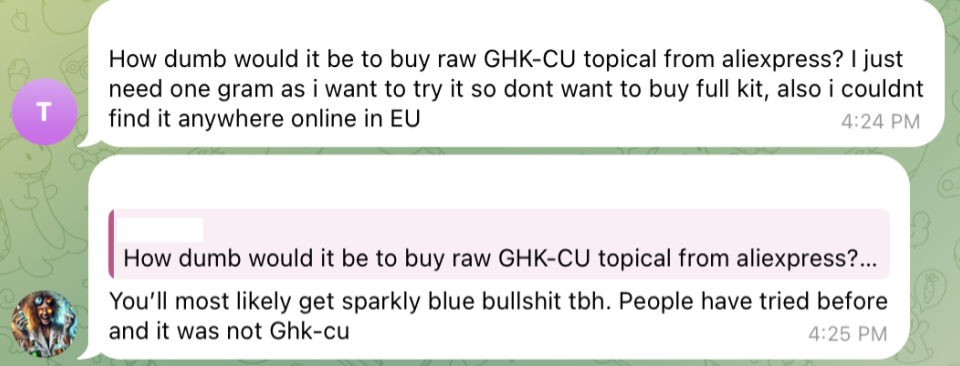
Telegram post, May 2026
The lack of data is clear in posts like this one, about GHK-Cu, a copper peptide which the PCAC will review in February. The substance has been tested for topical use in cosmetics, but injection trials have been limited to rats, mice, dogs, in vitro cells, and lungs removed from transplant patients. That hasn’t kept peptide sellers from marketing GHK-Cu for injection, however, even though no one really knows what the right dose is, what it does, or whether it will harm people.
2. The risk of counterfeits
The law requires compounders to source bulk ingredients from FDA-registered entities and this offers some assurance of safe sourcing, but these bulk ingredients aren’t included in the track-and-trace system.
You might think that buying peptides from a licensed compounding pharmacy means they only distribute legal substances, but as more and more licensed compounding pharmacies get caught distributing products made from illegal ingredients, we see that money sometimes trumps safety.
Licensed entities have been caught cutting corners
Recently, several licensed compounding pharmacies and their ingredient wholesalers were sanctioned for distributing illegal peptides and peptide ingredients not allowed in compounding.
- FDA-registered compounding ingredient supplier Darmerica was cited by the FDA for distributing unapproved peptide ingredients that aren’t legal for use in compounding to licensed compounding pharmacies in the U.S.
- Ohio’s Board of Pharmacy sanctioned Florida-based Brooksville Pharmaceuticals, which had shipped 153 prescriptions for retatrutide into the state over a year. The pharmacy agreed to pay a $250,000 fine.
- Indiana’s Board of Pharmacy declined to renew a pharmacy license for CRE8 Pharmacy Group, which had acknowledged compounding retatrutide.
The bottom line is that you can no longer assume a peptide compounded by a licensed pharmacy is legally permitted. Some parts of the industry are cutting corners on safety in pursuit of profit.
Unlicensed entities are also a problem and have very legitimate-looking marketing
Alongside licensed pharmacies compromising safety are many unlicensed vendors illegally operating in this space. That leaves the peptide supply chain vulnerable to bad actors, such as one peptide distributor who was sentenced for providing Americans with untested products sourced from unverified Chinese laboratories while falsely claiming adherence to U.S. standards. Federal authorities also recently indicted a Utah doctor, alleging comparable misconduct.
Telegram post, January 2026
Cases like these are especially troubling given reports from a Texas lab that a third of the peptide samples they test fail identity, purity, or quantity checks. Furthermore, a registered API supplier on the FDA’s Green List recently received an FDA warning letter for repackaging and selling substances from other sources as their own, showing that even diligent compounding pharmacies may struggle to acquire safe ingredients.
There is a significant risk that peptide buyers—whether they’re individual users or compounding pharmacies—are receiving bulk substances that aren’t what they say they are. At best, they may receive counterfeits that don’t work, wasting money; at worst, fakes could actively harm people who take them.
3. Sterility failures and manufacturing impurities
Another major concern when it comes to peptides is manufacturing quality. In April 2026, for instance, the FDA issued a warning letter to Hangzhou Yiqi Biotechnology Co., a Chinese API producer that makes unfinished bulk peptides like BPC-157, CJC-1295, Ipamorelin, Tesamorelin acetate, and TB500 acetate. The letter found major sterility violations and added it to an import alert denying its products entry into the U.S.

Reddit exchange, April 2026
Other FDA warning letters cited manufacturers of products that contain peptides for failing to test ingredients for purity, strength, and quality; for selling eyedrops with “gross microbial growth” that could lead to “life-threatening infections,” and for failing to investigate complaints about contaminated products. The agency also sent a letter to a compounding pharmacy for making a variety of peptides in unsterile conditions.
The potential for encountering peptides with impurities is exacerbated in the existing market, which supplies current peptide users with research chemicals that don’t meet safety standards for human use. They’re often labelled “not for human use” even though sellers are fully aware that humans are injecting themselves with these products.
There is evidence that these impurities can seriously affect patients. A physician told the Wall Street Journal about a patient who experienced heavy metal poisoning from peptide injectables, the FDA’s Adverse Event Reporting System includes records of a life-threatening incident and a hospitalization linked to suspected contamination in BPC-157, and there are discussions on online forums about users suffering from endotoxin poisoning.
4. Potential drug interactions
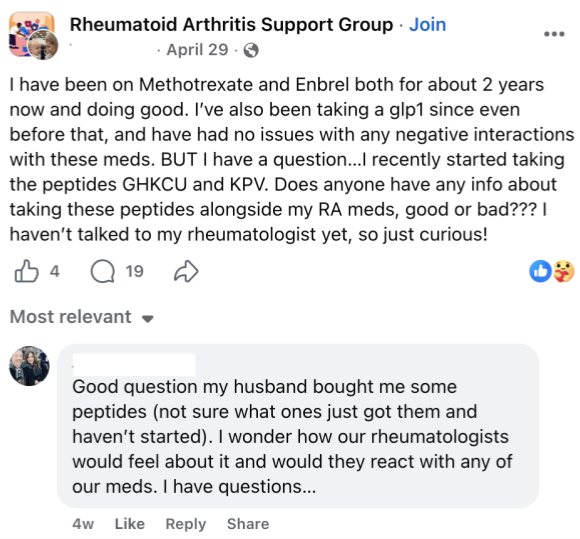
Lack of comprehensive study of the peptides on PCAC’s list means that the potential for and severity of drug interactions are not well understood. When they are understood, there’s no requirement or oversight to make sure products are sold with labels warning patients about those interactions.
Social media is full of conversations between people using peptides, usually with little medical oversight, consulting each other about risks and interactions. The majority of people using peptides are probably not consulting Reddit for these answers, and patients should not be crowdsourcing answers to important safety questions.
Facebook, April 2026
5. Unknown long-term effects
Research deficiencies also mean a lack of information about the long term effects these substances may have on human bodies. One expert noted that TB-500 was found to accelerate tumor growth in animal experiments, that other growth-related peptides might carry the same risk, and that other peptides could cause hormonal imbalances. Health Canada also warned about these risks, as well as the potential for mood swings, blood sugar imbalances, liver or kidney damage, and blood clots. An account from a Texas physician regarding a young patient who developed premature insulin resistance after using a peptide designed to stimulate growth hormones supports these concerns.
Use of peptides (or any drug) has the potential to permanently change how your body works. If you stop taking the peptide, the change may remain permanently; your body may not return to its pre-experimental state.
Conclusion
Peptides (and in fact any substance) pose substantial public health risks stemming from five critical safety deficiencies: inadequate human clinical data to determine efficacy and appropriate dosing; a vulnerable supply chain susceptible to counterfeits and illicit sourcing; pervasive manufacturing quality failures, including documented sterility breaches and heavy metal contamination; a lack of comprehensive understanding regarding drug interactions; and unknowns surrounding long-term physiological consequences.
Keep yourself and your loved ones safe and don’t experiment on yourself.
Related from PSM
Weight-loss medications can be life-changing when appropriately prescribed, but vulnerable patients need safeguards, too.