
Fishy Peptide Freight: What Q1 2026 import data reveals
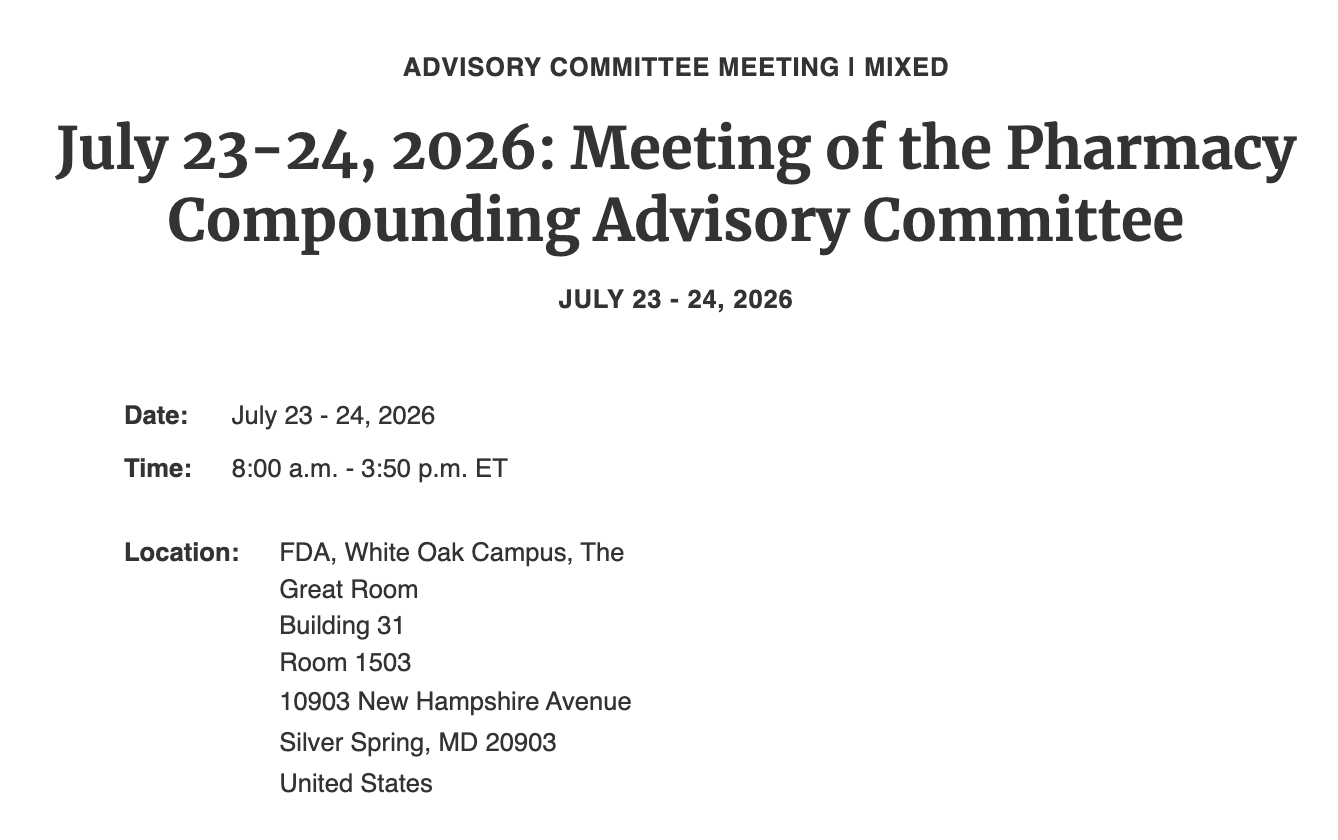
The peptide landscape is moving at lightning speed. Following HHS Secretary Robert F. Kennedy Jr.’s vocal criticism of the FDA's compounding rules, the agency recently removed several highly popular, unapproved peptides from its restrictive "Category 2" list. This summer, the Pharmacy Compounding Advisory Committee (PCAC) will meet to evaluate whether these substances can formally return to licensed U.S. compounding pharmacies.
The legal framework around compounding restricts the activity to very narrow uses when a commercial medical product is not suitable. It does not allow for ad hoc distribution of new, unapproved medicines. Some compounders have violated the law, sourcing active ingredients from uninspected overseas facilities and distributing them in the U.S. Leveraging our ongoing research into freight fraud, we analyzed U.S. import data for "peptides n.e.c." (not elsewhere classified) from January 1 to March 31, 2026, which offer insight into the massive volume of weight-loss giants hitting our shores, the shaky supply chains of upcoming PCAC agenda items, and whether customs officials are actually stopping bad shipments.
Our high-level findings
Between January and March, U.S. ports saw a steady volume of peptide shipments, but a massive portion of one class of those shipments came from manufacturers that operate entirely outside of FDA oversight, lacking both facility inspections and explicit approval to import drugs into the United States. Of the 127 shipments of peptides into the country, 50 of them (39.37%) originated from illegitimate manufacturers.
Of the 127 shipments, only 15 (11.81%) were stopped at the border. However, enforcement was highly targeted: two-thirds (10 out of 15) of the shipments refused came from these illegitimate sources.
Important caveats to keep in mind:
- The Invisible Market: This data only tracks declared legal imports. It cannot capture materials being smuggled into the country. CBP has documented one of these smuggling supply chains. There are certainly many more.
- The Registration Loophole: An "FDA-registered facility" does not mean the FDA has verified or approved that specific facility to manufacture peptides (or anything else), only that the FDA knows of its existence.
Weight loss drugs
When we look at the Import Trade Auxiliary Communications System (ITACS) to see the specific contents of the package, we can extract more information about what the drug is and how much each shipment contains. Despite immense scrutiny of compounding, massive bulk orders of blockbuster weight-loss and anti-obesity peptides flowed across the border virtually untouched.
Retatrutide, an investigational Eli Lilly obesity and diabetes drug, has become immensely popular online. 11 retatrutide shipments entered the U.S. from China in Q1. Some were declared to be multiple kilograms, and all the facilities shipping them were registered with the FDA. Retatrutide is still undergoing clinical evaluation, and bulk imports by third-party entities pose a significant patient safety risk.
Because we assume Lilly’s investigational drugs are not using this supply chain, these are likely destined for black-market retatrutide sales. The data shows at least eight of these black-market shipments were released directly into the U.S. supply chain.
The data also show several shipments of semaglutide and tirzepatide, the active ingredients in the popular diabetes and weight loss medicines made by Novo Nordisk and Eli Lilly. All of the 12 tirzepatide shipments and three semaglutide shipments came from registered manufacturers in China. Many of these products were multiple kilograms in size, and over half were marked as being intended as active pharmaceutical ingredients. All 15 shipments were released into the US.
The PCAC agenda items
Peptide shipments scheduled for the upcoming PCAC review were heavily plagued by unverified manufacturers and much more likely to be scrutinized at the border, which led to high refusal rates.

Half of the manufacturers of BPC-157 were registered with the FDA, but that doesn’t make this product safe. It’s banned for use in sports by the World Doping Agency, and has only been studied in animals and fewer than three dozen human beings. The unexpected medical events you might experience are entirely unknown.
One shipment included what influencers have dubbed the “Wolverine Stack” (BPC-157 combined with TB-500) from an illegitimate Canadian supplier, Nordwellness. That shipment was released into the country. Meanwhile, an Australian compounding pharmacy attempted to ship Epitalon, but was refused twice.
Off-agenda findings
In addition to peptides set to be discussed in July, import logs also revealed several peptides that aren’t FDA-approved and are not currently on the immediate PCAC agenda. These are actively moving through the supply chain.
- N.A.D. (Nicotinamide Adenine Dinucleotide): A single, one-kilogram shipment arrived from a registered Chinese manufacturer and was released into the U.S.
- CJC-1295: Two shipments arrived from a registered manufacturer in China, including one batch marked as API. Both were released.
- Thymosin Alpha 1: Four smaller shipments were tracked. The two originating from a registered Chinese manufacturer were released, while the two sent by the unverified Australian compounding pharmacy were promptly refused.
- TP-7: A small shipment of TP-7 (Selank) from an illegitimate Polish manufacturer was released.
- VRB-101: Two large shipments moved smoothly through registered Swiss pipelines.
Takeaways
- The shipments represented here cannot account for the popularity and prevalence of these peptides being offered in med spas, on TikTok, and other medical practices in the U.S. The shadow supply chain must be multitudes larger than the shipments that sneak through the FDA’s freight system.
- The Q1 2026 data shows a clear divergence at the border. While massive, multi-kilo bulk orders of mainstream metabolic giants are flowing into the country virtually unchecked, customs enforcement is taking a much harder line on unapproved peptides like BPC-157, Epitalon, and TB-500, especially when tied to unverified or international compounding sources.