
Safety risks in the GLP-1 market: an update on weight loss medication, May 2026

Drug shortages and coverage gaps have led to criminal counterfeiters exploiting Americans’ demand for blockbuster diabetes and weight loss drugs made with semaglutide and tirzepatide. Meanwhile, compounders, telehealth companies, and med spas have collaborated to meet high demand for weight loss injections and, recently, oral treatments, often straining and skirting regulations that protect the health of the public.
Dangers to American patients
Counterfeit GLP-1s
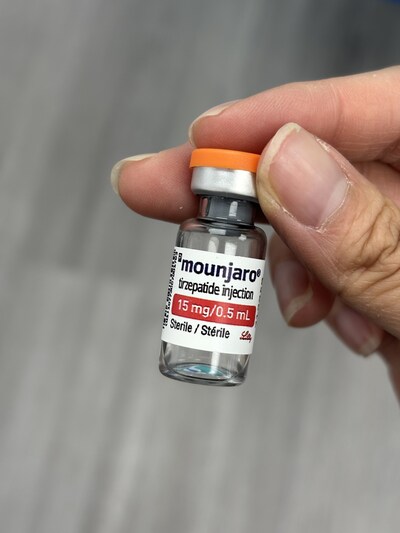
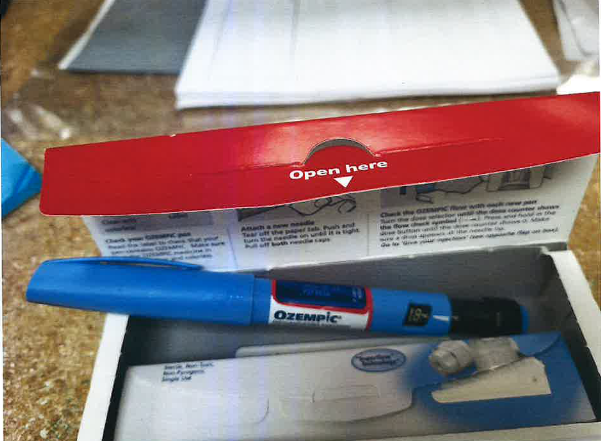
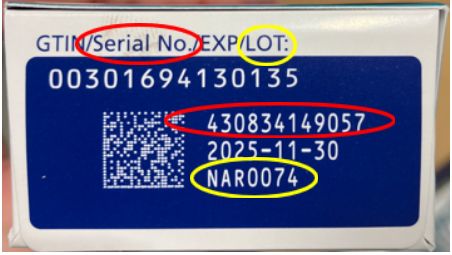
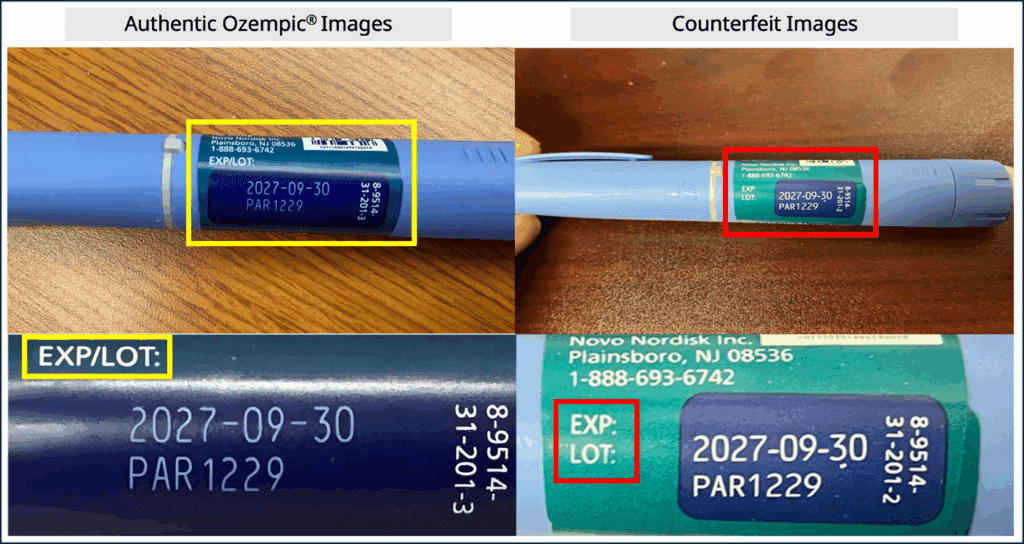
Ozempic and Mounjaro fakes have appeared in dozens of countries, including Mexico, Canada, and the U.S. Since 2023, the U.S. Food and Drug Administration has announced three seizures of Ozempic in the legitimate drug supply; pharmacies have quarantined fake Ozempic pens in their own stock; and customs has intercepted unapproved versions of semaglutide and tirzepatide in various forms. Individual Americans, however, have still suffered serious adverse events from fake versions of commercially-manufactured Ozempic they purchased outside the licensed supply chain.
-

Fake Mounjaro seized in Canada, 2026 (CNW Group/Health Canada) -
Ozempic quarantined in an Arkansas pharmacy, 2025 (Arkansas Board of Pharmacy) -
Fake Ozempic pens seized in Australia, 2024 (TGA) -
Customs in Cleveland seized these boxes of Ozempic in 2024 (CBP) -
The FDA warned consumers about fake Ozempic seized in the US in December 2023. -
FDA issued another warning in December 2025


Illicit online sales
Online sites sell substances claiming to be semaglutide, tirzepatide, and the experimental drug retatrutide, often sourced from foreign factories that aren’t registered with the FDA. These chemicals have no pedigree, but supplement and peptide vendors sell them, sometimes labeled for "research use only," and they are being acquired by both licensed and unlicensed compounders. Med spas and physicians have used them on patients, and a growing number of Americans are buying directly from Chinese peptide manufacturers via social media.

Weak oversight of mass-compounding, telemarketing, and medical spas
Regulators are struggling to monitor compounded semaglutide and tirzepatide production since some 503A “small” compounding pharmacies are now operating at drug-manufacturer scale. Compounders are bypassing existing rules to mass-produce GLP-1 weight loss shots for med spas and telehealth firms. The surge has revealed critical lapses in statute that leave regulators blind.
Unapproved ingredients: FDA import records and warning letters show that some compounders are ordering bulk ingredients from non-FDA-registered suppliers who could be selling anything. Independent quality testing of these mystery drugs is hindered by the lack of a U.S. Pharmacopeia reference standard for semaglutide and tirzepatide.
Untested drug combinations: Some compounders are sidestepping statutory limits by mixing semaglutide or tirzepatide with substances like NAD+ or B vitamins. Compounders claim that these products are tailored medicine for patients. However, an Eli Lilly study that identified chemical impurities in tirzepatide compounded with vitamin B12 shows that these are unapproved drugs with uncertain safety.
Failure to report adverse events: A November 2025 California Board of Pharmacy petition to revoke Empower Pharma's license cited numerous adverse effects, including three urgent care visits following semaglutide and B12 injections. The petition alleges Empower suppressed safety data. Since 2025, the FDA has also flagged compounding facilities for safety reporting failures, such as concealing a patient's hospitalization for gastrointestinal issues after using compounded semaglutide.

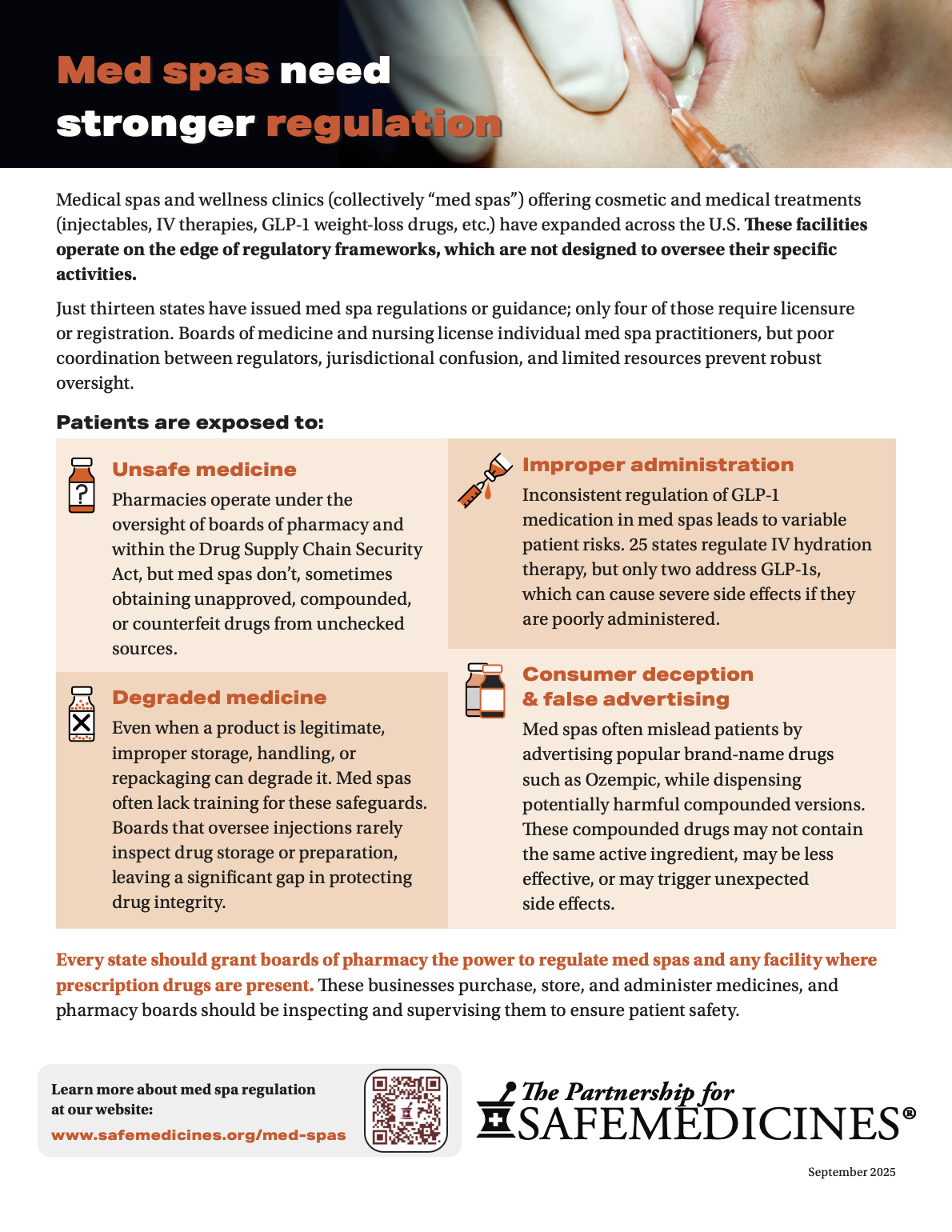
Weak oversight of med spas: Med spas offering weight loss shots often lack qualified staff and safe facilities, and have also sourced drugs illegally. Although states like Ohio and Indiana have passed laws to improve oversight, med spas are widely underregulated and thus unaccountable to authorities. Ohio’s board of pharmacy summarized common safety concerns at practices it had suspended here.
Deceptive marketing: Past advertising for compounded GLP-1s has misrepresented products. These ads falsely claim compounded medicines are identical to FDA-approved brands, even though the FDA has not evaluated the products or their active ingredients—which most American consumers don’t know. In February, FDA announced a crackdown on misleading marketing; the agency’s warning letter search shows that it has sent 88 letters about “false or misleading claims concerning compounded semaglutide and tirzepatide products” since September 2025.
Policy and legislative efforts to address the threat
FDA GLP-1 compounding guidance: In April, the FDA reiterated that state-licensed 503A pharmacies may only compound for individual needs without copying commercial drugs and that federally-registered 503B outsourcing facilities are limited to bulk compounding substances on the 503B bulks or drug shortage lists. Neither of these currently include semaglutide or tirzepatide. FDA is soliciting comments about excluding them, along with liraglutide, from the bulks list.The comment period ends June 30, 2026.
Some 503B compounders have already responded by curtailing their production. ProRx and, reportedly, BPI Labs, stopped producing GLP-1s in April; Medisource stopped in March, when its owner, Hims, agreed to stop selling compounded semaglutide products. Reddit posts show that a fourth 503B, Olympia Pharmaceuticals, officially exited the market in 2025.
The FDA also said it will not take action against 503A operations that fill four or fewer prescriptions that are copies of commercial drugs per month. It remains to be seen how avidly the agency will pursue 503As that are still filling telehealth and medspa orders.
Legislative efforts on med spa and compounding reform: In March, Indiana passed SB282, which requires medical spas to register with the state’s medical licensing board. It also strengthens requirements for ingredients that compounding pharmacists and physicians use and tasks the Indiana Board of Pharmacy with their oversight.
Legislation to strengthen med spa regulation is also being considered in Arizona, Iowa, and Massachusetts, but died in committee in Florida and failed in Colorado. Proposals for compounding reform are under consideration in California, Colorado and Kentucky.
At the federal level, Senator Banks of Indiana introduced S.3794, the SAFE Drugs Act, which would create tighter controls over compounding activity across the county.
Changes in the GLP-1 market
New FDA-approved GLP-1 pills. In April 2026, the FDA granted approval to two oral GLP-1 treatments, Eli Lilly’s Foundayo, made with orforglipron, and Novo Nordisk’s semaglutide pill, also called Wegovy. PSM anticipates that oral treatments will attract patients who were hesitant about injections and may spawn a new wave of counterfeits.
International activity broadens threats to U.S. patients. As generics for semaglutide become available in Brazil, Canada, China, India, South Africa and Turkey, personal importation may look enticing to Americans seeking lower costs. But in addition to being illegal, stepping outside the supply chain means patients can never be sure their medicine is genuine. British women have been harmed or even killed by black market “skinny jabs.” Sophisticated counterfeiting schemes have been caught in India and the United Kingdom, and authorities in Canada and elsewhere have reported fakes.
Notable
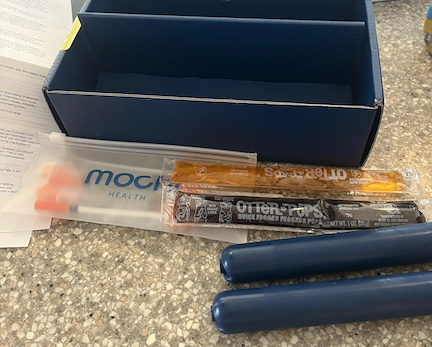
In 2024 a Reddit user shared images of their Mochi Health shipment, which had been cooled with popsicles.
Raid revealed safety failures at a Mochi Health-affiliated pharmacy: According to a King5 report on a March 2025 Washington State Department of Health raid, 503A compounder Aequita Pharmacy illegally imported cheap GLP-1 bulk ingredients to save costs. The pharmacy allegedly used non-pharmacists to make injectables, employed day laborers for packing, and substituted medical-grade supplies with Alibaba vials and frozen Otter Pops. Staff attributed these safety failures to time pressure from Mochi Health
Patient harm stories have emerged: Evidence of harm from compounded GLP-1s is growing. Kentucky resident Jimmie Wilson required a liver transplant after four weeks of using compounded tirzepatide/B12. A Texas family is suing Empower Pharmacy after their loved one died after using semaglutide/B12 injections that, according to California authorities, also sickened patients in 2023. Other patients in Illinois and North Carolina were hospitalized following injections.
