
May 26, 2026: Maryland PDAB passes a price cap on Ozempic, as Virginia’s governor questions board efficacy.
Major Stories
Maryland’s Prescription Drug Affordability Board (PDAB) established the state's second price cap. Virginia’s governor vetoed a bill for a similar board, citing concerns about the cost to establish the program.
On May 18, 2026, Maryland’s PDAB passed a measure to establish an upper payment limit on Ozempic. Set to take effect in January 2027, the drug’s price will be capped at $274 for a 30-day supply, a figure based on the maximum fair price (MFP) paid by Medicare, for state and local governments. In their April meeting, the PDAB also capped prices on Jardiance based on Medicare’s MFP.
The board, established in 2019, has spent millions and only recently began implementing upper payment limits after years of meetings and debate. Critics argue the process has been slow and ineffective, a point echoed by the board chair in November 2025, pointing to cases like Farxiga, another diabetes medication considered for a cap in April 2026, where more than a dozen FDA-approved generics entered the market before the board could act, driving prices down through competition instead.
That debate is also playing out in Virginia, where Governor Abigail Spanberger recently vetoed the highly anticipated PDAB bills in her state. In her veto memo, Spanberger said the boards “are expensive undertakings that other states have either repealed or are considering repealing due to costs and ineffectiveness.” According to the bill’s fiscal statement, the bill would have cost taxpayers $21 million through 2031.
In April, the Governor proposed several amendments that the General Assembly ultimately rejected, including requiring the state to study a reference-based pricing system before spending millions on implementation and giving the Attorney General greater authority to investigate anticompetitive behavior between pharmaceutical manufacturers and insurance carriers. Since taking office, Spanberger has signed bills to hold pharmacy benefit managers accountable and to require insurance carriers to offer plans that cap out-of-pocket drug costs.

Learn more about upper payment limits and why they're not effective drug affordability solutions here.
Domestic
News about pill press prosecutions in Arizona, Indiana, and Pennsylvania.
Federal authorities sentenced four Indianapolis men for ties to a counterfeit pill trafficking network. During coordinated raids in 2024, investigators recovered large quantities of counterfeit oxycodone pills, fentanyl, and a pill press used to manufacture illicit pills.
An Arizona man was arrested after a search warrant led detectives to an industrial-sized pill press, M30 dye, suspected cutting agents, and about 2.2 pounds of methamphetamine. Investigators also found what appeared to be a fentanyl pill conversion lab on the man's property.
A Pennsylvania man was found guilty of possessing methamphetamine for distribution after a search warrant of his house revealed an automated pill press, other items used to manufacture illicit pills, and over 1000 pills containing meth and controlled substances.
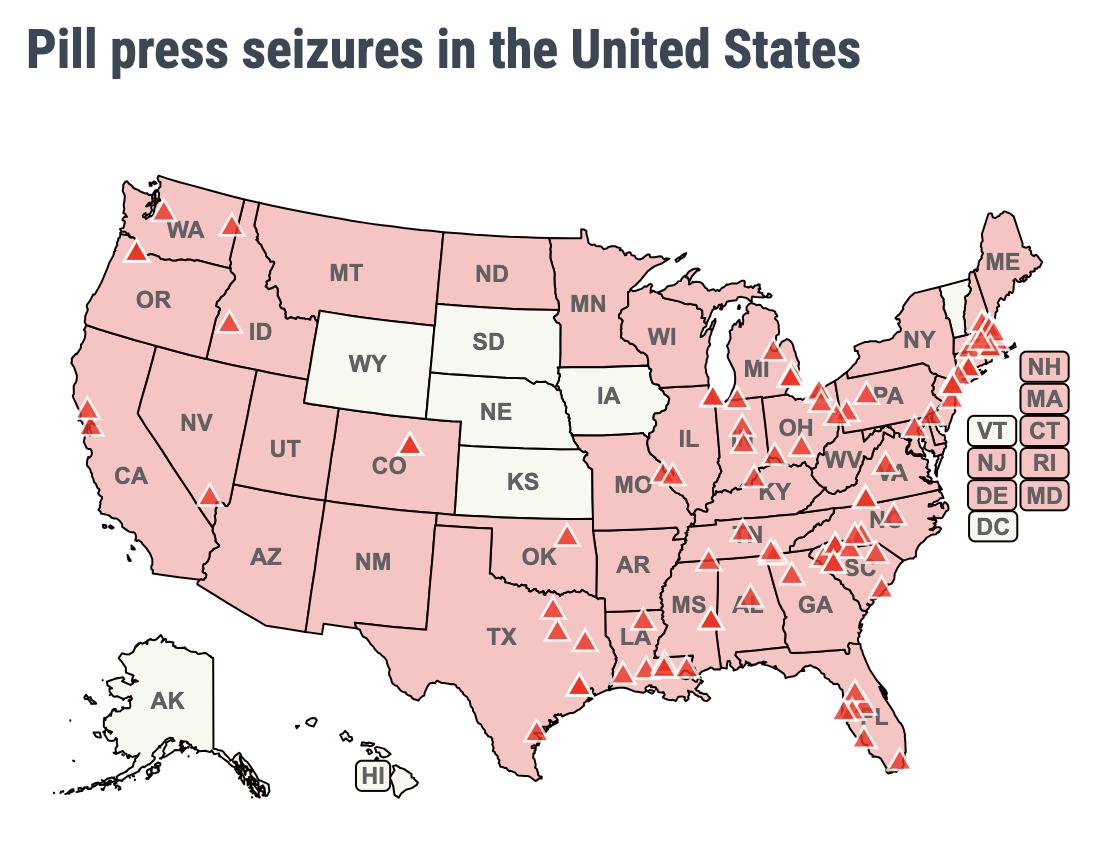
Illicit pill presses have been seized in 42 states. TYack the state of the issue in our semi-annual update.
Regulators protecting patients in the news
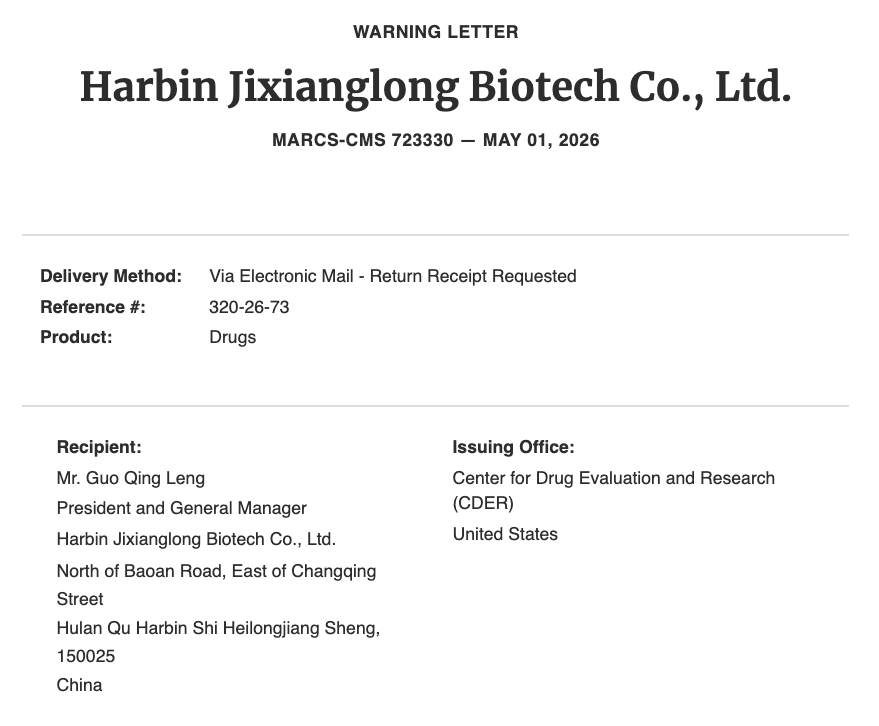
The FDA sent a sweeping warning letter to Harbin Jixianglong Biotech Co., a Chinese semaglutide API manufacturer previously included on the agency’s “green list,” after inspectors found the company purchased semaglutide API from unauthorized suppliers, relabeled it as its own product, and shipped it into the United States. FDA investigators also uncovered extensive manufacturing and quality control violations, including poor cleaning controls, incomplete testing methods, and insufficient microbial and endotoxin monitoring. The agency ultimately removed the company from the FDA’s green list, placed it on import alert, and oversaw a voluntary recall of two semaglutide API batches already distributed in the U.S.
The FDA also sent a warning letter to Hangzhou Yiqi Biotechnology Co., a Chinese peptide API manufacturer, citing significant CGMP violations, including a lack of validated analytical testing methods, failure to maintain adequate stability testing programs, and failure to properly monitor water systems. As a result, the agency placed all drugs and drug products from the company on Import Alert 66-40 in January 2026. The company’s NDC listing includes unfinished bulk peptide ingredients, including substances such as BPC-157, CJC-1295, Ipamorelin, Tesamorelin Acetate, and TB500 Acetate.
A Texas manufacturing facility was warned for major quality-control failures involving OTC drug production, including inadequate ingredient testing and poor process validation. The agency also warned a Michigan-based company over its product, which the FDA said was illegally marketed with claims that it could prevent infections and sanitize nasal passages despite lacking FDA approval. FDA also warned Minnesota and Texas-based firms after testing found high levels of mercury in their skin-lightening and acne treatment creams.
International
Five deaths of pregnant women in India linked to fake oxytocin injections. UK officials warn of possible botulism cases. Enforcement actions in India, Nigeria, and Zimbabwe uncovered illegal drug manufacturing networks.
A suspected fake batch of oxytocin injections used in government hospitals in India has been linked to the deaths of at least five pregnant women, who developed sudden and severe complications within hours of C-sections, including drastic drops in blood pressure, falling platelet counts, and signs of kidney failure. The tragedy triggered a statewide ban on oxytocin, the seizure of hospital stocks, and a high-level investigation, amid wider revelations that multiple essential medicines across the state have recently failed quality checks.
UK health officials warned about possible botulism cases linked to cosmetic “beauty jab” treatments involving botulinum toxin, with patients reporting symptoms such as drooping eyelids, difficulty swallowing, and double vision. The UKHSA is urging people to seek care if symptoms develop and to only use licensed practitioners amid a broader rise in cases tied to unlicensed or counterfeit injections.
Pakistani authorities issued a high-level alert after identifying counterfeit G-Tax 250mg antibiotic injections, specifically batch 25C025, that were found in circulation in the Punjab region. Health officials have ordered an immediate market recall and instructed healthcare providers and the public to stop using the affected batch.
A task force in Uttarakhand, India, busted a fake medicine racket operating through a Facebook page that sold counterfeit drugs, including critical medicines for conditions like cancer, hypertension, and infections, at steep discounts across six states. Authorities also sealed a factory that was allegedly used to manufacture fake Remdesivir injections during the peak of the COVID-19 pandemic in 2021, along with other counterfeit medicines and packaging materials. The raid uncovered production equipment and raw materials at the site, which had continued operating despite having its licence revoked.
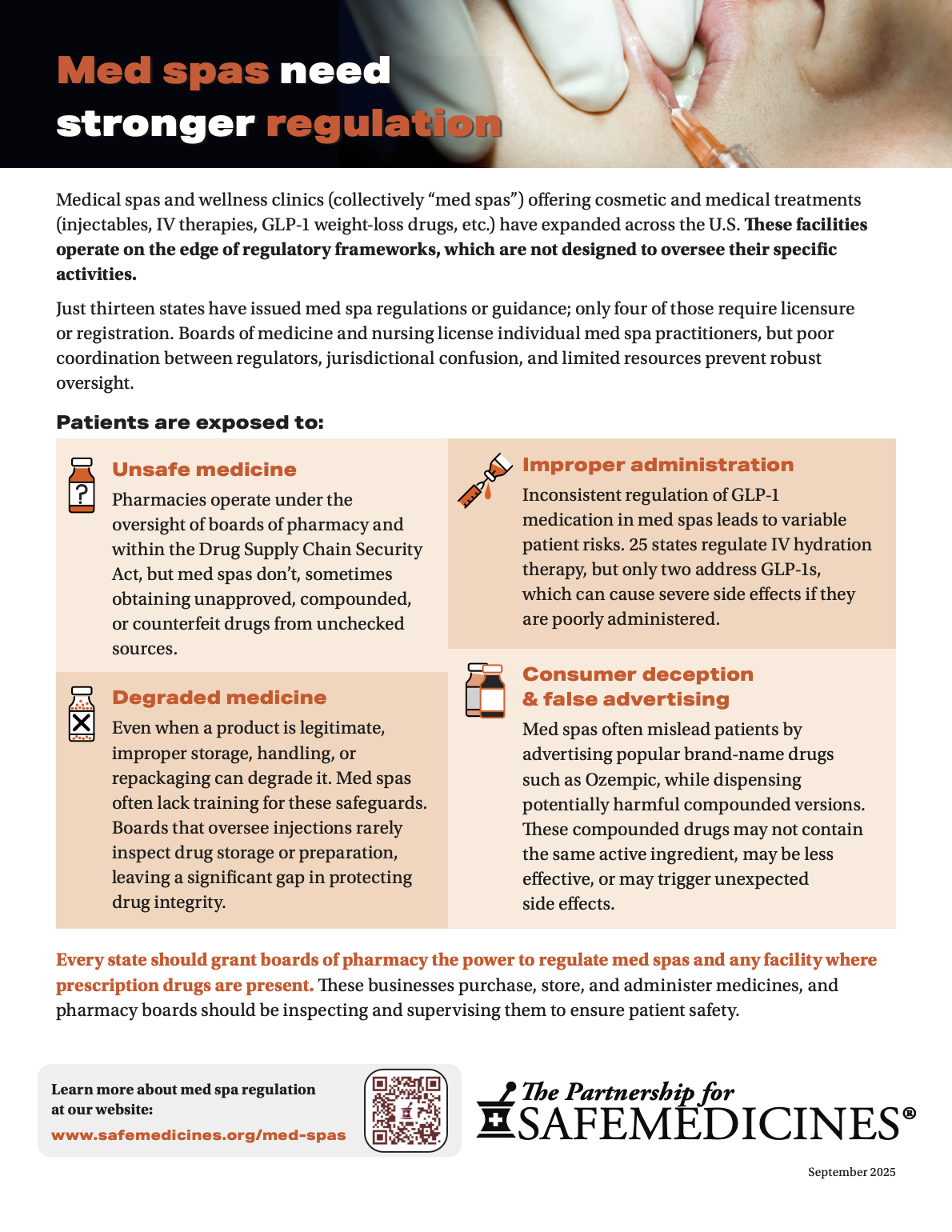
Med spas around the world have been at the center of public health crises. Learn more about med spa regulation in the US here.
Zimbabwe’s Medicines Control Authority and police raided an illegal medicine factory that allegedly produced unregistered capsules using unsafe and unverified materials and sold them with false health claims.
Nigeria’s NAFDAC the destruction of counterfeit drugs worth N2 billion, including large quantities of fake pregabalin capsules seized over the past two months, as part of a coordinated enforcement effort with customs and security agencies.