Fake medicines in Mexico, November 2025 - May 2026
Americans buying prescription medicines in Mexico are overlooking widespread drug counterfeiting in the country. This is a decades-long problem, and since 2022, tourist-facing pharmacies have sold fake blood thinners, counterfeit Adderall, and illicit drug-laced painkillers that pose severe health risks.
As Alternative Funding Program companies have been popularizing medical tourism to foreign countries to reduce healthcare costs, the risk of Americans encountering fake medicines in other countries like Mexico has exploded. What happens in Mexico’s drug supply chain is a problem for Americans.
Between November 2025 and May 2026, COFEPRIS, Mexico’s medicine regulator, issued 30 alerts for counterfeit or unapproved products. Another 12 alerts regarding pharmaceutical theft highlight a black market that further endangers the supply chain.
Oncology counterfeits
Alerts about cancer drugs were most common during this timeframe. The agency warned about seven treatments with falsified identifying numbers, irregular packaging, or missing active ingredients, including:
- Keytruda and Kisqali with falsified lot numbers,
- a lot of Keytruda with no active ingredient and a lot with English labeling,
- Tafinlar packaged in 120-capsule cartons, when the legitimate Mexican product only comes in 28-capsule cartons,
- Tagrisso bearing a lot number that wasn’t sold in Mexico,
- a lot of rituximab simply characterized as counterfeit,
- unapproved Neulasta, an anemic drug prescribed for cancer patients, with labeling that wasn’t in Spanish, and
- a batch of Darzalex, a treatment for myeloma, with an unrecognized lot number.
Reports of a kidney cancer patient receiving counterfeit Keytruda at a Yucatan hospital demonstrate the infiltration of dangerous fakes into Mexico's legitimate medical supply chain. Fake Keytruda has also been reported in India, the Philippines, and in black market channels here in the United States.

COFEPRIS reported this batch of the cancer drug Tagrisso in March 2026 because it was not authorized for sale in Mexico.
Diabetes and weight loss treatments
COFEPRIS alerts suggest that diabetes and weight loss drugs are as much in demand in Mexico as they are in the U.S. The agency reported:
- two lots of Ozempic with no active ingredient and packaging that wasn’t in Spanish, and a third counterfeit with the wrong injection pen.
- eleven lots of Victoza pens that were visibly tampered with and did not contain the active ingredient,
- Rybelsus pills in three different strengths with the same lot number and incorrect packaging,
- Jardianz pills with a lot number that expired in May 2021 and packaging that didn’t match the approved product in Mexico, and
- two unapproved tirzepatide products and a third that made with contaminated semaglutide.

Mexican regulators issued an alert about these fraudulent Rybelsus pills in April 2026.
Other observations
COFEPRIS alerts also included two lots of the blood thinner Xarelto, which, along with the osteoporosis injectables Prolia and Aclasta, and the ADHD drug Vyvanse, is currently in shortage in the U.S.
Counterfeiters used English-language packaging for four of the products listed in the alerts, Elopag, Keytruda, Tagrisso, and Prolia. Experts speculate that this is a tactic to convince buyers of superior product quality; certainly it’s the kind of packaging that might lead Americans to believe they’re getting the very same product on U.S. pharmacy shelves.
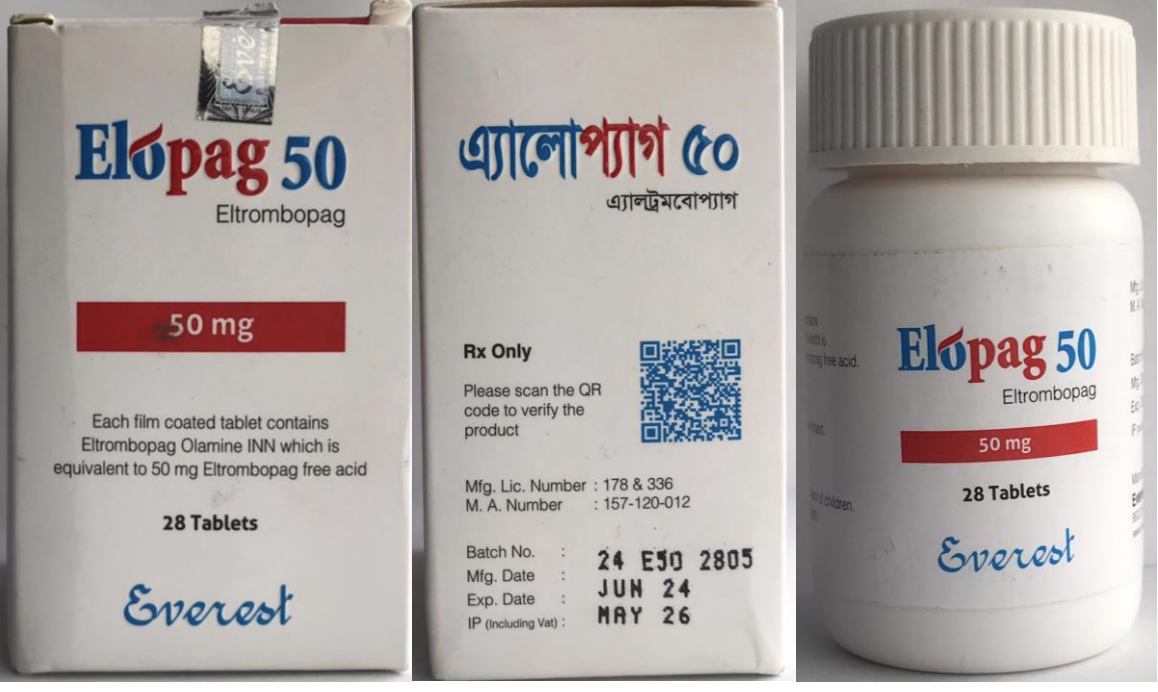
The agency flagged this anemia drug because it didn't have labeling in Spanish. The English labels are very legible for U.S. buyers.
Ensuring patient safety
These COFEPRIS alerts are examples of troubling dangers in the Mexican pharmaceutical market. While Americans may believe they are buying legitimate medicines at lower prices, they may be receiving substandard, contaminated or even fatal versions of their prescriptions.
To protect their health, U.S. consumers should only fill prescriptions through pharmacies licensed by their state Board of Pharmacy. If cost is a problem, patients should seek help through patient assistance programs. Learn more at www.safemedicines.org/patient-resources.