
Prescription Drug Affordability Board Activity, October 2025
Activities Summary
Colorado: Colorado's PDAB heard testimony about its decision to set an upper payment limit on Enbrel, and set price of $600 per 50mg/1ml, effective January 1, 2027. The board's next meeting was rescheduled from November 14, 2025 to January 9, 2026.
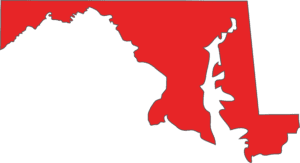
Maryland: The PDAB will next meet November 17, 2025.
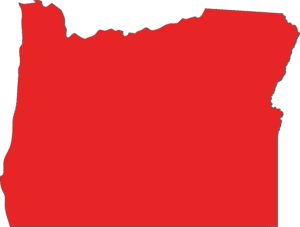
Oregon: The PDAB met on October 15, 2025 to hear public comment, continue discussing policy recommendations for its 2025 annual legislative report and to hear high-level information about insulin glargine products. The next meeting is November 19, 2025.
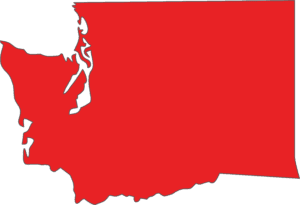
Washington: The next PDAB meeting will be on November 19, 2025.
Activity by State

Colorado
Colorado PDAB Meeting, October 3, 2025
Agenda | Recording | Slides | Written testimonies and comment
Director Updates
Sophie Thomas updated the board and the public that the stakeholder workgroup would have its first meeting on October 14th. The workgroup will identify opportunities to improve practices for collecting patient information during affordability review processes.
Rulemaking hearing on Enbrel: staff presentation
Staff give a presentation about the high-level effects of setting an upper payment limit UPL. The statute says that the board will be able to monitor implementation by reviewing carrier data, by requesting information for annual general assembly reports, and by accepting public comment after a UPL is set. The division of insurance, on the other hand, can monitor implementation by accepting information from providers, pharmacies, and patients; by conducting market analysis of carrier and PBM behaviors; and by examining data from APCD, carrier-submitted data about formularies and prior authorization, and rebates and drug-specific impacts on premiums.
Staff also reviewed UPL benchmarks, May-to-October data about public testimony, and data from 2025 rulemaking hearings. The board also examined data that staff put together about Enbrel, including the maximum fair price and the average plan paid amount, that led it to deem Enbrel unaffordable.
Next, they turned to proposed changes to the rule, including a minor change in the UPL dollar amount and setting a defined unit and an effective date. Staff recommended changing the dollar amount to $584 per unit to ensure alignment with the maximum fair price (MFP) per unit, and suggested setting the UPL unit at 1 milliliter, and mentioned that it would provide clarity for pediatric patients who would be taking half a unit. Staff also proposed a January 1, 2027 effective date instead of the current language, “at least six months after the adoption date.”
The board spoke at length about the unit given in the rule and how it would work with the different dosings and forms (syringes and vials) of Enbrel. The board entered an executive session to receive legal advice about the dollar amount in relation to the MFP and the usage of the unit in the rule. They changed the rule to say “50mg” in addition to the 1 milliliter that staff recommended and added a sentence: “The price per unit will apply to all commercially available formulations, including the unreconstituted powder vial.” They also changed the dollar amount to $600, for fear of being too close to the MFP, which is not legal.
The board agreed on January 1, 2027 as the best effective date, given the requirement to give at least 6 months and carrier concerns that contracts are usually reworked at the beginning of each year.
Rulemaking hearing on Enbrel - Witness Testimony
8 people spoke at the meeting. Additional written testimony is here: 1 | 2
Tiffany Westrich-Robertson, speaking on behalf of the EACH/PIC coalition and as a person with a disease treated by Enbrel, shared concerns that the history of cost shifting, utilization management, and non-medical switching will be repeated. She said that she appreciated board discussion about how to avoid these problems, but felt that these concerns, which have been raised by many patient advocacy organizations, have been minimized. The board chair replied that non-UPL solutions to affordability challenges are not part of the statute, so they are not able to address them.
Sophia Hennessy, from the Colorado Consumer Health Initiative, expressed support for setting the UPL for Enbrel at the MFP. She believes that that federally negotiated data is the best data available for Enbrel, and supports the annual adjustment order that is in the rule.
Derek Flowers, from the Value of Care Coalition, talked about the board ignoring other factors that are driving drug costs, like benefit design or co-pays. He also spoke about failures that are playing out federally, with early results showing that out-of-pocket costs for MFP medicines have risen by an average of 32% and that some independent pharmacies are not stocking them.
Katelin Lucariello, on behalf of PhRMA, expressed continued concern about the lack of methodology for the UPL-setting process. She would prefer a statutorily required approach that would be consistent among all drugs that are considered for a UPL to relying on a federal benchmark. She also mentioned a lack of clarity about how the UPL will be reviewed. The board asked about her thoughts on the January 2027 timing in the draft rule. She said that she appreciated the board listening to the supply chain stakeholders’ comments on the timing, but could not speak about specific members’ opinions. Multiple board members pushed back on the notion that they are relying only on the MFP, and that the same process will work for every drug.
Amy Goodman, with the Colorado BioScience Association, said that UPLs are an ineffective and counterproductive tool to accomplish the PDAB’s goal. She had concerns about the lack of clear standards and processes for UPL-setting, especially given the reliance on MFPs and the small number of drugs that have an established MFP. She pointed out that the PDAB statute requires the board to determine by rule the methodology for establishing a UPL and said that the board had not done so in a way that could be repeated for other drugs. She was concerned that the board had not considered setting a dosage for the UPL before the meeting.
Rae Wall, a Denver resident and patient who advocates for the lowering of the cost of prescription medication, testified about the struggle to afford life-saving drugs. She expressed her support for setting a UPL and working towards lowering the cost of medication.
Dr. Madelaine Feldman, on behalf of the Coalition of State Rheumatology Organizations, suggested that setting a UPL on Enbrel could lead to it being excluded from formularies or placed on higher tiers. She said that PBMs choose medications for their formularies based on manufacturer kick-backs, which leads manufacturers to raise prices in the hopes of outbidding other manufacturers to end up on PBM formularies. She pointed out that there's nothing in the PDAB law that requires PBMs to place UPL drugs on the formulary, which could leave UPL drugs out of reach of consumers.
Dr. Ingrid Pan, a pediatric rheumatology pharmacist, testified about the dosing of Enbrel for pediatric patients and talked about billing and prescribing Enbrel in the pediatric population, and how weight-based dosing complicates it. She did not have an issue with the verbiage of the draft rule.
Rulemaking Hearing on Enbrel - Board deliberation
The board revisited the draft rule. They decided to delete “including but not limited to commercially available formulations, such as the unconstituted powder vial,” following public comment. The board adopted the rule to set a UPL limit for Enbrel, effective January 1, 2027.
Board Business - UPL implementation
Staff presented a presentation about UPL implementation, which they are in the process of creating guides for. They mentioned developing a communication plan to ensure that carriers, providers, and consumers know about the price cap and the effective date. They also spoke about the manufacturer inquiry process, which is required through the statute, and requires reaching out to the manufacturers to identify whether or not they will continue to provide and give access to the UPL drug in Colorado. Staff are creating guides for the partnership with carriers with two requirements: a carrier appeal process for UPLs and the carrier's use of the savings report. Lastly, they are creating a UPL monitoring and board communication roadmap, identifying what data they have access to and what data they need to ensure access to Enbrel is not disrupted.
Staff then presented a timeline beginning with the manufacturer inquiry, which they have 30 days to respond to. Based on that response, they will issue a notice to consumers and pharmacies about next steps, including requesting implementation information from the carriers.
One board member asked about how, in this process, the board will ensure that Enbrel is not dropped from formularies. Staff suggested that they would address this as a part of the carrier implementation data.
Public comment
Emily Zadvorny, CEO of the Colorado Pharmacist Society, asked the board if they had any authority over setting a reasonable dispensing fee. She wanted to address the pharmacies’ concerns about having no margin now that a UPL has been implemented. The board clarified that they don’t have any authority to set a reasonable dispensing fee. They talked about the possibility of the board communicating with the legislature before the General Assembly Report is due in July.
Primo Castro, from the Biotechnology Innovation Organization, spoke about the lack of negotiation in the MFP price-setting process and potential access issues that the MFP may create for rare disease patients. He also spoke about lack of innovation in countries with nationalized healthcare systems.
Carl Eklund, a caregiver for his mother, spoke about PBMs being the real driver for high medication costs and asked the board to ensure that access to medicine was not restricted now that a UPL had been set. He also asked whether all the members of the board are from Colorado. The board chair replied that that was correct.
The board's next meeting was rescheduled from November 14, 2025 to January 9, 2026.
Oregon
Oregon PDAB Meeting, October 15, 2025
Program update
Chair Bailey began the meeting by introducing a new board member, Michele Koder, and the new executive director, Sarah Young.
Executive Director Young announced that the annual public hearing on prescription drug prices for the Drug Price Transparency Program would be December 4th. She also mentioned that the annual legislative report, which will review price trends, the drug subset list, policy recommendations, and PDAB updates, was in development and would be a focus of the November board meeting.
General public comment
Jessica McBride, from the Oregon Coalition for Affordable Prescriptions, spoke about the importance of the board’s mission to lower prices for Oregonians and about the effects of high drug prices. She urged the board to look to other states for guidance and mentioned that Colorado recently set an upper payment limit on Enbrel, which she said was expected to save the population and state government millions.
Dharia McGrew, on behalf of PhRMA, expressed support for the policy recommendation to seek an exemption in public meeting law from allowing media in executive session. She also expressed support for policy recommendations that account for the wide array of factors in the supply chain that affect affordability, such as PBM reform. Lastly, she thanked staff for adding a data dictionary to the rubric and encouraged them to add it to the review packets, too.
Lorren Sandt, from the Caring Ambassadors Program, raised concerns about considering insulin drugs. She said that she did not see how they create affordability challenges unless you’re only looking at the cost to the state, because patient co-pays have been reduced to $35 or less. She did, however, understand that the statute required the board to consider them. She spoke about the effect that H.R. 1 will have on the state, and said the board should consider disbanding or requesting an expansion of its scope to help legislators navigate oncoming changes. Lastly, she said that multiple studies have found that price controls will not lower out-of-pocket costs for patients.
Auden Friedman, from Oregon State Public Interest Research Group, supported the board's mission to reduce drug prices for consumers and mentioned Colorado's UPL on Enbrel, which he said would save Coloradans $32 million. Lastly, he expressed support for the board setting a UPL, saying it is the best hope to curb unnecessary healthcare costs.
Dean Suhr, from the MLD Foundation, did not support the setting of a UPL. Having read the board’s statute, he said that there was nothing in the charter about value, efficiency, or benefit to the patient and opined that that is backwards thinking. He urged the board to consider value as the first priority, saying that lowering the price of drugs with a UPL did not consider the overarching problems of the industry. He considers UPLs a short-term solution and believes that other levers, like the role of PBMs, need to be considered for long-term solutions.
Policy recommendations discussion
The board continued discussions started last month about policy recommendations, and Chair Bailey mentioned that they would vote on recommendations to include in the annual report in December.
John Murray talked about his recommendation to get an exemption from public meeting laws for trade secrets and strongly recommended expanding the scope of the board. He also suggested a few policy recommendations aimed at PBMs, but said that, given the short legislative session ahead, he would recommend that a work group be made through the summer of 2026 to study PBM policies and propose those in the longer, full legislative session. He says he was “not a fan of UPLs,” because of the lack of information about how they will affect the market.
Lastly, Murray talked about a pharmacist who works for him reaching out to give him an example of spread pricing, and said he does not understand how spread pricing benefits patients in Oregon, mentioning Vice Chair Burns in reference to a discussion from the previous meeting. Vice Chair Burns took issue with her name being referenced in this conversation, saying that she didn’t work for a PBM and did not have anything to do with spread pricing. In a heated exchange about the details of the policy recommendation, Vice Chair Burns said, “You mentioned my name. I just would like you to take that out of your mouth, yeah?”
Board members Dan Hartung, Dan Kennedy, and Michele Koder broadly expressed support for Murray’s policy recommendations, specifically mentioning the work group to account for a short legislative session and expanding the scope of the PDAB. Dan Hartung reviewed his policy recommendations, which include an audit of the 340B programs, similar to the audit conducted in Minnesota.
Vice Chair Burns explained her policy recommendation to disband the PDAB, saying that “we’ve been doing this for three plus years, and we’ve really come up with nothing that’s actually been enacted.” She cited public comments about the board not having the right people and the fact that they’ve done the drug reviews once and abandoned them. Chris Laman said that he doesn’t disagree with what Vice Chair Burns was saying and shared similar frustrations with the lack of progress for the effort put in. John Murray said that he did not support this policy recommendation; applications to the board have been open and that there is a lot of expertise on the board that can at least inform legislators. Lori Hogland also did not support disbanding the board. Chair Bailey clarified that individuals who receive money from manufacturers are not eligible for board positions.
Dan Hartung suggested that the board recommend that they submit a policy recommendation to give the board the authority to set a UPL, in part a response to the sentiment expressed by other board members that the board was not doing enough. Vice Chair Burns expressed support for this recommendation.
Discussion about methodology for drug reviews and scoring rubric and worksheet
Staff spoke about updates made to the rubric and solicited feedback from board members for more improvements. Concerns were raised about the subjectivity of certain metrics, specifically the equity category. The hope was that those could be more quantified. One board member asked that the rubric include information about the availability of a therapeutic alternative and a timeline for the availability of other biosimilars or generics.
Drug review: Insulin Glargine
Staff presented a high-level overview of where the board is in the drug review process. Insulin glargine was the last group of drugs to discuss before they stop collecting survey information. In November and December, the board will discuss all 16 drugs again, with updated packets. This will prepare them to vote on the drug subset list in January.
The staff’s packet combined all insulin glargine products: Basaglar KwikPen, insulin glargine-yfgn, Lantus, Lantus SoloStar, Semglee, Toujeo Max SoloStar, and Toujeo SoloStar. The board discussed affordability programs and legislation that have affected insulin products, and asked how that was reflected in the packet. Staff said that the data, from 2023, did not reflect these changes, but there was other information in the packet about these plans. They noted that affordability programs do not affect the cost to the healthcare system.
Board members flagged that the numbers in the WAC price for a 30-day supply table are substantially higher than they have seen. There were comments about Toujeo being more expensive than Lantus and having the highest rebate. There were also some suggestions about the formatting of the packets and data from the board.
The next board meeting is on November 19, 2025.