
July 13, 2026: Researchers find telehealth platforms prioritize “quick prescriptions over comprehensive care”
Major Stories
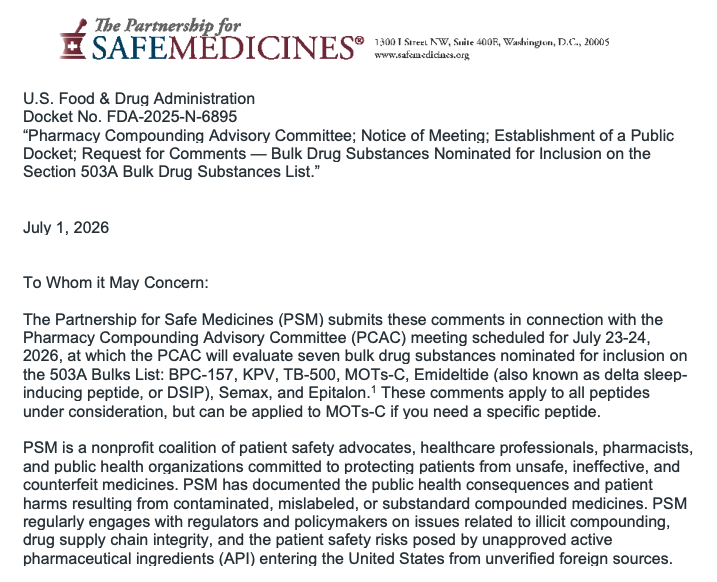
New research finds that those seeking weight loss drugs on telehealth platforms are likely to have no clinician interaction. PSM released our comments on the seven peptides set for FDA consideration in late July 2026.
A new research letter published in JAMA analyzed the rise of online telehealth platforms that offer weight loss drugs and the ease of obtaining a prescription on these platforms. Using a simulated patient who meets eligibility criteria for the drugs, researchers followed the platform's process until prescription determination or blood work requests. In total, they found that 91.8% of the platforms issued a prescription. Every website used a questionnaire, in which 98% asked about medical conditions, 93.9% asked about medications and allergies, and only 55.1% asked about eating disorder history.
Researchers warned that clinical engagement “may be substantially lower than previously suggested.” Prescriptions could be obtained very quickly, with some being issued in less than 5 minutes, and many not requiring any clinician interaction. Providers who are writing prescriptions on multiple platforms are writing the same patients' prescriptions on separate sites. Providers who are writing prescriptions on multiple platforms wrote prescriptions for the same simulated patient on separate sites. Researchers raised concerns about extremely limited oversight and a high potential for abuse of these medications.
Perhaps most concerning, researchers found that the sellers of the compounded versions of these drugs asked leading questions about personalization. The practice of personalization is used to justify the continued compounding of weight loss drugs after the end of shortages in 2025. Despite the increased patient access to these drugs, researchers reiterated concerns about “impersonal care that prioritizes quick prescriptions over comprehensive care.”
Read our letter here.
The Partnership for Safe Medicines (PSM) released our comments to the Pharmacy Compounding Advisory Committee ahead of their July 23-24 meeting to evaluate lifting compounding restrictions on seven peptides. We oppose the addition of any of the seven substances under consideration for three reasons: a lack of clinical evidence to support safety or efficacy, public health concerns associated with widespread compounding when public understanding of compounding is poor, and regulatory gaps when overseeing companies marketing and selling these products.
Domestic
Analyses of polling data show growing use of weight loss drugs. Eating disorder advocates warn of social media's impact on recovery. Peptide testing analyses show high failure rates compared to FDA standards.
As part of their National Health and Well-Being Index analysis, the public polling firm Gallup reported that current GLP-1 usage for weight loss is at an all-time high in 2026, at 11%, up from 3% in 2024, with almost 20% of the public reporting using a compounded version. In our letter to the FDA’s peptides committee, PSM has warned that public understanding of the risks of compounding is not well understood. Americans for Safe and Effective Medicines reported that less than 20% of the public know that compounded drugs are not FDA-approved; however, 84% find FDA approval, independent expert review, and clinical trials were extremely important factors in picking a weight loss drug.
An article in Mashable interviewed those recovering from eating disorders about the impact of excessive weight-loss drug content online. The CEO of the National Eating Disorder Association (NEDA) told the outlet, “[recovery is] a hard thing to protect now,” as the organization released survey results which found that “82% report engaging in disordered eating habits after exposure to body-focused content on social media.”
This survey was supported by University of Melbourne researchers who analyzed TikTok algorithms and found that the platform was 335% more likely to deliver videos about dieting to users with eating disorders, despite those users only being 23% more likely to engage with the content. Another study, published in JAMA Psychiatry, suggests that weight loss drug usage may be higher among those with eating disorders than the general population.

Line plots showing the interaction of the category of video content with participants’ self-reported eating disorder symptoms on the likelihood of them "liking" the content.
Researchers at the Performance Medicine Institute analyzed publicly available data about consumer-submitted samples from a peptide testing facility. They found that 71% of gray-market peptide samples failed to meet FDA-manufactured standards criteria, and 42% failed to meet the less stringent standards for compounded drugs. They also found that 15% of samples contained measurable bacterial endotoxins and 2% did not contain the peptide listed on the label. The study concluded, “a substantial proportion of patients using gray market peptides are exposed to safety risks that are invisible to them, unquantified by the healthcare system, and unaddressed by current regulatory oversight.”
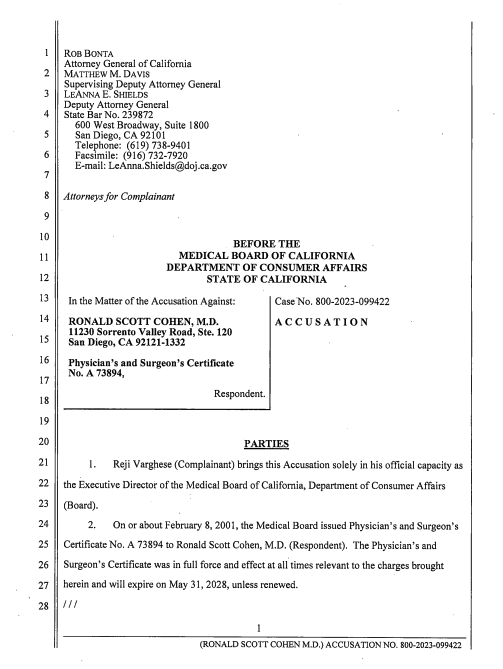
The California Medical Board filed an accusation seeking to revoke a physician's license after he allowed a pharmacist to compound weight loss drugs out of the clean room in his medical office from 2023-2025. Allegedly, the pharmacist would leave some of the drugs at the clinic for the physician to administer to patients. The vials produced had little information about the drugs, other than a label with “Gram Peptides” listed, and the clean room was inadequate for compounding. Gram Peptides received a warning letter from the FDA in March 2026 for producing drugs labeled “research use only” that were intended for human use, including the experimental drug retatrutide. The pharmacist behind the company had his license revoked in 2023, after a California Board of Pharmacy investigation found he filled uncertain prescriptions, failed to review patient records, and dispensed multiple prescriptions he was not authorized to.
The founder of telehealth company Done Global was sentenced to six years in prison and fined $1mm in connection with a scheme to distribute Adderall and other stimulants online, reported Fierce Healthcare. Evidence at trial showed that the founder refused to hire clinicians who did not participate in the conspiracy and pressured clinicians to diagnose ADHD much quicker than in a typical examination. The company then used an “auto-refill” platform to minimize follow-up appointments, which continually authorized refills after requests from patients’ families to stop filling scripts, and even after patients’ deaths. Prosecutors said over 37 million pills of Adderall were distributed; Medicare, Medicaid, and commercial insurers were defrauded of over $12 million; and the federal investigation was obstructed.
Experts warn that gray market peptides are increasingly being marketed and used like dietary supplements, with consumers often "stacking" them alongside traditional supplements despite many being legally classified as unapproved drugs rather than nutritional ingredients. Researchers say this trend blurs the line between supplements and pharmaceuticals, highlighting the need for stronger regulation, better consumer education, and more research on safety and interactions with other supplements.
A forensic laboratory in north Louisiana warned the public that nearly one in three tablets with legitimate-looking drug imprints bought on the street were counterfeit. Blue M30 tablets were most commonly counterfeited, and fentanyl was the most common substance found in the counterfeit pills. The lab’s deputy director of toxicology and chemistry said, “The stamps look authentic; so you… probably can’t tell the difference.”
PSM in the news
A Yahoo Finance article cited the PSM letter to the FDA’s peptide panel and our Q1 2026 freight fraud report with FDA recommendations about the dangers of loosening peptide regulation.
Read our report on peptide imports here!
Regulators protecting patients in the news
The FDA issued 14 warning letters to sellers of unapproved ketamine drugs claiming to treat mental health disorders. Many of these warning letters were to online pharmacies, and some were to compounding pharmacies. Ketamine is a Schedule III controlled substance that requires a black box warning, which these drugs did not have.
International
Experts in the United Kingdom warn of fake weight loss drugs and regulators sentence members of an online scheme to sell illegal drugs.
Experts in the United Kingdom are warning the public of an expected surge in fake weight loss pills in the country, after the Wegovy pills became available through legitimate supply chains. Pills, often made with chalk and paint, are much easier for criminals to copy and can be nearly undetectable. The United Kingdom health regulator has already seized more than 6,500 fake weight loss drugs in the past three years. Experts warn the public to be incredibly cautious, warning that scammers have cloned legitimate pharmacy websites in the UK, and that counterfeit injections have been modestly discounted to avoid suspicion by consumers.
Four members of a criminal group that sold prescription medicines and controlled drugs online were sentenced. Investigations uncovered a group responsible for the sale of almost two million doses of unauthorized and illegally supplied prescription medications without prescriptions.

Photo: MHRA Criminal Enforcement Unit from Operation Lamborghini.