
July 27, 2026: FDA peptide panel narrowly votes to add unapproved drugs to compounding list
Major Stories
The FDA’s peptide panel voted to add six unapproved compounds to the 503A bulks compounding list, despite agency scientists' warnings about the consequences. A woman in New York died after receiving an injection of the non-FDA- approved compound NAD+. PSM featured at Axios event on weight loss drugs.
The FDA’s Pharmaceutical Compounding Advisory Committee (PCAC) voted to add six of seven peptides to the 503A Bulk Drug Substance List, despite FDA scientists recommending against all of them because of limited evidence of their safety and effectiveness. While the vote is only advisory and must still go through a formal rulemaking process, it could give patients the mistaken impression that these unapproved peptides are FDA-endorsed and accelerate their use through compounding pharmacies.
The Partnership for Safe Medicines (PSM) played a prominent role in the debate, submitting written testimony, providing oral testimony at the hearings, and speaking to the press about the risks of expanding access to untested peptides. Executive Director Shabbir Imber Safdar argued that the committee's decision is "a serious setback for patient safety," warning that it could legitimize compounds lacking adequate clinical evidence and increase the spread of potentially unsafe products through wellness clinics, medical spas, and online platforms.
Read our written PCAC comments here.
The vote comes as news broke of a New York woman dying after receiving an NAD+ injection at a Bronx wellness center from a man accused of practicing medicine without a New York license. NAD+, while not a peptide, is an unapproved drug that can be prepared by 503A compounders. In a statement, Safdar said the tragedy underscores the risks of bypassing the FDA approval process and argued that only stronger enforcement and sound policy, not broader compounding access, can protect patients.
PSM sponsored an event in partnership with Axios Live that brought together legislators, patient advocates, and healthcare providers to talk about weight loss drugs. Moderated by Axios, panelists discussed the promise of these therapies, the risks and regulatory challenges surrounding non-FDA-approved compounded versions, and what the next phase could mean for patients, providers, policymakers, and industry.
PSM in the news
PSM was cited throughout national coverage of the FDA's PCAC meeting. Before the meeting, Tech Times and Orrick acknowledged PSM’s stance opposing adding the substances to the list, citing our research into the supply chain shortfalls of peptides. As the committee passed the drugs, Shabbir Imber Safdar was quoted in NBC News, saying, “Compounding shouldn’t be used as an end run around the safety assurances of the FDA approval process.” Time Magazine also cited our concerns about the standards at 503A compounding pharmacies and the potential for people to think that these peptides have robust clinical evidence behind them as a result of being added to the list.
Domestic
Secret shopper study finds that the end of weight loss drug shortages was not the end of compounding. Independent pharmacies file an antitrust suit against a PBM. Colorado PDAB to appeal preliminary injunction against their Enbrel price cap.

Table showing the characteristics of facilities identified as suppliers of compounded weight loss drugs.
A secret shopper study of 75 weight loss clinics and medical spas in two states found that despite the end of the shortage, compounding of weight loss drugs did not decline; instead, pharmacies added ingredients to justify their production. Researchers found that over half of the clinics offered compounded variations of weight loss drugs combined with B vitamins, while a smaller percentage offered levocarnitine and glycine. The study also highlighted licensing issues and disciplinary actions among many locations that were visited.
A coalition representing nearly 5,000 independent pharmacies has filed an antitrust lawsuit against Prime Therapeutics, alleging it colluded with Express Scripts to suppress pharmacy reimbursement rates and increase fees through a 2019 partnership agreement. They claim the arrangement allowed Prime to adopt Express Scripts' lower payment rates and higher fees, harming independent pharmacies while boosting revenue for both companies.
Colorado’s Prescription Drug Affordability Board (PDAB) voted to allow the state Attorney General’s office to appeal the preliminary injunction against its upper payment limit (UPL) on the arthritis drug Enbrel. Amgen, maker of Enbrel, was granted the injunction after a judge found that the company was likely to be significantly harmed by the cap. The UPL was the first PDAB price cap in the nation, set to take effect January 1, 2027. The board has spent almost $4 million, with this UPL being the first policy action they have taken.
A Michigan man was sentenced to 21 months in prison for his role in a conspiracy to introduce misbranded drugs with the intent to defraud and mislead the FDA and consumers. The drugs that were imported from China were unapproved peptides and weight loss drugs labeled “for research purposes only.” Products bearing this label are not intended to be used by humans, but bad actors use them as a legal loophole to sell consumers unapproved drugs.
A Nevada man pleaded guilty to smuggling misbranded prescription drugs into the US, making over $1.9 million in the process. He admitted to importing erectile dysfunction drugs from India and paying a packaging company to list false ingredients and claim the drugs did not require a prescription.
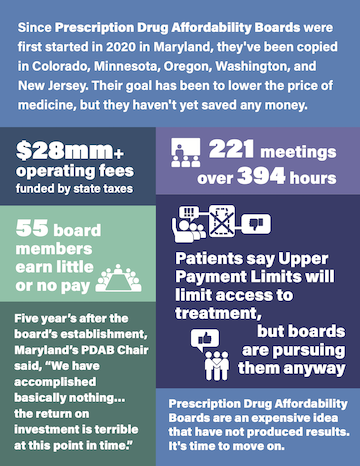
Read more about PDAB spending here.
Pill presses
Two Connecticut men were charged with their role in narcotic distributions, with one of the men allegedly using multiple pill presses to manufacture counterfeit Oxycodone, Adderall, and generic pills containing drugs like fentanyl and methamphetamine. A pill press was also found in a North Carolina man’s shed, in connection with a dark web drug shop selling counterfeit pills, according to an FBI affidavit. Lastly, a Georgia man was sentenced to 35 years for using a pill press to manufacture and distribute tens of thousands of methamphetamine pills.
Regulators protecting patients in the news
The FDA announced multiple voluntary recalls of drugs found to contain particulate matter or be cross-contaminated. An oncology injectable used to treat lymphoma, leukemia, and breast cancer was reported to contain steel particulates, with no adverse events being reported. An antibacterial injectable used to prevent postoperative infection was reported to contain cardboard particulates. An injectable medication used to treat visceral spasms and poor blood circulation was found to contain glass particulate matter. Finally, an over-the-counter antihistamine is being recalled for potential contamination with the heartburn medication ranitidine.
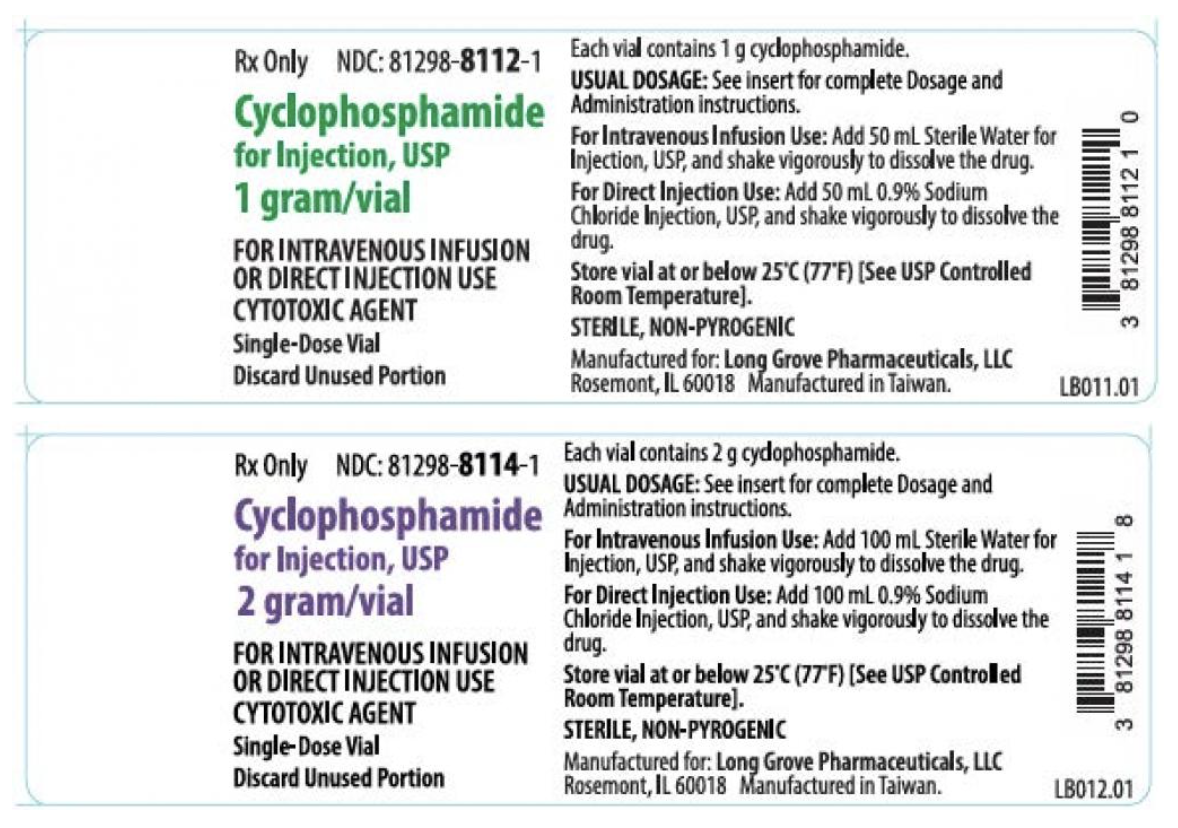
Sunny Pharmtech's recalled Cyclophosphamide label (FDA).

The FDA issued a warning letter to an Indian API manufacturer after inspectors found that the company knowingly accepted deliberately mislabeled raw materials to bypass licensing requirements, failed to perform required identity testing, and relied on unverified supplier documentation before using the materials to manufacture APIs shipped to the United States. The FDA also cited the company for using unvalidated laboratory testing methods that failed to detect impurities and for inadequate equipment cleaning and cleaning validation practices that increased the risk of cross-contamination between products.
A second Indian API producer was cited for undocumented laboratory data, inadequate process validation, poor quality oversight, insufficient stability testing, and inadequate employee training, which resulted in recalls of their products. The FDA warned another Indian facility for widespread data integrity failures, inadequate manufacturing and cleaning validation, insufficient microbiological testing, and inaccurate drug listings.
Two Arizona facilities also received warning letters. One was cited for failures in the manufacture of OTC acne drugs. FDA also found several of its products to be unapproved new drugs and misbranded because their labeling made claims that exceeded those allowed. The other was cited for marketing supplements with unapproved drug claims, while also failing to comply with dietary supplement CGMP requirements.
GLP-1s
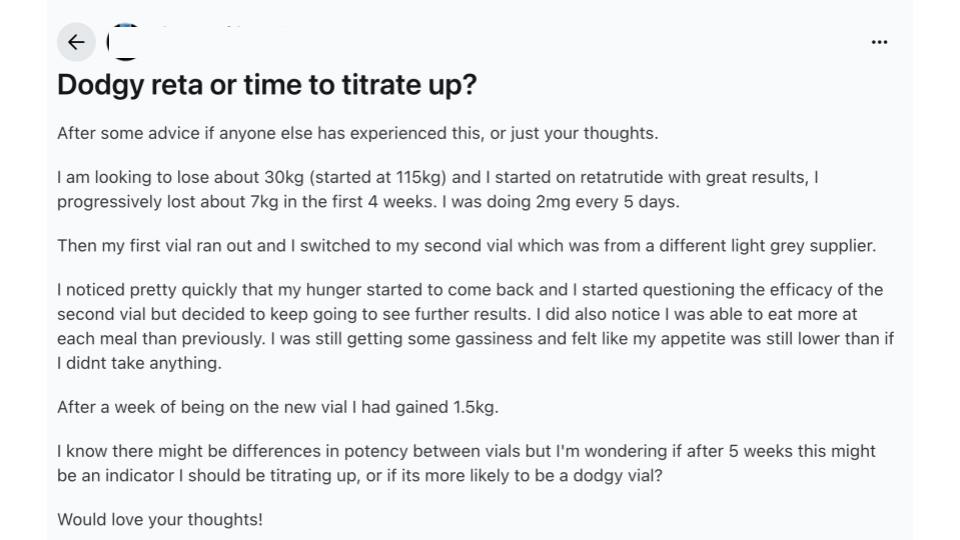
A Reddit user shared that after initially losing weight on retatrutide, switching to a new vial from a different "light gray" supplier, they noticed their hunger returning and even gained 1.5 kg after a week. Unsure whether the change was due to needing a higher dose or receiving a less potent product, the user questioned whether the new vial was "dodgy."
The post highlights the uncertainty patients face when using drugs from the unregulated supply chain. Retatrutide, an experimental drug, is only available through an Eli Lilly clinical trial; otherwise, it is a black market drug, regardless of supplier. Research-grade chemicals are not meant for human consumption, so patients are left questioning whether quality or authenticity is consistent, which can make it difficult to know whether changes in results are due to the drug, dosing, or the product itself.
Legislation
The Senate HELP committee held a markup for SB 3794, also known as the SAFE Drugs Act. The bill was recommended to be reported back to the Senate. The legislation provides for priorities mentioned in our recently released roadmap to patient safety, including addressing “essentially a copy” practices.
Keep up with state legislation in the areas of pill presses, prescription drug affordability boards, drug importation, and med spas.
International
Emergency responses linked to weight loss clinics and cosmetic procedures in the UK near 10,000. Canadian clinics are using compounding loopholes to promote unapproved drugs. Black market and counterfeit cancer medications in Syria and Pakistan.
New Freedom of Information data shows UK ambulance services responded to 9,395 emergencies linked to weight-loss treatments and cosmetic procedures between 2020 and 2025. That equates to an ambulance response every 5.5 hours. London accounted for the majority of incidents, while experts warned that unregulated clinics, counterfeit products, and treatments purchased through online marketplaces pose serious safety risks.
A CBC News investigation found that some Canadian doctors and clinics are promoting and prescribing BPC-157, an unauthorized peptide, by using a regulatory loophole that allows certain compounded formulations. Undercover reporters visited clinics where physicians made claims about the peptide’s potential benefits for healing, inflammation, and tissue repair despite acknowledging limited human research.
Cancer patients in Syria are increasingly being pushed toward an unsafe black market for life-saving medicines as shortages at public hospitals, limited charity support, and high treatment costs leave many without reliable access to care. An investigation found patients are turning to private sellers, pharmacies, and social media sources for missing cancer drugs, raising concerns about smuggled and potentially counterfeit treatments.
Separately, the World Health Organization and Pakistan’s drug regulator warned of counterfeit blood cancer medicines, including fake batches of Darzalex injections and Jakavi tablets, highlighting the growing risks patients face when legitimate supply chains fail.
Authorities in India cancelled the manufacturing licences of Jackson Laboratories units after oxytocin injections produced by the company were linked to five maternal deaths, while investigations continue into the cause of the adverse events. Separately, regulators uncovered multiple alleged counterfeit drug operations, seizing fake medicines, packaging materials, and manufacturing equipment tied to well-known pharmaceutical brands, finding counterfeit blood pressure medications, antibiotics, diabetes medications, antacids, painkillers, and supplements.