
February 23, 2026: State investigates whistleblower allegations of unsafe GLP-1 drug handling at Mochi Health-affiliated pharmacy
Major Stories
Washington State investigators found serious violations at a Mochi Health-affiliated compounding pharmacy producing GLP-1s, and a med spa bill in Indiana hears public testimony about a med spa bill.
A startup pharmacy in Washington, owned by Mochi Health, is under investigation after whistleblowers alleged it allowed unlicensed workers to handle and package compounded GLP-1 weight-loss drugs in violation of state law. Former employees told KING 5 that workers recruited from hardware store parking lots were allowed into restricted areas, where they accessed refrigerators stocked with patient-labeled medications and packaged prescriptions. Investigators allege that the laborers were sorting and labeling drugs while managers looked on. Pharmacists, whose salaries were based on output, said they were pressured to verify prescriptions in seconds to maximize output.
The Washington State Department of Health found multiple violations and temporarily restricted Aequita’s compounding license, though the agency says the company has since addressed deficiencies and remains under investigation. Whistleblowers also described cost-cutting measures dubbed “Glassgate,” which involved the use of cheap vials from Alibaba and frozen Otter Pops instead of medical-grade ice packs, alongside reports of contaminated medication vials. Some customers reported serious illness after injections, and authorities in multiple states are investigating related complaints.
Indiana lawmakers are advancing Senate Bill 282 to establish new regulations for medical spas and drug compounding, amid concerns that patients are receiving powerful treatments like compounded GLP-1 weight-loss drugs without adequate oversight. The proposal would require medical spas to register with the state, undergo inspections, designate a responsible licensed practitioner, and report serious adverse events, while tightening pharmacy compliance with federal standards.
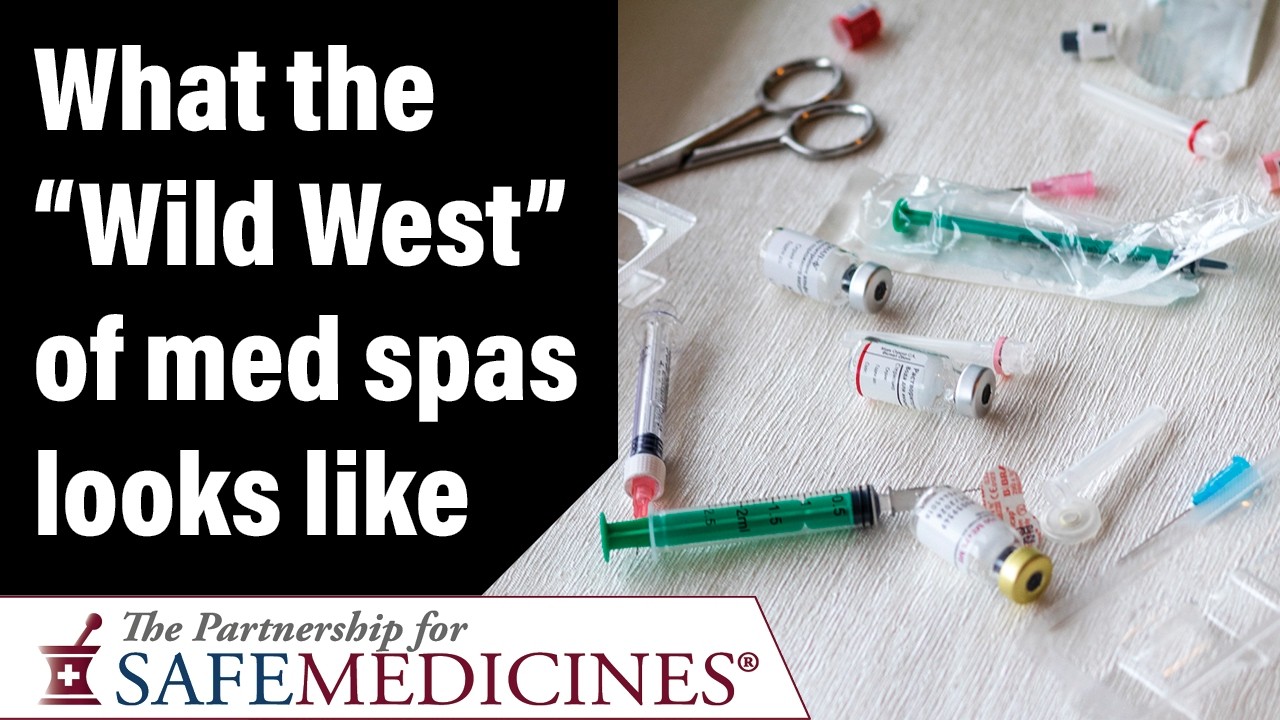
Troubling practices alleged at a compounding pharmacy that supplied Mochi Health. Learn more.
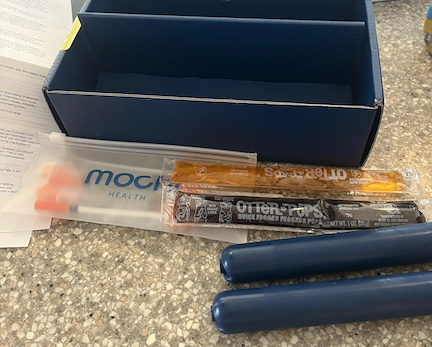
A Reddit user posted a photo of their Mochi shipment chilled with popsicles in 2025.
Partnership for Safe Medicines Executive Director, Shabbir Imber Safdar, CFE, testified in support of the bill. Other supporters, including physicians and industry leaders, argued the fast-growing med spa market operates like the “Wild, Wild West” and poses patient safety risks. Pharmacy representatives, however, warned that some of the proposed language could unintentionally restrict legitimate compounding practices and limit patient access to needed medications.
Our newest Prescription Drug Freight Fraud Report analyzes November and December 2025 import data and reveals a surge of social-media-driven medications entering the U.S. from unregistered and implausible manufacturing sites, including residential addresses and commercial storefronts. We identified hundreds of shipments of semaglutide, tirzepatide, minoxidil, spironolactone, and rivaroxaban (Xarelto), along with widespread product-code mismatches that may reduce regulatory scrutiny. While FDA and Customs officials are refusing many violative shipments, significant volumes continue to reach the border.

Read the January 2026 Freight Fraud report!
Domestic
Parents protested Snapchat for its role in selling fentanyl to teens, the “worst-kept secret” in Florida’s med spa industry, and a sentencing in a California pill press case.
Dozens of parents gathered outside Snap Inc. headquarters in Santa Monica to protest what they say is Snapchat’s role in facilitating fentanyl sales to teens, displaying the names of more than 100 children who died from alleged social media-related drug purchases. Snapchat is facing 63 active lawsuits from families nationwide, amid growing legal and public pressure on tech companies over platform safety. Advocacy groups and grieving parents continue to call for stronger safeguards to prevent what they describe as a “digital drug market” targeting young users.
A California man was sentenced to six years in federal prison for operating a fentanyl pill lab in his Oakland apartment. Authorities seized four pounds of fentanyl and a pill press after an undercover investigation in which the defendant sold fentanyl to an agent.
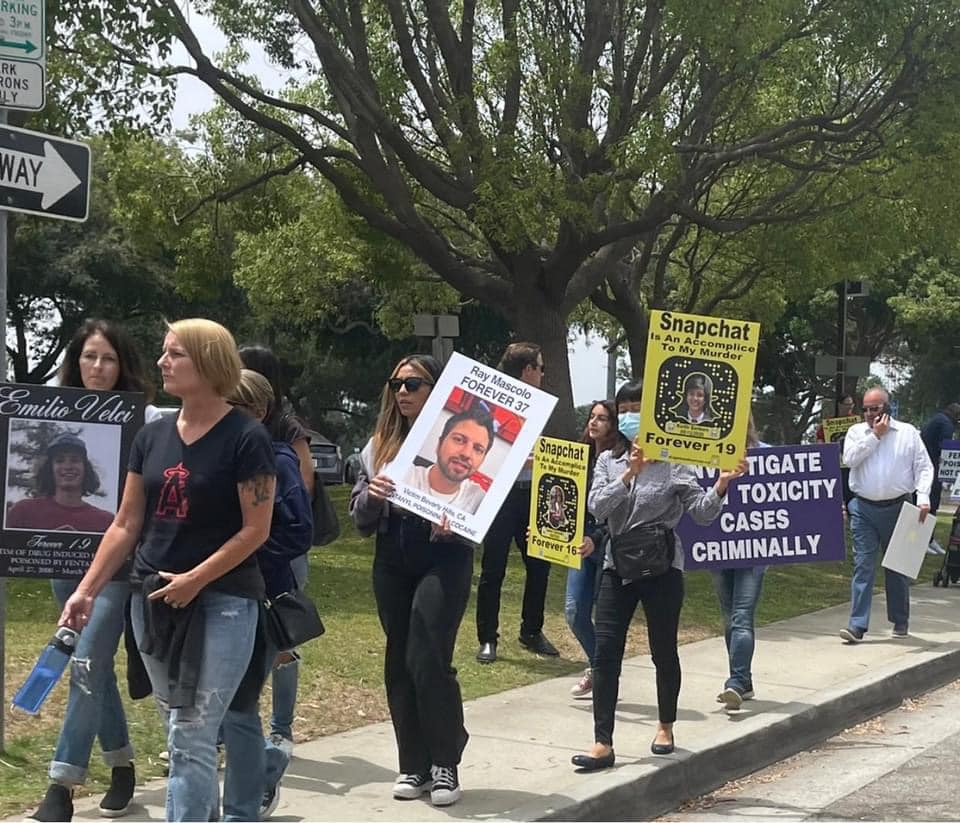
Grieving families protesting at Snapchat HQ in 2021. (Photo: Facebook)
A sweeping investigation by the Orlando Sentinel found Florida’s booming med spa industry operating with minimal oversight, as injuries mount and supervision laws go largely unenforced. Despite a legal requirement for physician medical directors, experts say oversight is often nominal. Some doctors are paid as little as $500 a month and are rarely present, prompting one surgeon to call it “the worst-kept secret in this industry” and “the Wild West.” Lawsuits detail burns, blindness, and disfigurement from improperly performed laser and filler procedures, and a 2025 study found many medical directors lacked required board certifications or supervised multiple spas in violation of state rules. Efforts to tighten regulations have repeatedly failed in the legislature, leaving critics warning that “these are not haircuts — they’re medical procedures.”
Prescription Drug Affordability Board (PDAB) activity
States in dark red have passed legislation to create a PDAB. Bright red states have PDABs that can set Upper Payment Limits. Yellow states are states with proposed PDAB legislation. States in Blue have repealed their PDABs.
In January 2026, Colorado and Oregon’s Prescription Drug Affordability Boards (PDABs) advanced key policy and review discussions. Colorado’s PDAB focused on expanding patient engagement strategies, including a toolkit and community partner network, and voted to dismiss its appeal in Amgen v. Mizner. In Oregon, the PDAB meeting concluded the 2025 drug affordability review, with the board identifying Cosentyx, Trulicity, and Vraylar as posing affordability challenges and adding Lantus Solostar to meet statutory requirements. The Oregon board also advanced planning for its 2026 review, clarifying how orphan drug exemptions apply and outlining criteria to narrow future drug lists.
Regulators protecting patients in the news
The FDA issued a warning letter to an Australian facility for serious CGMP violations. The facility failed to properly test products for identity, strength, preservatives, and microbial contamination, and its manufacturing processes and environmental controls were inadequately validated. Equipment was not fully qualified, cleaning procedures were unreliable, and batch release criteria lacked scientific rigor. The company relied on local regulations rather than U.S. standards, and all drugs from the facility are now on Import Alert 66-40/66-41, with production for the U.S. market halted.
Legislation
PSM was among organizations that gave testimony that led Colorado’s House Health & Human Services committee to indefinitely postpone Colorado House Bill 1056. The legislation would have prevented patient advocates and health benefits professionals from informing Colorado health plans and patients about the safety and legal risks of Pharmacy Stewardship Programs that use illegal foreign drug importation. These programs can cause treatment delays, expose patients to unsafe or unlicensed medicines, and create significant civil and criminal liability for health plans. The bill also conflicted with federal law, misrepresented Colorado’s unapproved Section 804 importation program, and could have led to costly, likely unwinnable litigation for the state.
House Bill 1272, recently reintroduced in Illinois, would create a wholesale prescription drug importation program, directing the Department of Public Health to import prescription drugs from Canada through contracted wholesalers.
For more than 25 years, attempts to import unauthenticated foreign medicines to lower costs have repeatedly failed and posed serious public health risks. Only Florida has received federal approval for a Canadian drug importation pilot, but it has yet to secure any medicines despite spending over $132 million. Meanwhile, some employers are using Alternative Funding Programs to illegally import drugs for patients, exposing them to unsafe, unverified medicines and creating significant civil and criminal liability for health plans. Read our February 2026 update on Canadian drug importation to see how these issues have evolved.

Read our February 2026 importation update.
International
Counterfeit cancer drugs, antibiotics, paracetamol, and more were seized in Pakistan and India.
Pakistan’s Federal Investigation Agency raided an illegal pharmaceutical factory in Karachi producing counterfeit cancer pain medication at dangerously high doses. Authorities seized fake drugs, raw materials, and production machinery. They made multiple arrests, intercepted shipments, and warned the public to only buy medicines from registered pharmacies due to serious health risks.
Indian police dismantled a sophisticated counterfeit drug factory, seizing thousands of fake antibiotics, paracetamol, zinc tablets, spurious vials, and heavy machinery, and arresting nine people, including the alleged mastermind. The operation exposed a criminal network producing tramadol-based opioids and fake medicines and distributing them through bogus pharmacies and smugglers, posing serious risks to public health.
India’s Uttarakhand Special Task Force arrested three more suspects in a multi-state counterfeit drug operation, bringing the total detained to 16. The investigation revealed the illegal manufacture and sale of fake medicines replicating legitimate brands across several districts.