
October 19, 2026: Two deaths linked to bootlegged retatrutide
Major Stories
Two deaths have been linked to black market versions of retatrutide, as a British woman warns followers that taking an early dose of the drug “nearly killed” her.
Black-market versions of retatrutide, an unapproved weight loss drug, have been linked to two deaths, according to CBS News. The first death reportedly occurred in July, after a 41-year-old woman went into cardiac arrest. The report says the woman obtained compounded retatrutide from an “unreliable source.” The second death involved a 49-year-old patient who died in September after a licensed nurse “convinced” her to buy retatrutide online. The report says she experienced severe dehydration, malnutrition, and cardiac arrest.
Both cases were reported to the FDA by healthcare professionals through the agency’s Adverse Event Reporting System (FAERS). Neither report is connected to a formal Eli Lilly clinical trial, according to CBS. Given that the drug is not legally available outside of Lilly programs, both patients were likely taking black market peptides, which cannot be guaranteed to have accurate dosing or ingredients.
A British woman, who previously promoted the use of weight loss drugs on social media, took to TikTok to warn that a substance labeled retatrutide “nearly killed” her. She said a dose taken too early caused her to suffer from extreme digestive symptoms. She says she is no longer taking weight loss drugs.

PSM interviewed the sister of a man who died at 33 after taking performance-enhancing drugs, including peptides. Hear more about Isabella Boutin's experience of the likely preventable loss of her brother, Alex.
Domestic
FDA found 14 violations in Texas compounding pharmacies producing weight loss medications. Research on unapproved retatrutide side effects and reports of patients harmed by peptides.
FDA inspectors found 14 violations while inspecting a Texas compounding pharmacy making weight loss drugs, failing to investigate microbial growths in areas packaging sterile drugs, poor equipment sterilization, and apparent mold. The findings followed a six-day inspection in August, and the pharmacy subsequently recalled 64 vials of compounded tirzepatide with niacinamide due to a lack of assurance of sterility, as well as seven vials of sermorelin.
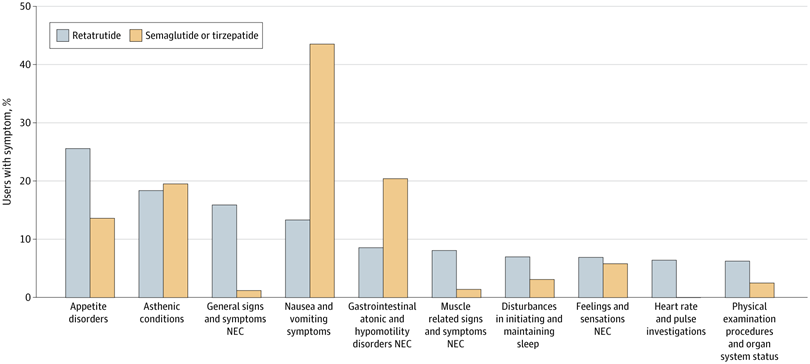
Chart depicting groupings of symptoms reported on social media. (Source: Self-Reported Adverse Effects Among Social Media Users Taking Nonapproved Retatrutide)
Researchers analyzed nearly 150,000 social media posts from 13,500 unique users related to unapproved retatrutide and found the most commonly reported side effects of the drug were increased appetite (reported by 1336 people), fatigue, increased energy, nausea, food cravings, insomnia, and heart rate increases. Other side effects included edema, muscle weakness, a skin burning sensation, and various psychiatric disorders, which were reported by 30% of users.
This comes as a KFF Health News investigation details reports of serious side effects among people using unapproved peptides such as BPC-157, TB-500, and retatrutide, including migraines, neurological symptoms, and hospitalizations, some of which echo the findings from social media. One man reported months of fatigue, anxiety, muscle and eye twitching, and emotional numbness even after stopping BPC-157, while another user experienced severe migraines and facial numbness after taking BPC-157 with TB-4. The users of these drugs outside of clinical trials are using black market drugs, for which they cannot verify the ingredients or guarantee safety.
Vascular surgeon and founder and chairwoman of Healthcare for Action, Dr. Anahita Dua, warned in the Washington Examiner that peptides linked to Chinese chemical manufacturers associated with the supply chains for fentanyl precursors should concern everyone from policymakers to patients. The article cites thousands of intercepted shipments and continued online sales despite FDA warning letters, and calls for stronger enforcement and coordination among federal agencies to combat illegal imports and protect American patients.
Doctors in South Carolina detailed the case of a man who developed Cushing's syndrome, likely from taking a supplement that was recalled for undeclared glucocorticoids. He took the supplement for nine months before developing symptoms, which included rapid weight gain. Doctors are highlighting the case to warn consumers to research the supplements they take, as some can still be available after recalls.
The Trump administration delayed implementation of new customs procedures for low-value international mail shipments by 90 days, moving the compliance deadline from October 22, 2026, to January 20, 2027.

PSM in the news
Want a summary of this news straight to your inbox every week, or a quarterly update on our publications? Subscribe to our newsletter here!
WWLTV in New Orleans spoke with PSM Executive Director Shabbir Safdar about how to distinguish real GLP-1 medicine from counterfeits. Watch here.
Regulators protecting patients in the news
Bloomberg reported that the FDA found black mold and bugs at two Chinese factories supplying weight loss drug ingredients to U.S. compounders. The outlet says the findings by FDA inspectors were obtained under Freedom of Information Act requests, and that both companies have been placed on Import Alert.
One manufacturer, Chengdu Shengnuo, had “significant insect activity” in the ceilings in addition to mold and filthy floors. Inspectors also caught staff hurriedly stuffing lab documents into lockers, and said personnel were pouring product samples into sinks “in a seemingly coordinated effort.” At Nanjing Chengong Pharmaceutical Co., FDA inspectors found that workers were buying active ingredients from other firms and repackaging them without testing to confirm products were safe.
An Arkansas compounder producing ketamine and fentanyl received an FDA warning letter for producing sterile drugs in unsanitary conditions. A Pennsylvania manufacturer was warned for violations of standard practice, including a microbiologist failing to record microbial results reported as too numerous to count and cracked testing plates being recorded as within acceptable limits. A Washington State facility was also cited for mishandling failed microbiological tests by averaging yeast and mold counts to produce passing results, failing to adequately investigate a fungal contamination recall, and other quality-control failures.
The FDA also warned a Korean manufacturer and a Chinese manufacturer and announced two nationwide recalls for medications distributed at the hospital level.
International
Another retatrutide and tirzepatide bust in the U.K. Australian authorities warn that peptides are sending people to hospitals. Additional news from India, Lebanon, Nigeria, Turkey, and Uganda.
The UK’s Medicines and Healthcare Products Regulatory Agency seized more than 12,000 counterfeit weight-loss pens containing purported retatrutide and tirzepatide, with an estimated value of £2 million, from a “filthy” warehouse in Birmingham. Investigators discovered packaging for approximately 30,000 additional products, raising concerns about the scale of the illegal operation. Authorities warned that the unregulated products may contain contaminated or incorrectly dosed ingredients, and noted that retatrutide is not authorised for use in the UK outside clinical trials.
Australian health officials are warning of a stark spike in emergency department visits related to peptide use in New South Wales. Hospitals recorded 1,180 emergency department admissions related to peptide use between July 2025 and September 2026, with average monthly presentations rising from five to 217 over the period. Officials cautioned that professional-looking packaging, online reviews, and purity claims do not guarantee a product’s safety or contents, and urged consumers to consult qualified healthcare professionals before using peptide products.
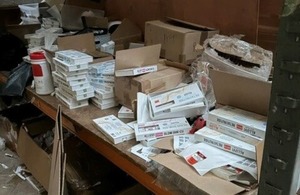
Photo: MHRA
Sixteen people in Turkey have been hospitalized over three months after experiencing complications following cosmetic Botox injections, with three requiring intensive care. Symptoms included difficulty breathing and swallowing, muscle weakness, and feeding difficulties. Separately, seven women were hospitalized in intensive care after receiving injections at the same beauty center, experiencing symptoms including double vision and drooping eyelids.
Ugandan authorities arrested two people who allegedly manufactured and distributed counterfeit antiseptic solutions that are commonly used in surgery. They were found in possession of over 200 liters of packaged counterfeit product, which they had been supplying to several clinics and laboratories.
Nigeria’s National Agency for Food and Drug Administration and Control destroyed unsafe and non-compliant products worth ₦22.73 billion between January and August 2026, targeting counterfeit medicines, adulterated food, unsafe cosmetics, and other regulated goods. During the eight months, the agency conducted 5,542 enforcement activities, made 52 arrests, and concluded 295 cases. Cosmetics accounted for the largest share of product seizure entries, followed by drinks and drugs.
Indian authorities cancelled 14 drug licences and suspended 29 others amid an investigation into counterfeit medicines and fraudulent billing. Investigators found that some firms recorded purchases and sales on paper while circulating fake drugs, and uncovered a cross-billing network operating without the physical supply of medicines. So far, authorities have seized illegal medicines and made two arrests.
Four vials of nimotuzumab, an expensive targeted cancer treatment, have allegedly gone missing from the Delhi State Cancer Institute. The hospital has launched an internal inquiry, while police are investigating whether the disappearance is connected to an organised network involved in the theft and diversion of cancer medicines.
Lebanese security forces raided warehouses suspected of storing unregulated cancer medications in Beirut, amid reports that counterfeit Iranian drugs were among the products seized. The raid triggered a confrontation with armed Hezbollah supporters, escalating tensions between the group and the Lebanese government.