
October 5, 2026: Two charged in connection with fake Ozempic that spurred FDA public alert
Major Stories
Two Indian nationals were charged in connection with counterfeit Ozempic pens that spurred a December 2023 public warning from the FDA. According to court documents, from at least July 2023 to April 2024, the men allegedly obtained the counterfeit products, which included the packaging, pen labels, and needles, from unauthorized sources in China. Even after the FDA’s warning, the scheme allegedly continued.
One defendant was extradited from Italy, while the other remains at large. If convicted, they each face a maximum of 71 years in prison. Documents show that more than 150 pharmacies and businesses fell victim to this scheme, which highlights the need for extra vigilance for those working in this area.
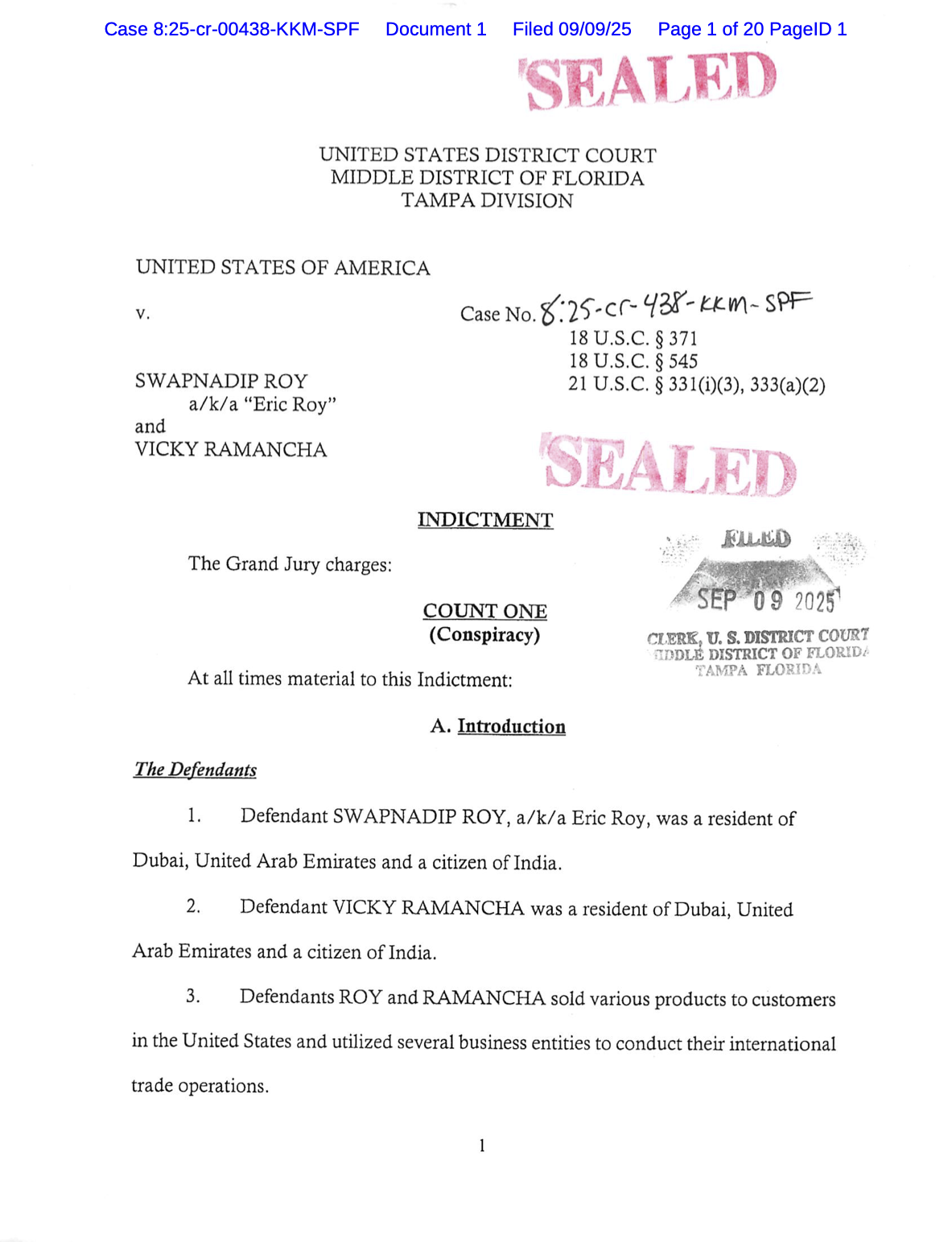
Read the indictment in our prosecution document library.
Domestic
Experts warn against taking unapproved, black-market peptides, citing serious risks and unknown origins. Researchers study the relationship between drug shortages and illicit online pharmacies. Iowa Board of Pharmacy warns nurse accused of prescribing unapproved drug.
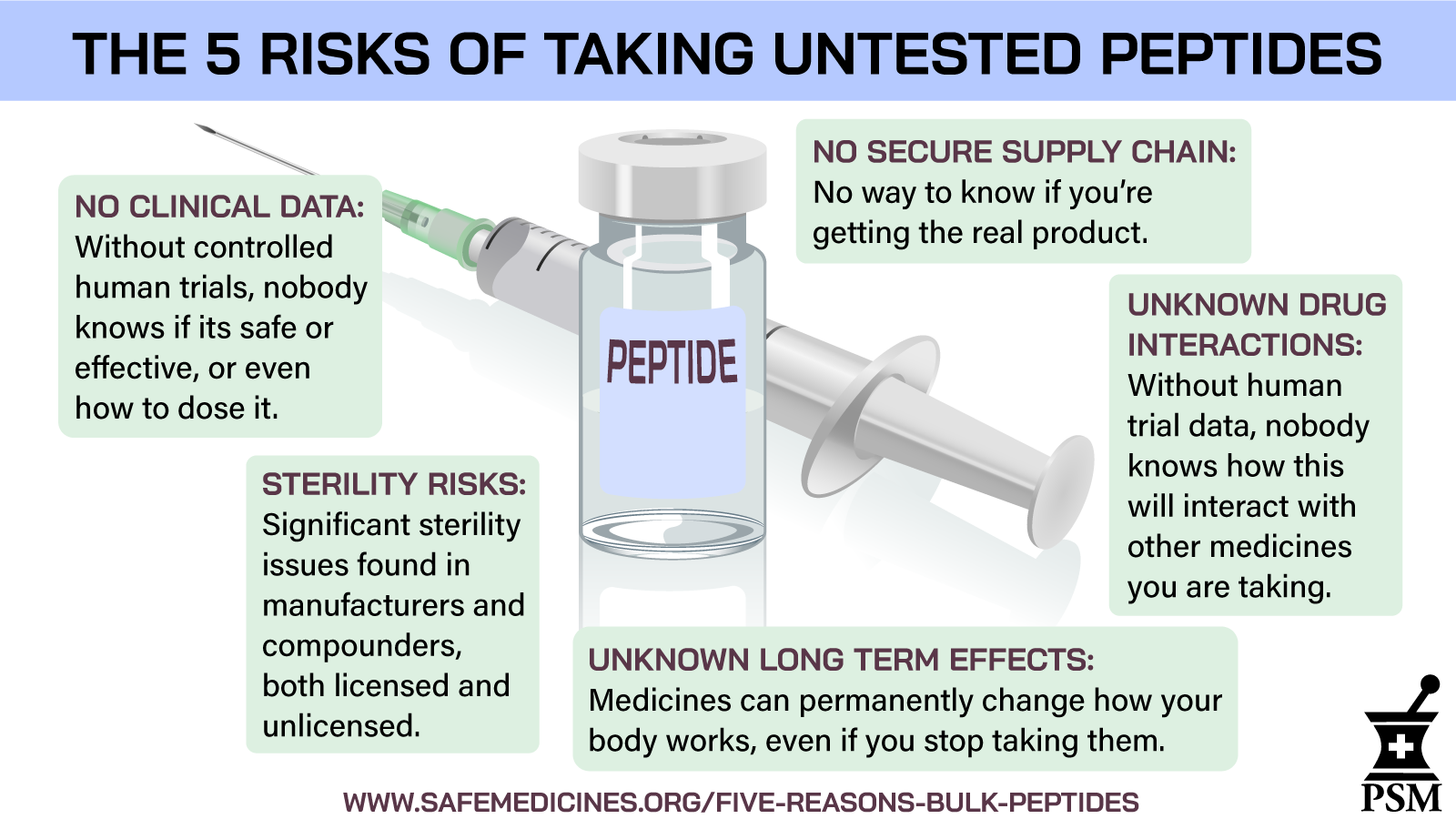
Learn more about five of the dangers patients face when they take unapproved peptides in our blog.
In an article for the American Journal of Managed Care, Catherine Varney, DO, warned that for many patients using unapproved peptides, harm is often unrecognized until a patient is seriously hurt. Dr. Varney, the obesity medicine director at the University of Virginia Health, attributes this to nonspecific symptoms, like fluid retention, muscle aches, and injection site reactions, that could be linked to serious cardiovascular events.
Pharmacist and outlet contributor Phil Crowley told KLS TV, “don’t jump the gun,” when asked about peptides. Discussing a number of drugs that have gained popularity on social media, including BPC-157, TB-500, GHK-Cu, and tesamorelin, he repeated one conclusion: that human studies are limited. Crowley also raised concerns about the sourcing of these serious drugs.
Fred Mills, Chief Policy Officer of Americans for Safe and Effective Medicines, wrote in MedCity News that patients who obtain drugs, including retatrutide, through social media often believe they are receiving products that are safer than they actually are. He attributes this to marketing claims of “third-party validation,” and the language used online misleads buyers.
A new study from researchers at IE University in Spain found that during drug shortages in the United States, illicit online pharmacies’ sales of the affected drugs rose by 40.5%, and sales remained 32.8% higher in the six months following the shortages. The researchers found that these effects are most pronounced in drugs that treat chronic conditions, drugs with fewer substitutes, and drugs with more intense shortages. They also found that patients who turn to illicit pharmacies continue to use them as their main source for medicines even after shortages are resolved. Luis Diestre, one of the researchers who conducted this study, joined the PSM's Executive Director to talk about how he researches illegal online pharmacies. Find the podcast here.
An Iowa advanced registered nurse practitioner has been charged by the state’s Board of Nursing with engaging in unethical conduct for prescribing retatrutide, an investigational, unapproved weight loss drug, to a patient and herself. There is no legitimate supply chain for retatrutide outside of Eli Lilly programs; any drug that is sold outside of Eli Lilly channels is a black market drug. The nurse was warned and is required to complete 30 hours of educational training on prescribing practices and ethics.

Pill Presses
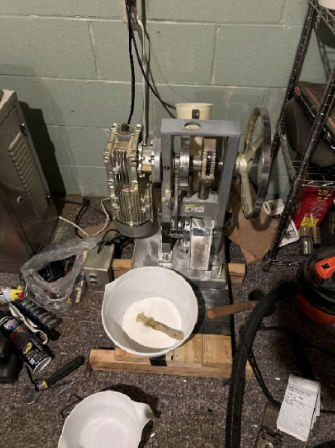
Pill press seized in Michigan. (U.S. District Court for the Western District of Michigan).
An investigation into suspicious packages led to a drug bust at a Michigan home, where investigators seized a pill press and over 22 pounds of counterfeit Xanax. The owner of the home was allegedly in regular correspondence with a Chinese phone number associated with several companies that produce pill presses. Authorities in Massachusetts also seized a pill press during a search warrant that led to an arrest. A man in Ohio was sentenced to over five years for crimes related to producing counterfeit prescription pills in his home.
Regulators protecting patients in the news
The FDA has published a fourth recall of compounded glutathione products due to elevated endotoxin levels. Texas-based Greenwich Rx, which was issued a cease and desist order from the California Board of Pharmacy for shipping products without a license, is recalling ten lots that were distributed to patients nationwide between June 26, 2026, and September 21, 2026. The company reported that two patients required emergency department care after IV administration of a glutathione product that was not formulated for IV use.

Greenwich Rx glutathione (Photo: FDA)
In August, the FDA announced that at least 30 patients reported side effects from compounded glutathione following recalls from Victory Medical Center Pharmacy and Optimal Balance Pharmacy, both for elevated endotoxin levels. The agency said that both facilities obtained their glutathione, which was labeled as dietary supplement grade, from the same manufacturer. The agency also reminded compounders that supplement-grade raw ingredients were not appropriate to make injectable drugs.
The FDA warned a German manufacturer of sterile IV drugs after an inspection revealed that the company did not adequately inspect the root cause of an endotoxin result failure. The company received reports of adverse events associated with the famotidine injections and subsequently recalled three batches. The FDA inspection also revealed a history of at least nine instances of hair contamination in filled media. The firm sold batches of drugs associated with these contamination instances, despite them being considered adulterated. At the advice of the FDA, the firm also recalled glycopyrrolate, lidocaine, and ropivacaine hydrochloride injections.
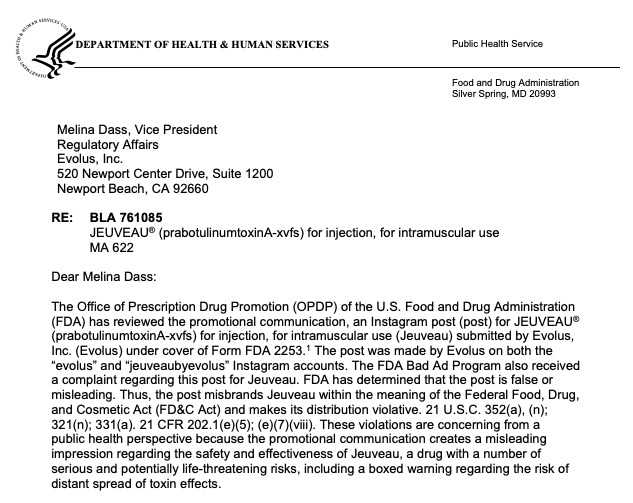
The agency sent a letter to a beauty company that promoted a product intended to rival AbbVie’s Botox in an Instagram reel; the FDA says it misled consumers by comparing their product to something incorporated into an everyday cosmetic routine, minimizing risks associated with the serious drug. The FDA also warned a South Korean website that sells unapproved, misbranded Botox.
Several firms were warned for failing to test the identity of incoming ingredients and final drug products, including an Armenian manufacturer of disinfectant products, a Florida manufacturer of over-the-counter medicines, a New Jersey manufacturer, and a poorly maintained dietary supplement manufacturer.
International
USAID and NABP conduct operations in Kenya. Authorities in Benin seize counterfeit drugs. Indian authorities arrest three in counterfeit drug cases.
The United States Agency for International Development, Office of Inspector General, led a field operation in Kenya in coordination with the National Association of Boards of Pharmacy and several Kenyan agencies to investigate diverted U.S.-funded medical commodities. Investigators seized thousands of non-compliant products. Two arrests were made, and four pharmacies were closed for illegal schemes and regulatory violations.
Authorities in Benin seized over 180 kilograms of counterfeit pharmaceutical products, arresting three, as an ongoing investigation into illegal medical supply chains continues. Indian authorities arrested two more people in connection with a scheme related to fake blood pressure drugs and extradited another man from Azerbaijan, suspected of participating in a network that supplied fake cancer drugs to over 90 hospitals and clinics.