
November 2, 2026: HHS tells compounders it will not enforce peptide regulations
Major Stories
The Department of Health and Human Services (HHS) said that it would exercise “enforcement discretion” for six unapproved peptides, which means it will not take legal action against compounding pharmacies making the drugs. In July, all six peptides (BPC-157, epitalon, KPV, MOTS-c, semax, and TB,500) were recommended to be eligible to compound by the FDA’s Pharmacy Compounding Advisory Committee (PCAC), despite the FDA’s scientists and experts' warnings of a lack of proven safety or efficacy studies.
The policy effectively allows compounders to produce these drugs, which are massively understudied, even though they don't meet federal criteria for compounding. PSM Executive Director Shabbir Imber Safdar said the decision “leaves Americans in a gray area as to whether peptides are safe or not” in a statement. He also criticized the “insufficient scientific evidence to support the safety of these peptide products and that the [PCAC] was constituted in violation of … federal laws that govern conflicts of interest in agency advisory proceedings.”
In their coverage of the enforcement discretion decision, Politico reported that consumers may see little change in the availability of these unapproved products, depending their state. Because these pharmacies are regulated primarily at the state level by individual state boards of pharmacy, states may disregard federal guidance and maintain their own prohibitions. As a result, consumers face an uneven national rollout, with permissive states allowing access while stricter states like Alabama, Mississippi, and Ohio may continue to block or heavily restrict sales.

Domestic
An update on Florida’s drug importation plan and PBM reform.

American policymakers have been trying to save money through Canadian drug importation for decades, without success. Learn the current state of the issue.
Florida has paid a Texas-based company, LifeScience Logistics, over $81 million since 2020 to facilitate a Canadian prescription drug importation program, News 6 reports. Despite the massive expenditure, the program has not imported a single medication, and the state's Agency for Health Care Administration recently confirmed the company has no current contracts with foreign manufacturers.
A rule newly published in the Federal Register by the Department of Labor will require Pharmacy Benefit Managers to disclose detailed fee and compensation data to self-insured group health plans. Taking effect in January 2027, the regulation targets PBM revenue practices like spread pricing and manufacturer rebates to improve market competition and lower prescription drug costs.
Georgia police recovered a pill press in an operation, arresting six people on felony charges. A Massachusetts man pleaded guilty to his involvement in a drug trafficking operation where a pill press was recovered.
PSM in the news
Want a summary of this news straight to your inbox every week, or a quarterly update on our publications? Subscribe to our newsletter here!
PSM’s research and public statements were mentioned in multiple outlets during national coverage of the HHS enforcement discretion decision, including NPR, NBC News, MarketWatch, BioSpace, and more. PSM Executive Director Shabbir Imber Safdar told NBC News, “Imagine what it means for the nation’s top drug regulator to announce they won’t enforce the laws on people making completely untested compounds and distributing them to the public.”
Safdar also spoke to the American Homefront Project, opposing proposed legislation to increase access to the unapproved drugs for those in the military. Service members are often more vulnerable to performance-enhancing drugs due to the physical demands of their jobs.
The Longmont Times-Call published Facing Fentanyl founder and PSM board member Andrea Thomas’s editorial in support of Colorado Proposition 132, a ballot measure that would increase penalties for manufacturing or selling synthetic opioids and emphasize treatment as a part of case resolution.
Regulators protecting patients in the news
The Ohio Board of Pharmacy issued a summary suspension notice to a Texas compounding pharmacy based on allegations they shipped hundreds of unapproved compounded drugs to Ohio patients. The agency also says that records indicate that the pharmacy sent prescriptions to patients before obtaining a license in Ohio.
Victory Medical Center, which issued a recall of compounded glutathione products due to elevated endotoxin levels in August, has issued another class II recall for thousands of vials of various products due to “lack of processing controls.” In a September inspection findings report, the Texas-based compounder was cited for inappropriately using dietary supplement grade ingredients in several sterile drugs, as well as for poor cleaning practices.
The FDA issued a warning letter to a North Dakota manufacturer of PET scan medications for not formally identifying or investigating instances of positive microbiological contamination, which deems their products adulterated. The agency also warned a Chinese and a Singaporean company for practices that led to their products being adulterated, and several other companies for selling unapproved drugs.

American regulators are struggling to secure patient safety in the face of the growing mass compounding market. Learn more about the problem, and PSM's action plan to help.
International
Canadian and Irish regulators warned about counterfeit prescription pills. A peptide fatality in Australia. More news in Malaysia, New Zealand, Turkey, and elsewhere.
Canadian authorities issued drug alerts about benzodiazepines and tranquilizers being sold as opioids and counterfeit Dilaudid pills made with isotonitazene.
Irish authorities are warning about counterfeit alprazolam made of meclonazepam, which they described as a designer benzodiazepine, being distributed in two types of blister packs. Naloxone will not reverse benzodiazepine overdoses.
An Australian coroner recommended the country's medicines regulator consider tougher restrictions after finding the cardiac arrest death of an actor to be “triggered by” the use of two popular peptides. It’s believed to be the first death caused by unapproved peptide use in Australia. The actor reportedly disclosed to a nurse that he had been taking double the prescribed dose hours before collapsing.
This comes as Radio New Zealand reports that users of unapproved peptides, including retatrutide, find them affordable and easy to access and hear success stories from friends and on social media, fueling their popularity. Malaysian authorities have seized over 700 units of retatrutide and semaglutide in raids since September 2025, despite retatrutide not being approved for use in the country.
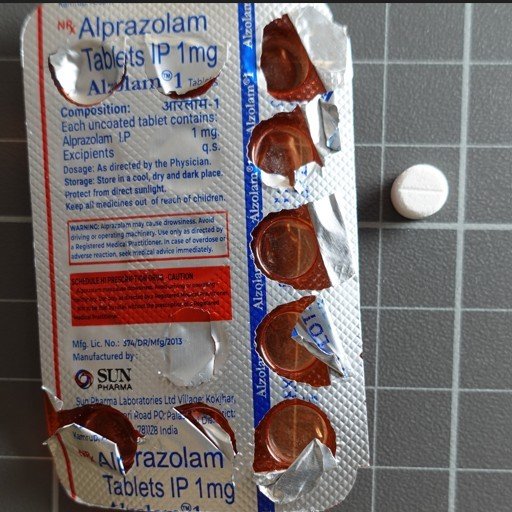
Counterfeit alprazolam seized in Dublin, Ireland in October 2026. (HSE)
Authorities in the Netherlands shut down dozens of websites offering sedatives, painkillers, and sleeping aids and arrested three linked to the deaths of three people. Some of the pills sold contained synthetic opioids, and the public prosecution service is demanding prison sentences of up to 10 years.
Turkish authorities detained 22 people associated with a scheme to repackage and sell expired cancer drugs. Ugandan authorities arrested two people who are accused of operating an illegal store selling HIV medications and test kits. Pakistani authorities have declared six medicines to be counterfeit, including antibiotics like Augmentin, after testing showed no active ingredients.