
November 9, 2026: Woman’s cancer returns after taking med spa peptides
Major Stories
“I’m always going to wonder.” Paige Gordon bought a peptide promising glowing skin on the recommendation of a licensed nurse she’d been a patient of for years at a med spa. Gordon, who was diagnosed with and overcame breast cancer in the last two years, wasn’t warned of any risks associated with the drug. Two months ago, she was told her cancer returned.
The peptide, BPC-157, is unapproved by the FDA and has little clinical research, but because it was recommended by a medical professional and was sold at a clinic, she thought it must be “above board.” NBC Bay Area says the link between BPC-157 and cancer growth is “theoretical,” and there is no conclusive evidence that the peptide contributed to Gordon’s cancer returning, but as PSM’s executive director Shabbir Imber Safdar told the outlet, “It’s just not been studied in enough humans to know.”
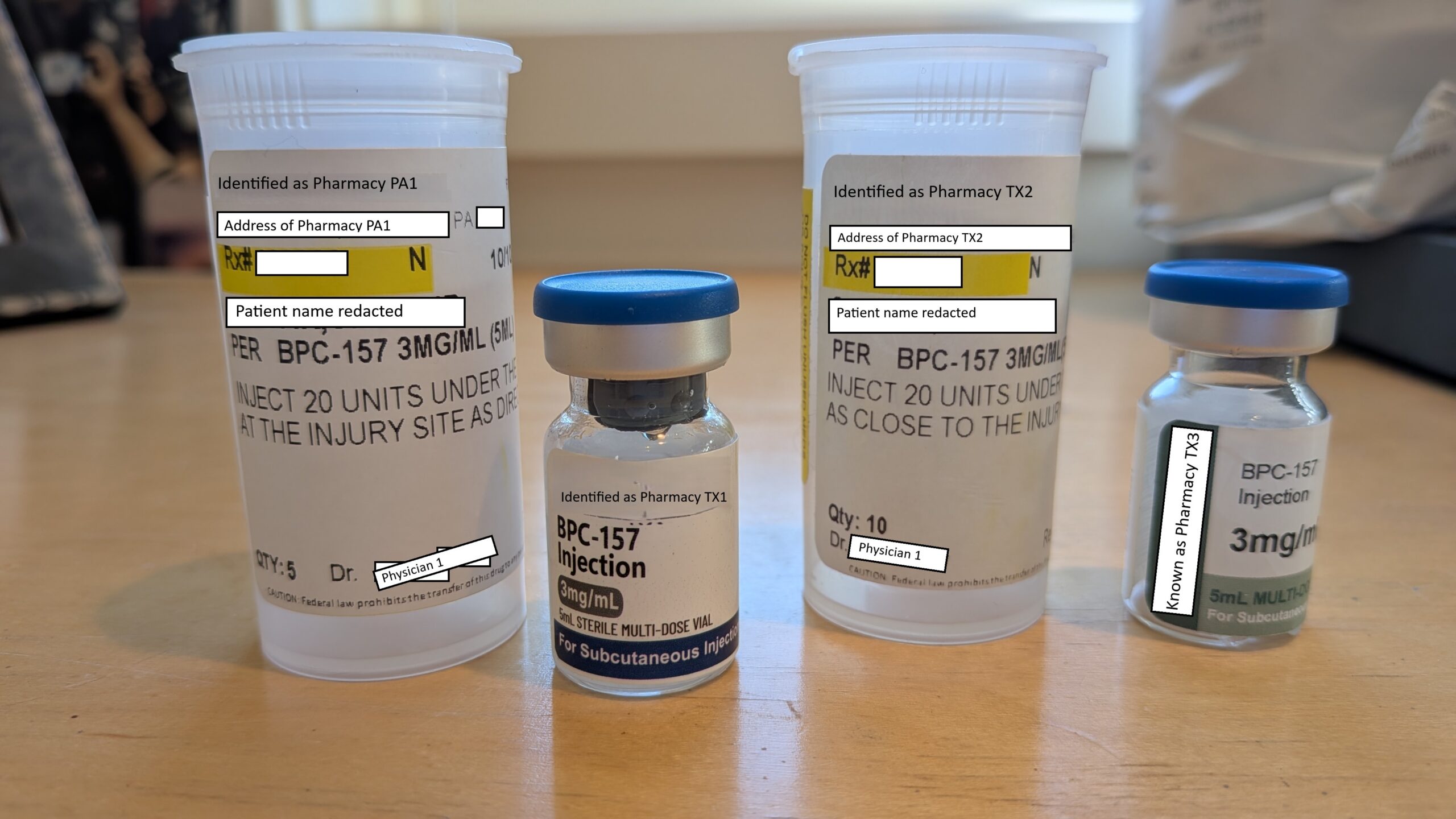
BPC-157 vials were obtained from a telehealth provider with little friction. Learn more in PSM's post about our citizen petition.
Domestic
Class action lawsuit filed against Empower Pharmacy. Review of the regulatory landscape for compounding. Poison center reports a spike in weight loss drug calls.

A class action lawsuit filed in New Jersey alleges Empower Pharmacy falsely marketed its compounded weight loss drugs as “proven, personalized, and safe.” The lawsuit claims the compounder promoted its drugs using results from clinical trials for the FDA-approved versions, that its personalization claims were false, and that the company claimed it met safety standards. Plaintiffs cite a September 2026 FDA warning letter alleging the company produced copies of approved weight loss drugs "regularly and in inordinate amounts," along with several FDA and state pharmacy board warnings about safety practices at Empower facilities.
This comes as The Regulatory Review reports that despite the official resolution of federal GLP-1 shortages, high brand-name prices continue to drive widespread consumer demand for compounded alternatives. This sustained reliance poses serious public health risks, as unapproved compounded formulations bypass FDA premarket review and have been linked to sterility failures, dosing errors, variable potencies, and novel chemical impurities.
Washington Poison Center is reporting a sharp rise in calls involving weight loss medications. The center says calls between January and September have doubled in 2026 compared to the same period in 2025. Of particular concern are calls involving retatrutide, an unapproved, experimental weight loss drug, according to a representative for the center. The poison center and experts on weight loss treatments agree that taking unapproved drugs like retatrutide risks exposing yourself to unknown contaminants and dosing errors.
A Virginia man has been charged with nine counts, including operating an unregistered manufacturing facility and introducing misbranded drugs into U.S. markets. Prosecutors say the man advertised prescription drug components and sold the drugs on thousands of occasions. The substances include Prussian blue, which helps remove radioactive material; methylene blue, which treats serious blood disorders; sildenafil citrate, an erectile dysfunction treatment, and tamoxifen citrate, a breast cancer drug.
Pill Presses
A man living in Oregon was sentenced to over 17 years for operating a fentanyl manufacturing and distribution hub out of his home. A search of the residence led to the seizure of a pill press, and the operation is associated with at least one death.
PSM in the news
Want a summary of this news straight to your inbox every week? Subscribe to our newsletter here!
PSM Executive Director Shabbir Imber Safdar was cited in The Scientist’s coverage of HHS’s enforcement discretion decision.
Regulators protecting patients in the news
A Florida compounding pharmacy initiated a recall of 209 units of its compound glutathione injections for endotoxin contamination, making it the fifth facility to recall injectable drugs for elevated endotoxin levels. In August, the FDA reminded compounders that dietary-grade ingredients are not suitable for injectable drugs after receiving reports of 30 patient illnesses.
365 Whole Foods Market ashwagandha capsules have also been recalled by manufacturer Vitality Works for potential Salmonella contamination.
The FDA warned a telehealth company for falsely claiming that its compounded medications were FDA-approved on Twitter, and a Chinese API manufacturer for distributing adulterated “critical starting materials.” The latter company was placed on import alert.
The FDA also warned several other companies for violations like failing to meet aseptic requirements for sterile drugs and failing to test for high-risk ingredients. One company producing flavored toothpaste was cited for failing to test for diethylene glycol and ethylene glycol, which have killed hundreds worldwide.

Recalled 365 Ashwagandha capsules. (Photo: FDA).
International
Authorities in Canada and Australia issued warnings about unauthorized peptides. Eli Lilly is working to stop the online sale of counterfeit Mounjaro in the U.K.
Health Canada is warning consumers to avoid unauthorized injectable peptides after testing found bacteria in the products sold online. The agency said that the products may cause serious infections, hospitalization, or sepsis.

Synedica-branded peptide products Australian authorities are warning consumers to avoid. (Photo: TGA).
In Australia, regulators tested seized peptide shipments, and they discovered that products labeled as retatrutide were significantly underdosed compared to their packaging and varied wildly from vial to vial, while products marketed as the healing peptide TB-500 contained no detectable active substance whatsoever. Meanwhile, the Australian Broadcasting Corporation reported that fitness and wellness influencers are aggressively monetizing the black market by promoting performance-enhancing and weight-loss compounds to mainstream audiences through affiliate codes and sponsorships.
In the U.K., Mounjaro developer Eli Lilly initiated High Court proceedings to compel internet service providers to block websites and domains caught selling counterfeit, unapproved versions of its weight-loss and diabetes treatments.
Dutch regulators and customs officials have reported “drowning” in a relentless influx of websites selling cheap, bulk peptide powders shipped directly from chemical suppliers in China to feed a constantly regenerating network of domestic online vendors.
A recent police bust in Canada dismantled an illicit lab operation centered around an industrial pill press.