
June 26, 2026: PSM releases road map to improve patient safety amidst compounding boom
Major Stories
The Partnership for Safe Medicines released two publications and is calling for signatures on a letter to the FDA's recent docket about the 503B Bulks List.
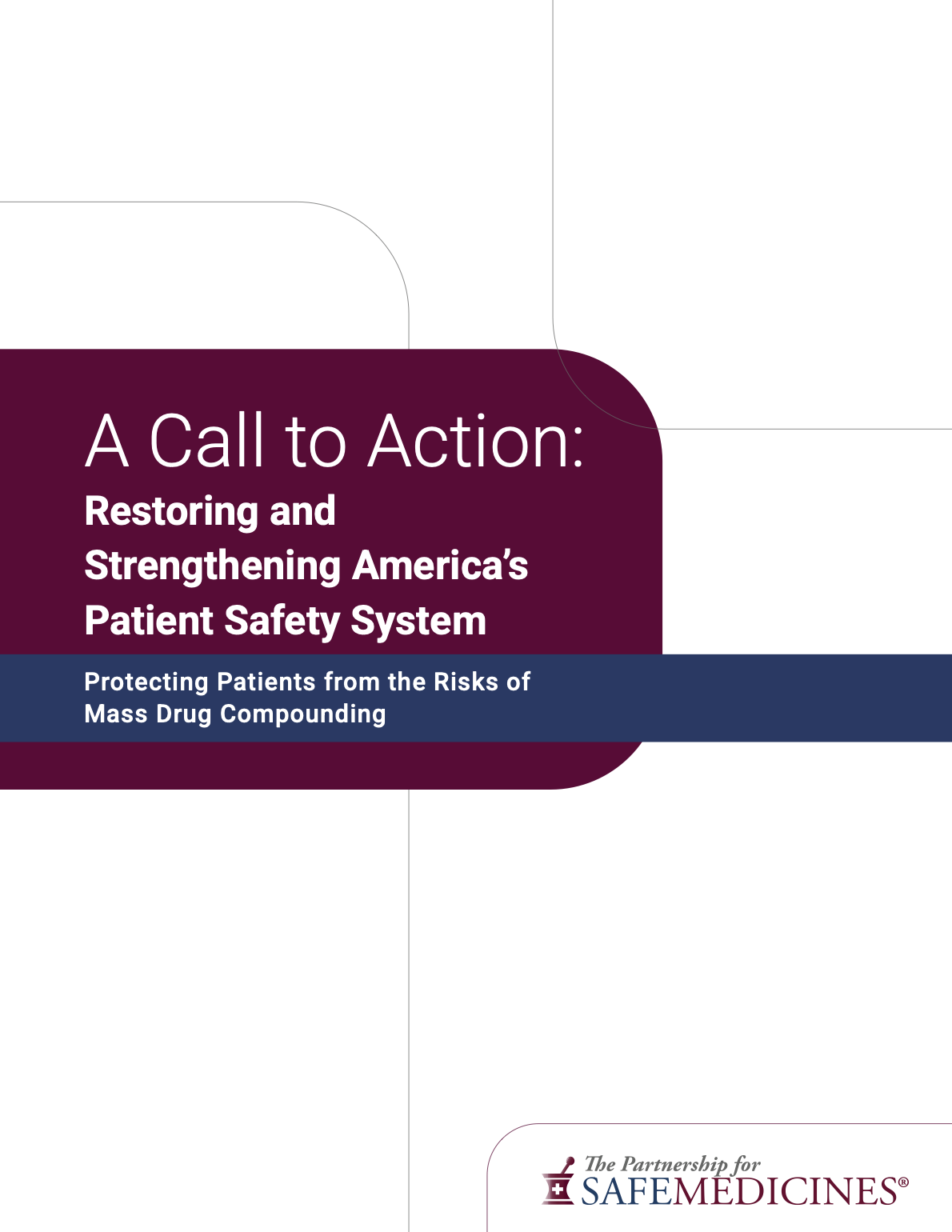
Last week, the Partnership for Safe Medicines published a report, A Call to Action: Restoring and Strengthening America’s Patient Safety System, which serves as a roadmap for policymakers and regulators to uphold the gold standard system that protects Americans from untested and unsafe medicines.
The rapid growth of compounded GLP-1 drugs has created a large market for medications that have not undergone the FDA’s standard review for safety, quality, or effectiveness. Although the FDA only allowed compounding during GLP-1 shortages, these products remain widely used despite the shortages ending, and have been associated with reports of adverse events, the rates of which are increasing at an alarming rate.
Our two-pillar strategy would help to protect patients from the rapidly growing market of GLP-1 drugs. Pillar I aims to strengthen enforcement of existing laws by addressing compounding violations, restricting unsafe ingredient imports, and combating deceptive advertising. Pillar II addresses the need to implement new laws and regulations, including clarifying what constitutes an impermissible copy of an approved drug, improving supply chain traceability, and establishing stronger oversight of med-spas.
PSM is calling on organizations interested in supporting the traceable drug supply to sign onto this letter to the FDA's recent docket about the 503B Bulks List. Read the letter and learn more here.
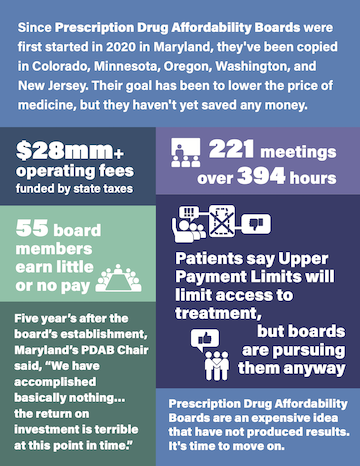
PSM also released an update on the cost of prescription drug affordability boards (PDABs), which set upper payment limits (UPLs) despite concerns about risks to pharmacies and access to medicine. Progress has been slow and costly: across five years and 400 hours of meetings, only three UPLs have been passed at a taxpayer cost exceeding $28 million.
In 2025, Maryland’s PDAB chair said, “We have accomplished basically nothing… the return on investment is terrible at this point in time,” and Virginia Governor Abigail Spanberger vetoed legislation to establish a PDAB, citing high costs and lack of demonstrated effectiveness in other states.
Domestic
Healthcare fraud indictments, dark web vendor complaints, and clinician perspectives on retatrutide.
Arizona Attorney General Kris Mayes announced 42 indictments across ten cases as a part of a campaign targeting healthcare fraud. Five cases levy charges related to drug mishandling, including possession of prescription-only drugs, sale or transportation of narcotic drugs, and sale of misbranded drugs. Two cases involve unlicensed individuals who allegedly performed cosmetic injections, one of whom may have been using fillers that were not FDA-approved. Another case involves a licensed pharmacist who allegedly generated fraudulent prescriptions for oxycodone to divert the controlled substance for his personal use and sale.
According to federal court documents filed in Nebraska, a darknet vendor sold counterfeit Adderall and MDMA through online marketplaces, with laboratory testing showing that the purported Adderall contained methamphetamine. A criminal complaint links the man to the operation through controlled purchases, postal surveillance, phone-location data, and digital evidence, alleging he helped package and ship thousands of drug orders. Reporting claims that an account associated with the man completed 10,000 sales and 5,000 had positive reviews.
TikTok user @rachthepa, who claims to be a certified physician assistant, warned that gray market peptide users who present to the ER are more challenging to treat given the risks, like unpredictable potency or contaminants, associated with these unregulated products.

Photo from USA v. Peter Lam complaint
Court filings by New York health officials alleged that a manufacturer of a cadaver fat-derived cosmetic filler, alloClae, smuggled the product to plastic surgeons in the state in violation of New York regulations. The company disputes allegations that it "smuggled" alloClae, arguing that the FDA, not New York state, has regulatory authority over the product.
Clinicians around the country are reporting widespread use of weight loss drugs, including the experimental Eli Lilly product retatrutide, which is proving to be a challenge to manage. Among those challenges is the lack of assurance of the quality of the drugs claiming to be retatrutide. Anne Peters, MD, a professor of clinical medicine and clinical scholar at the University of Southern California, told Medscape Medical News, “For all I know, they might be taking baby powder.” Courtney Younglove, MD, founder and medical director of Heartland Weight Loss in Kansas, compared the popularity of retatrutide to a “huge, unregulated human experiment.”
The Maryland PDAB recently announced they plan to consider adopting upper payment limits for Jardiance and Ozempic. Price caps are an unproven policy tool that advocates warn may cause pharmacies to close and limit access to medicines. The board is accepting public comment through July 27, 2026, which can be made by emailing comments.pdab@maryland.gov and including your name, address, and the agenda item your comment addresses.
A man with stage IV cancer spent five months navigating getting treatment from a foreign pharmacy after his insurance abruptly stopped covering his medications. That story isn’t an outlier, according to a recent study that found that alternative funding programs (AFPs), which employers use to reduce specialty drug costs, were associated with longer delays in accessing medications, more treatment interruptions, and worse clinical outcomes compared with standard insurance coverage. Researchers and patient advocates say AFPs often force patients to navigate complex assistance programs or international pharmacies, creating administrative burdens and potentially jeopardizing timely access to treatment.
Pill presses
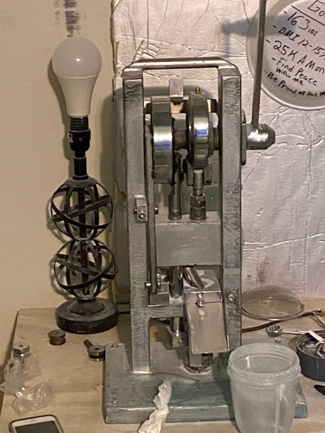
Hand crank pill press found in Massachusetts (Photo: DOJ).
Two men in Massachusetts were sentenced to 53 months in prison and three years of supervised release for their roles in manufacturing and distributing counterfeit pills. The men used a hand-crank-style pill press to produce counterfeit oxycodone pills containing fentanyl. Another Massachusetts man was sentenced to 30 months in prison and three years of supervised release after distributing thousands of counterfeit oxycodone pills containing fentanyl and possessing a pill press.
A man in Maryland was sentenced to five years in prison and five years of supervised release for his role in a drug trafficking conspiracy. While investigating two residences associated with him, investigators found a pill press, pill-press parts, and bricks of cocaine.
Regulators protecting patients in the news
The FDA published a recall for Beekeeper’s Naturals Saline Nasal Spray sold through Amazon. The product, with the lot number 5950 and expiration date 02/2028, tested above the acceptable microbial limits for yeast and may contain Aspergillus spp, which the FDA warns could cause serious infections like invasive sinusitis and lung infections for at-risk populations.
The FDA warned a South Korean manufacturer for data manipulation, failure to investigate failed quality tests, and inadequate sterile manufacturing controls. Following the inspection, the company agreed to suspend U.S. drug production. The agency also warned a Canadian sterile drug manufacturer for inadequate aseptic processing controls, flawed smoke studies and media fills, and poor environmental monitoring and contamination prevention.
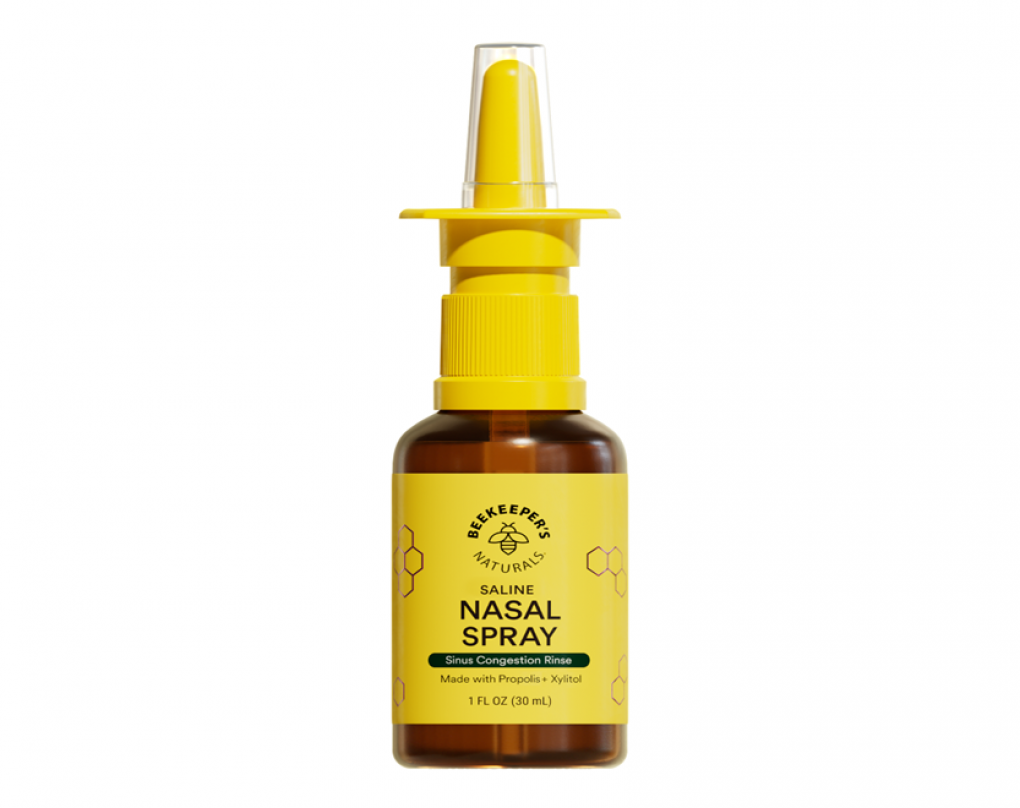
FDA photo of recalled nasal spray.
The FDA issued warning letters for multiple websites and companies selling unapproved drugs, many of which were marketed to treat prostate cancer. Some of these products included high-risk injectables, drugs sold on the TikTok Shop, and other unapproved new drugs that were produced in unsanitary conditions, causing them to be adulterated.
International
Retatrutide seizure in Greece, while Australia reports serious adverse reactions to products claiming to contain the substance. The UN reports on evolving drug trends. India to expand their QR-code based drug tracking system.
Greek authorities seized a record quantity of retatrutide in an illegal steroids lab in the basement of a pharmacy. Authorities found the drug, which has not been approved anywhere in the world, among approximately 1,000 injectable weight loss products. The pharmacy's owner was arrested, and investigations into how he obtained the drug are ongoing. Investigators say the operation has been running for two years and estimate that it shipped to 90 countries under the guise of dietary supplements. They also estimate that more than 15,000 shipments were sent and that the operation's proceeds exceeded €1 million.

Lab in pharmacy basement that produced retatrutide. (Photo: Hellenic Police)
In a joint statement, the Therapeutic Goods Administration and Chief Medical Officer in Australia say that the list of serious adverse effects associated with the use of unregulated peptides is growing. On the same day, the Victorian Department of Health released an alert, identifying six cases of acute liver injury in the state from products labeled retatrutide, reta, R-10, or R-20.
The UNODC World Drug Report 2026 says global drug markets are rapidly evolving due to technology, instability, and organized crime innovation, with a surge in synthetic and novel drugs and expanding trafficking networks worldwide. It reports rising global drug use, growth in substances like cannabis, methamphetamine, and cocaine, and a shift toward more potent synthetic opioids as traffickers adapt to enforcement pressures.
Indian drug regulators announced an expansion of their QR code tracking system to manufacturers of all vaccines, antimicrobials, addictive medicines, and cancer drugs over the next two years. The QR code-based system is already applicable to 300 brands of medicines. At the same time, authorities in the country uncovered a counterfeit medicine operation involving fake allopathic drugs and adulterated Ayurvedic products. Lab testing found that the counterfeit Chymoral Forte and Kamraj Capsules contained undeclared drugs like tadalafil and paracetamol.
Authorities in Nepal seized a huge quantity of counterfeit asthma medicine across the country. Seroflo Rotacaps 250 is a widely prescribed asthma medication, officially produced by an Indian pharmaceutical company. Authorities have listed batch numbers 5SA2150 and 5SA0759 from various distributors as the counterfeits.
In Thailand, over 130,000 fake cough syrup bottles and equipment used in a counterfeiting production network were seized by authorities. The total value of the seized product was estimated at more than 30 million baht (over 900,000 U.S. dollars). Investigators say that the medicines were being mixed with kratom juice to produce a psychoactive drink known as “4×100.”
Regulators in the United Arab Emirates issued an alert about Botox cosmetic injections with the batch number “C7048C4,” which was found to be counterfeit, warning of the risk of unusual symptoms or unforeseen complications.