
October 13, 2026: Mounting evidence that popular unapproved peptide causes cancers
Major Stories
More evidence links melanotan-II to skin cancer. PSM talks to a family advocate about the risks of performance-enhancing drugs and releases our six-month importation update.
Another case report has been published linking the use of melanotan-II to occurrences of skin cancer. Doctors in Michigan and Illinois reported that a man who injected the unregulated peptide developed a melanoma lesion after only taking the drug for five weeks. The man experienced nausea, headaches, appetite loss, and changes in existing moles after obtaining the peptide through his local gym. Although doctors cannot definitively link the melanoma to the drug, the case adds to existing concerns about serious side effects and the risks of using products without established safety standards or medical oversight.
The report echoes concerns raised in a recent KQED podcast about melanotan-II, which has been promoted online despite limited human safety data and potential risks. These conversations come as PSM sat down with the sister of an Australian man who died at 33 after years of using body-enhancing drugs, including peptides. She is sharing his story to raise awareness and prevent other families from experiencing similar loss. Her brother believed the products he used were safe, but recent testing of unregulated peptides has found incorrect dosages, missing active ingredients, and contamination.
PSM also published an update on the state of drug importation, which features the last six months of state and federal legislative updates, new research, and advocacy work related to Canadian drug importation and alternative funding programs. Learn more in the handout!

Read PSM's six-month update on foreign drug importation and alternative funding programs in our handout!
Domestic
Patient harm linked to unapproved botulinum toxin injections in New York and Colorado. Eli Lilly sues five more retatrutide sellers. Over-the-counter skin creams adulterated with corticosteroids and antifungals. Washington State’s pharmacy association speaks out on upper payment limits.
A New York City med spa owner has pleaded guilty to illegally importing and administering mislabeled botulinum toxin products that were marketed as Botox. The products were obtained online from South Korea and dispensed to clients, one of whom developed botulism and required hospitalization. The Centers for Disease Control and Prevention published an investigation into three women who experienced neurological symptoms after receiving injections of an unapproved botulinum toxin product at a Colorado medical spa in late 2025 and early 2026. Investigators found that the spa had also purchased the product online and identified unsafe practices involving dilution, vial reuse, temperature monitoring, and storage.

An article in JAMA highlights the growing black market for retatrutide and zenagamtide, experimental weight-loss drugs that have not been approved by the FDA. Reports have linked black-market products labeled as retatrutide to hospitalizations, liver toxicity, and a potentially fatal esophageal rupture; laboratory testing has also found products containing incorrect amounts of the drug or entirely different ingredients. Although clinical trials show promising weight loss, researchers caution that these findings do not establish the safety of unregulated versions.
Eli Lilly filed five additional lawsuits against online vendors and a weight-loss clinic accused of selling unauthorized versions of retatrutide. In August, the company filed six similar lawsuits aimed at curbing the sales of the drug.
A study published in JAMA Network Open found that a third of 18 selected over-the-counter skin creams marketed online contained an undeclared prescription-only corticosteroid at concentrations up to 9.2 times higher than those in FDA-approved topical formulations. Two products also contained undisclosed antifungals, miconazole or terbinafine. Repeated exposure to these substances can cause serious harm, including skin thinning, discoloration, steroid acne, and, around the eyes, glaucoma.
FDA staff are raising concerns about a Trump administration proposal that could temporarily allow certain unapproved peptides to be dispensed through compounding pharmacies while the government develops new regulations. The proposal follows an FDA advisory panel’s recommendations to permit access to six previously restricted peptides, despite warnings from FDA scientists and other medical experts that these substances lack sufficient testing and human safety data.
The Washington State Pharmacy Association urged the state’s Health Care Authority to account for risks to independent and rural pharmacies in proposed rulemaking about upper payment limits on prescription drugs. In comments submitted to the agency, the association argues that capping what pharmacies can receive for affected drugs could force them to dispense medications at a loss, stop stocking them, or close.
A federal jury convicted a Michigan physician for his role in a $100 million drug distribution and health care fraud scheme involving an ADHD telehealth platform. He prescribed more than two million Adderall and other stimulant pills without examining patients, including individuals with substance use disorders and serious psychiatric conditions whose symptoms were worsened by the drugs. He received more than $1 million for his prescriptions and recruited other medical professionals into the scheme.
In an editorial in TheWell News, vice chair of the Collaborative for Evidence-Based Medicines Michael Stepanovic argues that the widespread distribution of compounded weight loss medications undermines the original purpose of medication compounding. He warns that telehealth platforms and online pharmacies are marketing compounded drugs at scale while misleading consumers about their regulatory status, safety, and effectiveness.

Read WSPA's letter here.
Pill Presses

Pill presses seized in Tennessee (photo: DOJ).
In Tennessee, a man was sentenced to more than 26 years in federal prison after investigators discovered more than half a dozen pill presses used to produce fentanyl pills resembling brand-name medications, alongside large quantities of narcotics. In two Georgia investigations, authorities seized multiple pill presses during searches connected to an alleged criminal gang’s drug and firearms trafficking network and a separate operation stemming from a traffic stop. In Massachusetts, the DEA seized approximately 25,000 pills along with a pill press and binding agent, while Ohio police recovered two pill presses and several hundred suspected pressed fentanyl pills during searches that also uncovered substantial quantities of drugs and firearms.
PSM in the news
TIME reported the story of a patient who experienced severe side effects after her telehealth provider switched compounding pharmacies for her weight loss medication. PSM Executive Director Shabbir Imber Safdar told the outlet that mass-producing copies of FDA-approved medications goes beyond the intended role of compounding, which is to meet individual patients’ specific needs.
Want a summary of this news straight to your inbox every week? Subscribe to our newsletter here!
A Forbes article examining the growing online market for unapproved injectable peptides cited import-record analysis identifying at least eight shipments of retatrutide from Chinese manufacturers that entered the U.S. supply chain during the first quarter of 2026.
In an ongoing effort to address the risks of online pharmacy-to-pharmacy marketplaces, PSM presented background and policy recommendations to the Indiana Board of Pharmacy, which is available on YouTube.
Regulators protecting patients in the news
The FDA announced the voluntary recall of one lot of pre-workout dietary supplements due to the presence of 1,3-Dimethylamylamine (DMAA). The agency warned that DMAA could result in elevated blood pressure and cardiovascular problems, including heart attack. The FDA also published a recall initiated by a South Carolina compounding pharmacy for several lots of compounded prefilled single-dose injectable drugs. The reason for the recall was listed as a lack of sterility assurance related to the formulation using bacteriostatic water and compounding equipment.
The FDA warned a New York-based 503B outsourcing facility for producing sterile drugs in unsanitary conditions. Specifically, investigators noted that personnel inadequately sanitized equipment and the firm did not conduct adequate investigations into particulate contamination.
Ten companies, including Walmart and Amazon, were warned for selling unapproved new drugs claiming to treat sexually transmitted infections. Two additional online pharmacies were also warned for selling non-FDA-approved versions of weight loss drugs online that failed to list adequate directions for use, making them misbranded.
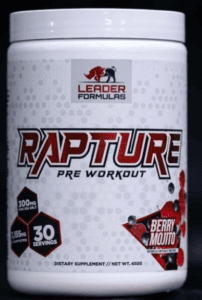
Recalled Rapture pre-workout (photo: FDA).
Legislation
A New York Assembly bill aimed at establishing a pilot program that would set upper payment limits for prescription drugs based on federally negotiated maximum fair prices was recommitted to the Committee on Insurance.
Keep up with state legislation in the areas of pill presses, prescription drug affordability boards, drug importation, and med spas.
International
U.K. regulators cited two weight loss treatment providers. An EU official called for better cooperation to stop counterfeit medicine sales. 15,000 vials of counterfeit antibiotic injections in India.
The United Kingdom’s General Pharmaceutical Council (GPhC) took action against two weight loss treatment providers for advertising and regulatory violations and for failure to demonstrate that their prescribers were appropriately assessing patients.
The European Commissioner for Health and Animal Welfare urged stricter enforcement to curb online sales and promotion of illegal or counterfeit drugs by requiring major digital platforms to verify sellers and remove illicit listings, alongside stronger cross-border cooperation across EU health, judicial, and law enforcement agencies.
In India, the leader of a counterfeit medicine ring admitted to selling 15,000 vials of fake antibiotic injections, including ones with fake Pfizer labels imported from Turkey, over the past 18 months.