
Drug importation raises public risks without lowering costs
The idea that we can reduce healthcare costs by simply bulk importing prescription medicine from countries where it costs less is a popular but deeply flawed policy proposal. Canada has drug shortage problems and has objected to the proposal, and other countries are certain to follow.
Because drugs made for other countries are not produced within the U.S. regulatory system, they undercut the security of the country's drug supply, which relies on tracing a medicine from the factory floor to the moment it reaches a patient.
Opening the drug supply via importation is a threat to public safety. During the pandemic, the U.S. was awash in counterfeit medical products. Even now, criminals are regularly smuggling fake active pharmaceutical ingredients, counterfeit prescription pills, and counterfeit injectables like Ozempic and Botox into the country. Rings like these make an estimated $4.4 billion each year, selling unreliable and sometimes toxic look-alike products across the world, and there is no easy way to prosecute them.
Read our most recent update on the current state of drug importation.

2020: Federally-regulated bulk Canadian drug importation programs
The Medicare Modernization Act of 2003 permitted prescription drug importation from Canada if the Secretary of Health and Human Services certified that imported drugs posed no additional safety risks and would lower costs. Between 2003 and 2020, HHS and FDA leadership declined to approve importation because they did not believe any importation program could meet these requirements.
Despite the danger, the U.S. government defined regulations for "Section 804 Importation Programs" to be run by states and tribal governments in September 2020. Connecticut, Colorado, Florida, Maine, New Hampshire, New Mexico, Texas, and Vermont began pursuing the required federal approval for their programs.
Has the federal regulation led to successful importation programs? No.
As of 2026, only Florida and Colorado are visibly pursuing state drug importation programs:
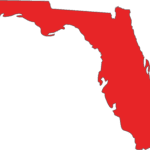 Florida gained federal approval to pilot a two-year Canadian drug importation program in January 2024. Despite committing tens of millions of dollars, it had yet to import any medicine as of February 2026. We've been tracking Florida's efforts here.
 As Colorado continues to revise its as-yet-unapproved section 804 drug importation application, anticipated program savings has shrunk from $36 million to $15 million per year. Learn more about Colorado's importation ambitions.
States that have passed or are considering legislation to legalize drug importation
RED: States that have passed importation legislation
BLUE: States that have passed legislation to study importation
YELLOW: States with live importation legislation
Current bills in state legislatures
Alternative Funding Programs
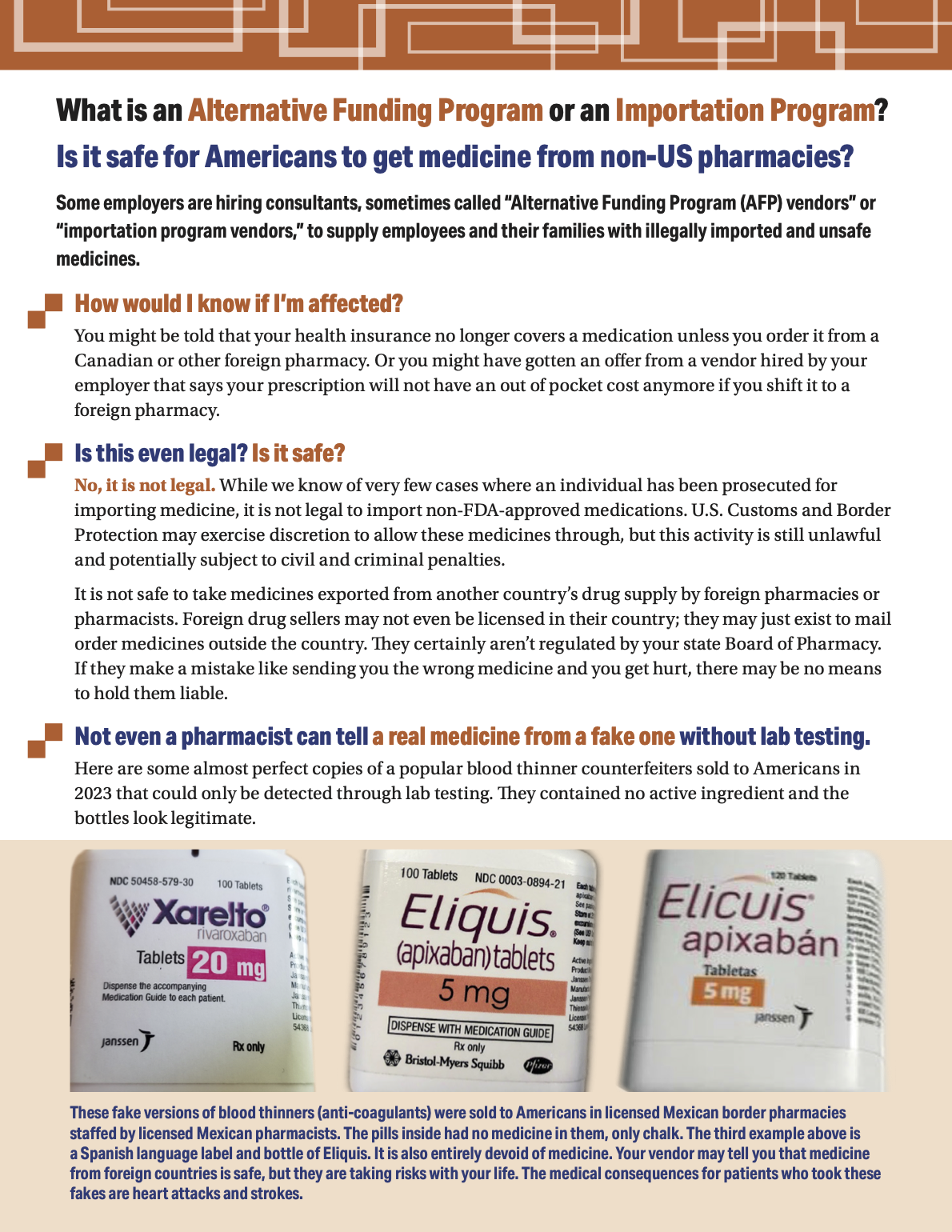
Share this handout and our Importation update to spread the word about these programs.
While states are chasing federally-approved Section 804 importation programs, smaller municipalities and employers with self-funded health plans have been offloading coverage of prescription drugs to "alternative funding programs" (AFPs) that seek lower cost sources for medicines.
The programs are controversial: they can delay patient care, have offloaded insured employees onto patient assistance programs, and sometimes supply Americans with risky medicines from foreign, non-FDA-approved sources.
Why is importation unworkable?
In the past, Canadian drug importation programs haven't paid off financially, and they've also raised public health risks.
Efforts in Illinois and Minnesota in the 2000s were costly and suffered from weak regulation.
A judge struck down a personal importation law in Maine in 2015, but not before the state's pharmacy association president (now a PSM board member) ordered and tested drugs from a "Canadian" business advertising in a local paper. The medicines he received were substandard products from countries that were not permitted by Maine's statute.
Don't just take our word for it: since 2000, hundreds of experts have written letters and testimony opposing drug importation and published op-eds explaining the shortcomings of the policy.
Importation undermines the safety of our medicine supply.
State and federal authorities regulate every entity in the U.S. supply chain from the point of manufacture until a medicine is dispensed, and that makes counterfeits in the legitimate supply chain rare.
In 2013, Congress passed the Drug Supply Chain Security Act to make the supply chain even stronger. This system only works as well as the entities participating in it fear regulatory enforcement.
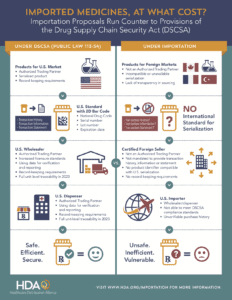
The Healthcare Distribution Alliance offers a brief take on why importation and track and trace are incompatible in their infographic, Imported Medicines, At What Cost?
Fact sheets about importation
- Why won't Canadian drug importation work?
- Pandemic counterfeits demonstrate the danger of Canadian drug importation
- Has Canadian drug importation been tried before? How did it work out?
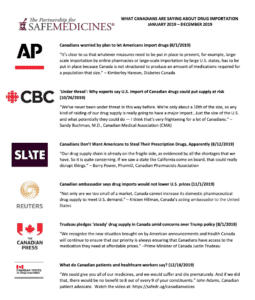
- What Canadians are saying about Canadian drug importation
- What is "track and trace," how does it protect our drug supply, and does Canada use it?
Online congressional briefing (2022)
PSM's Shabbir Safdar; Pharmacist & Pharmacy Professor Dr. Kenneth McCall; Family Advocate Andrea Thomas; Law Enforcement Veteran Mark Baughman; Madison County, Indiana Sheriff Scott Mellinger; and Christina Cella of the Canadian Society of Hospital Pharmacists explain the problems with importing medicine:
Canada is not a willing partner in this project.
A 2019 paper by PSM former board member Dr. Marv Shepherd found that Canada does not have a large enough drug supply to fill American prescriptions: if 20% of U.S.prescriptions were sourced from Canada, they would strip Canada's name-brand drug supply in 165 days.
Canada's federal government, Canadian patient groups, and pharmacy regulators from the Canadian provinces of Manitoba and Newfoundland and Labrador share these concerns. Even the association that represents pharmacy boards across Canada weighed in against importation.
The drugs that Canadian online pharmacies sell Americans, for example, are not the same as the ones Canadians take. In 2017, the National Association of Boards of Pharmacy found that 74% of 108 so-called Canadian pharmacy sites that they reviewed sourced the medicines they were selling from outside Canada.
Canada has been explicit that "Health Canada does not assure that products being sold to U.S. citizens are safe, effective, and of high quality, and does not intend to do so in the future.”
Can't we stop these criminals?
Stopping the counterfeit medicine trade is a problem of resources. Agencies need more staff and better technology to catch illegitimate medicines coming into the country. Forensic laboratories need the time and money to identify the cause of unexpected deaths. Law enforcement needs to be able to investigate drug smugglers and extradite foreign distributors for prosecution. This has proven difficult.
- The Department of Justice indicted six CanadaDrugs.com executives for selling fake Avastin to American oncologists in 2014, but were unable to extradite them. Instead, the defendants plea bargained in exchange for fines and probation and served no jail time.
- When the U.S. prosecuted RxNorth founder Andrew Strempler for falsely claiming that unregulated medicines he sold Americans met U.S. safety standards, they had to persuade Panama to deport him and arrest him in the Miami airport during a flight layover.
Statutes also need to change. A 2017 legal review that analyzed more than 100 criminal cases related to fake Internet pharmacies concluded that "current legal tools and regulatory policies do not effectively deter this highly profitable criminal activity."
How can Americans protect themselves?
Only buy drugs from licensed U.S. pharmacies. PSM maintains resources to educate patients about the risks of importation. Americans can save money safely by taking generic drugs when appropriate, comparing prices among licensed U.S. pharmacies, and pursuing patient assistance programs.